


 Login


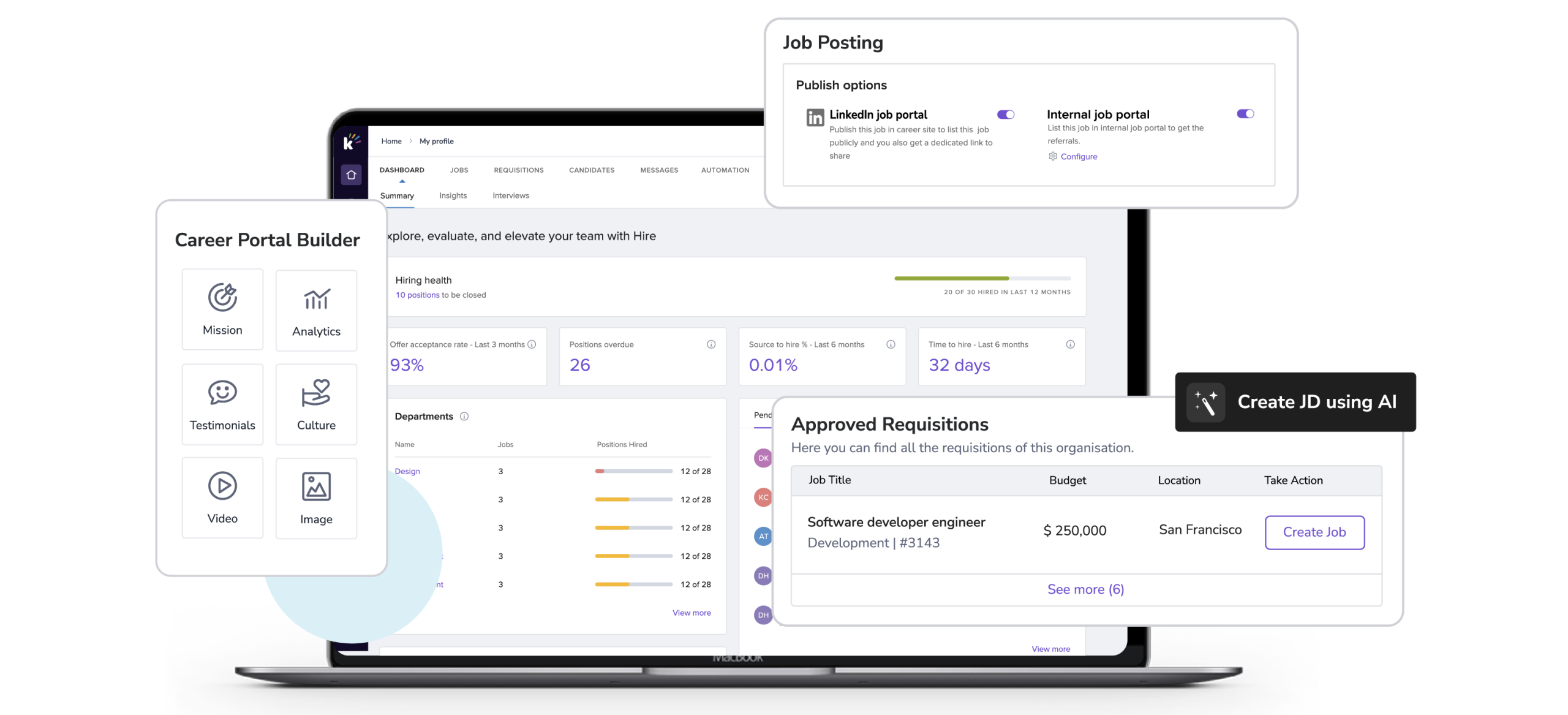
Quick overview
The best recruitment software in India in 2026 includes Keka, Zoho Recruit, Workable, Greenhouse, Lever, Darwinbox, Naukri RMS, SmartRecruiters, iCIMS, Recruitee, Bullhorn, and Ceipal. We compared them on sourcing, screening, interviews, offers, integrations, and verified India pricing.
Picture a recruiter with 50 applications to screen. A hiring manager wants an update on three candidates, the interview panel still hasn’t shared yesterday’s feedback, and new applications keep coming in. When hiring runs on spreadsheets, emails, and follow-up messages, filling even one role turns into a juggling act.
Recruitment software brings it all into one place, from sourcing candidates and screening resumes to scheduling interviews and sending offers. But not every tool solves the same problem. Some are built for high-volume hiring, some for staffing agencies, and some for companies that want hiring connected to the rest of HR.
In this guide, we compare 12 recruitment software options for Indian businesses on features, pricing, G2 ratings, pros and cons, and the teams they suit best.
Best Recruitment Software in India
| Tool | Best for | Pricing | G2 Review | Free Trial |
|---|---|---|---|---|
| Keka | Hiring connected to onboarding and HR, for any company size | Custom | 4.4/5 | Yes |
| Zoho Recruit | Budget-friendly ATS for Zoho users | ₹1,250/recruiter/month (billed annually) | 4.4/5 | Yes |
| Workable | Fast setup and job distribution for growing teams | $299/month (billed annually) | 4.4/5 | Yes |
| Greenhouse | Structured hiring for mid-size and large companies | Custom | 4.4/5 | No |
| Lever | ATS plus CRM for proactive sourcing | Custom | 4.3/5 | No |
| Darwinbox | Large Indian enterprises hiring at volume | Custom | 4.4/5 | No |
| Naukri RMS | Teams that hire heavily through Naukri | Custom | N/A | No |
| SmartRecruiters | Global enterprises with high hiring volume | Custom | N/A | No |
| iCIMS | Large enterprises with complex recruiting operations | Custom | 4.2/5 | No |
| Recruitee | Collaborative hiring for small and mid-size teams | Custom | 4.5/5 | Yes |
| Bullhorn | Recruitment and staffing agencies | $99/user/month | 4.2/5 | No |
| Ceipal | Staffing firms and GCC hiring teams | Custom | 4.6/5 | No |
How We Evaluated the Best Recruitment Software in India
We evaluated every tool against the same seven criteria:
-
Sourcing and job distribution: How the software handles job boards, career sites, referrals, and candidate databases.
-
Screening: Resume parsing, AI-assisted screening, and assessments.
-
Interview workflows: Interview scheduling, structured interview kits, scorecards, and panel feedback.
-
Offers and onboarding: How candidates move through approvals and into the employee onboarding process.
-
Recruiting analytics: Visibility into funnel conversion, source quality, and time to hire.
-
Integrations: Connections with HR, payroll, calendars, and other recruitment tools.
-
Candidate experience: Mobile applications and communication through email, WhatsApp, or SMS.
We also read user reviews on G2 and Capterra, watched product walkthroughs, and checked Reddit discussions, to see how each tool works in a real hiring process, not just what its website claims.
Disclaimer: Keka is our product, and we evaluated it using the same criteria as every other tool on this list.
Top 12 Recruitment Software in India in 2026
Keka: Best Recruitment Software Connected to HR
G2 Rating: 4.4/5
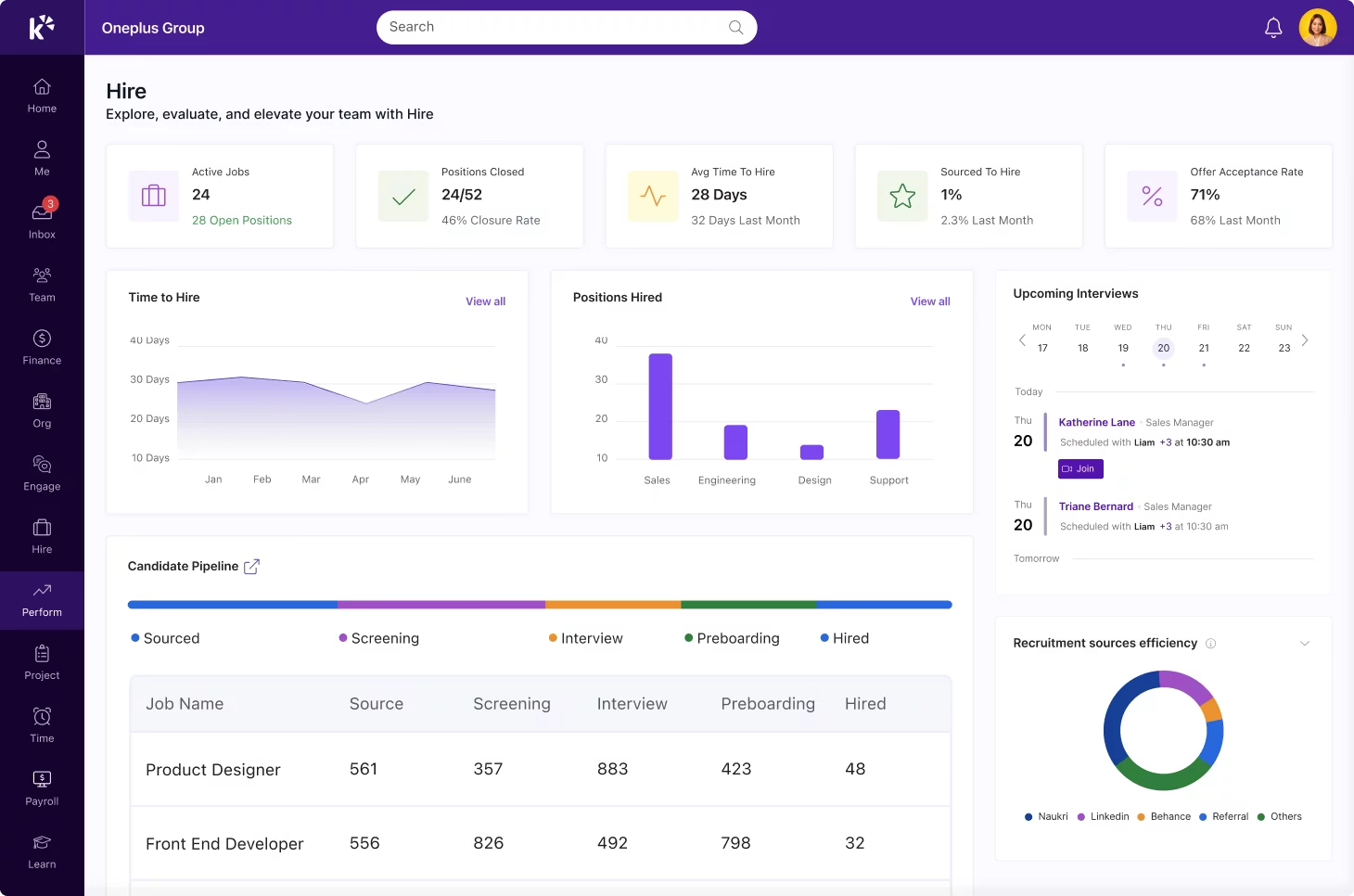
Keka is an all-in-one HR platform for companies of all sizes. Its hiring software combines recruitment capabilities with a broader HR platform, helping teams manage hiring alongside onboarding, payroll, and performance.
Recruiters can work with headcount plans, sourcing, screening, interviews, and hiring analytics while keeping recruitment connected to employee data. This is useful for companies that want to reduce duplicate data entry between recruitment and HR systems.
Keka also offers capabilities such as AI-led screening interviews, structured interview plans, and AI scheduling.
Key features:
-
Headcount planning: Connect open positions to the organization’s structure and approved hiring plans.
-
Unified sourcing: Manage sourcing channels in one place, track source quality, and identify internal candidates.
-
AI-led screening interviews: Generate interview transcripts and scores to support candidate evaluation.
-
Structured interviews: Use interview plans, role-specific assessments, scorecards, and panel calibration.
-
AI scheduling: Check interviewer availability, coordinate interview slots, manage rescheduling, and send follow-ups.
-
Hiring analytics: Track funnel conversion, offer acceptance, 90-day performance, and early attrition.
-
Onboarding handoff: Connect recruitment with the employee record and subsequent HR processes.
Pros and Cons of Keka:
| Pros of Keka | Cons of Keka |
|---|---|
| Hiring and HR share the same employee record, reducing duplicate data entry when a candidate joins. | Teams need to map interview and approval processes before setting up automation. |
| AI-led screening interviews provide transcripts and scores for candidate evaluation. | Companies moving from a separate ATS should plan candidate data migration before switching. |
Pricing: Keka offers customized pricing. Check the Keka pricing page or book a demo for a quote.
Best for: Talent acquisition heads, recruiters, and HR leaders at Indian companies of any size that want recruitment connected to onboarding, payroll, and HR.
Zoho Recruit: Best for Zoho Users
G2 rating: 4.4/5
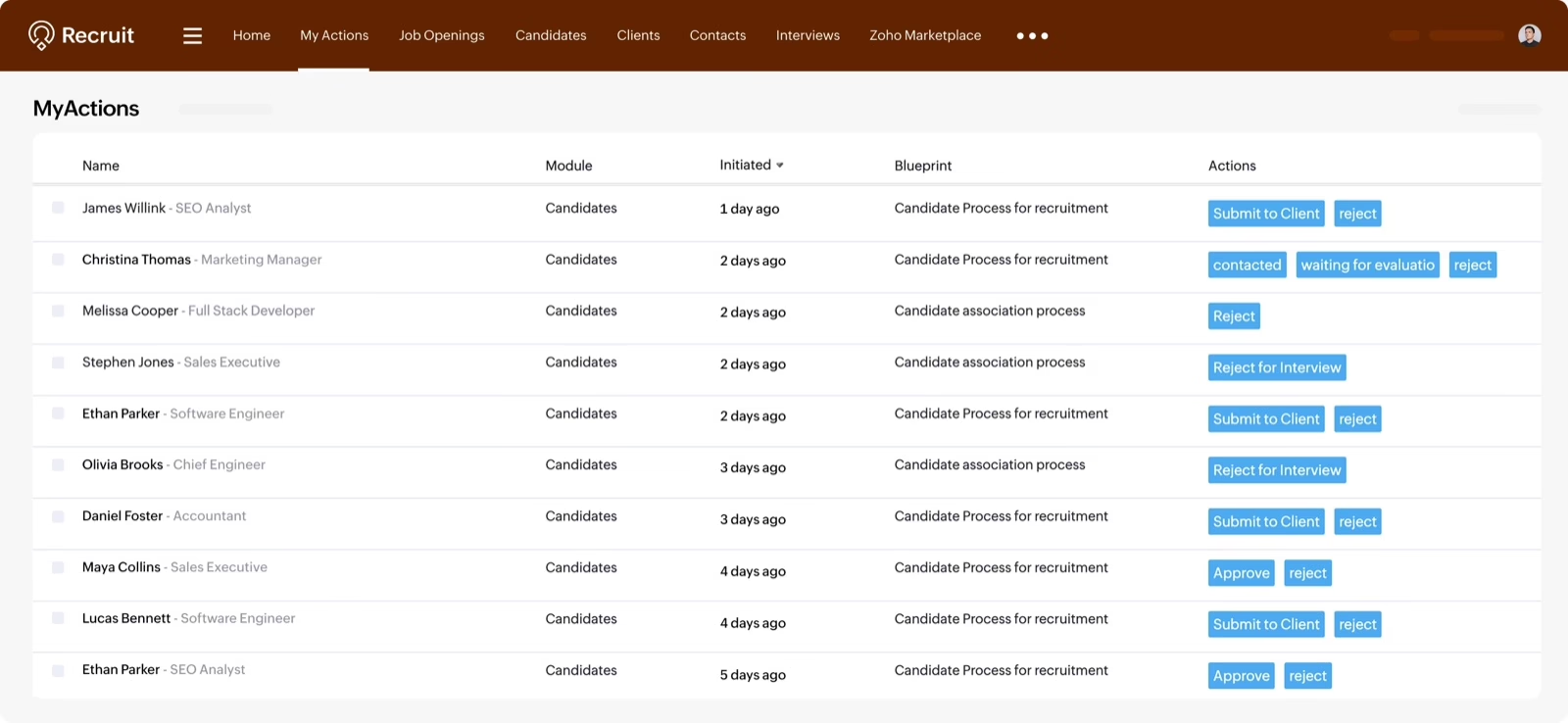
Zoho Recruit is an applicant tracking system for in-house hiring teams and recruitment agencies, with separate editions for each. It covers job posting, resume parsing, candidate pipelines, and interview scheduling. Its biggest draw is how it connects with other Zoho apps, so teams already on Zoho can fit hiring into the tools they use every day.
Key features:
-
Multi-board job posting: Publish openings across multiple job boards and manage applications.
-
Resume parsing: Extract candidate details from resumes and organize them into profiles.
-
Candidate pipelines: Move applicants through recruitment stages and track their progress.
-
Interview scheduling: Coordinate interviews within the hiring workflow.
Pros and Cons of Zoho Recruit:
| Pros of Zoho Recruit | Cons of Zoho Recruit |
|---|---|
| Zia AI recommends closer candidate matches on higher plans. | Some features can feel complicated, and the system can slow down when handling many applications. |
| The interface and app syncing make it easier for recruiters to get started. | Some settings take time to learn, and finding an option can mean several clicks. |
Pricing: Their basic plans for corporates start at ₹1,250/recruiter/month, billed annually (₹1,500 billed monthly).
Best for: Indian SMBs and Zoho users who want to streamline their recruitment process.
Not for: Enterprises that need deep structured-hiring workflows.
Workable: Best for Fast Setup and Job Distribution
G2 rating: 4.4/5
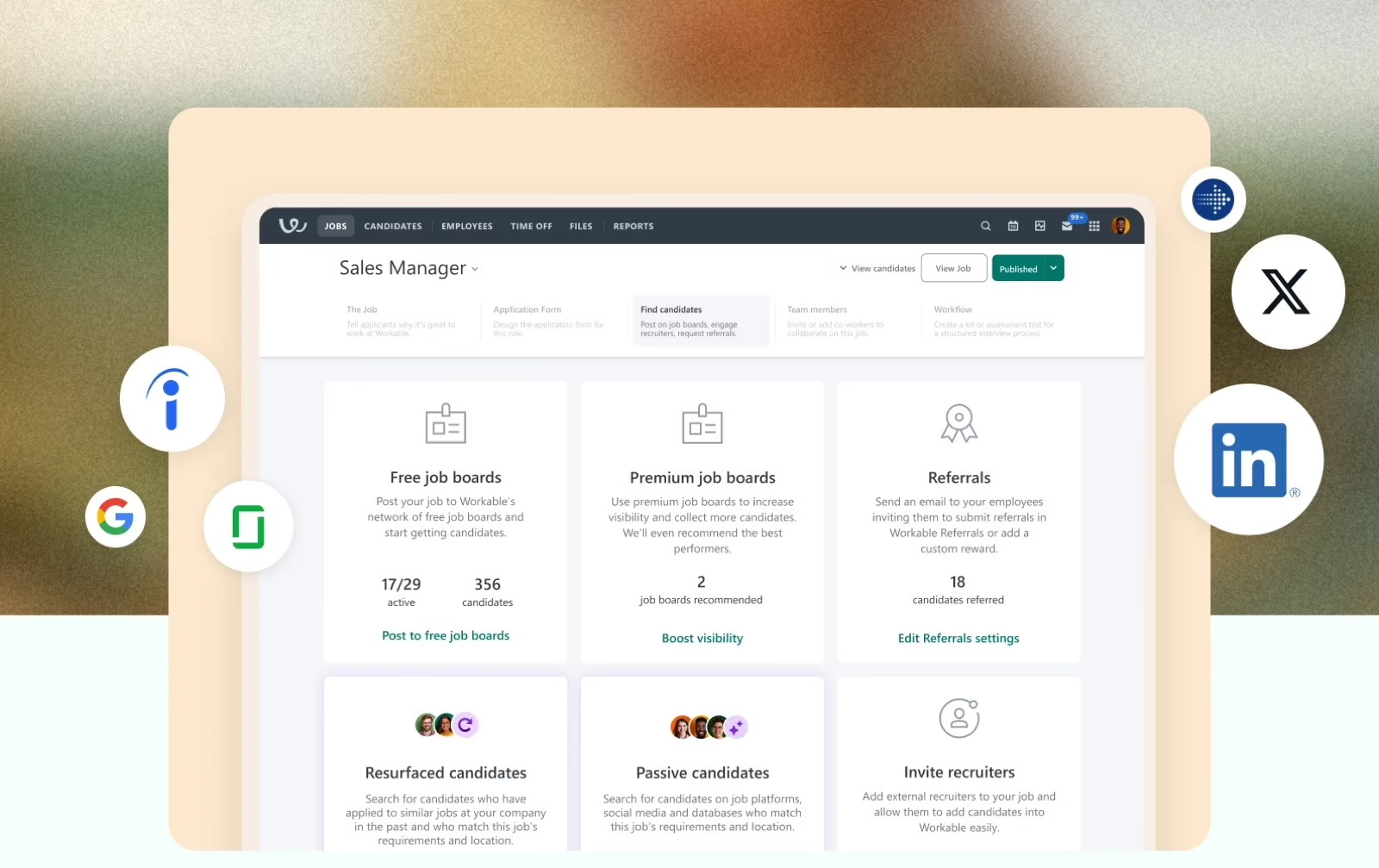
Workable is an applicant tracking system that takes teams from job posting through candidate evaluation. It covers one-click job posting, AI sourcing, candidate recommendations, interview scheduling, assessments, and mobile access. Because it focuses on reaching lots of candidates fast and keeping the hiring team in sync, it suits growing teams that need to fill several roles without a complicated setup.
Key features:
-
One-click job posting: Publish jobs across more than 200 job boards.
-
AI sourcing: Find relevant candidate profiles and use recommendations to support sourcing.
-
Interview scheduling: Coordinate interviews and share scorecards with the hiring team.
-
Candidate assessments: Evaluate applicants using assessments as part of the recruitment process.
Pros and Cons of Workable:
| Pros of Workable | Cons of Workable |
|---|---|
| Reporting and scorecards provide visibility into time to hire and source quality. | Talent pool search needs work, especially duplicate detection and filters. |
| WhatsApp messaging and an AI assistant help with candidate communication and interview prep. | Automation is less flexible, and tools for passive candidates can feel basic. |
Pricing: Workable’s plans start at $299 per month (billed annually; $360 billed monthly) for up to 20 employees.
Best for: Growing teams that want quick setup and wide job distribution.
Not for: Teams that depend heavily on advanced talent-pool searches and passive-candidate outreach.
Greenhouse: Best for Structured Hiring
G2 Rating: 4.4/5
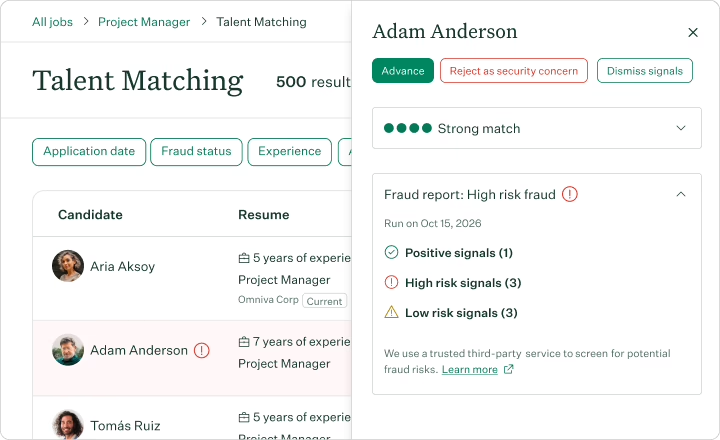
Greenhouse is a recruitment platform built around structured hiring. It gives every interviewer the same interview kits and scorecards, and adds reporting, diversity tools, and a large integration marketplace. That makes it a strong fit for mid-size and large companies that want hiring managers and interview panels to follow one shared process across teams.
Key features:
-
Scorecards: Collect candidate feedback against defined criteria.
-
DEI features: Support organizations working to make hiring practices more inclusive.
-
Reporting: Monitor recruitment activity and hiring performance.
-
Integration marketplace: Connect Greenhouse with other HR and assessment tools.
Pros and Cons of Greenhouse:
| Pros of Greenhouse | Cons of Greenhouse |
|---|---|
| ID checks catch fake applicants and save screening time, and integrations connect it with other tools. | Managing workflows across multiple requisitions can be time-consuming, and reporting and search could be better. |
| Structured interviews and analytics keep scorecards, feedback, and the pipeline organized. | So many settings can lead to inconsistent data if teams don’t follow the same process. |
Pricing: Greenhouse offers customized pricing.
Best for: Mid-sized and large companies that want structured, consistent interviews.
Not for: Small teams that need a quick, low-cost ATS with minimal setup.
Lever: Best for Proactive Sourcing and Candidate Nurturing
G2 Rating: 4.3/5
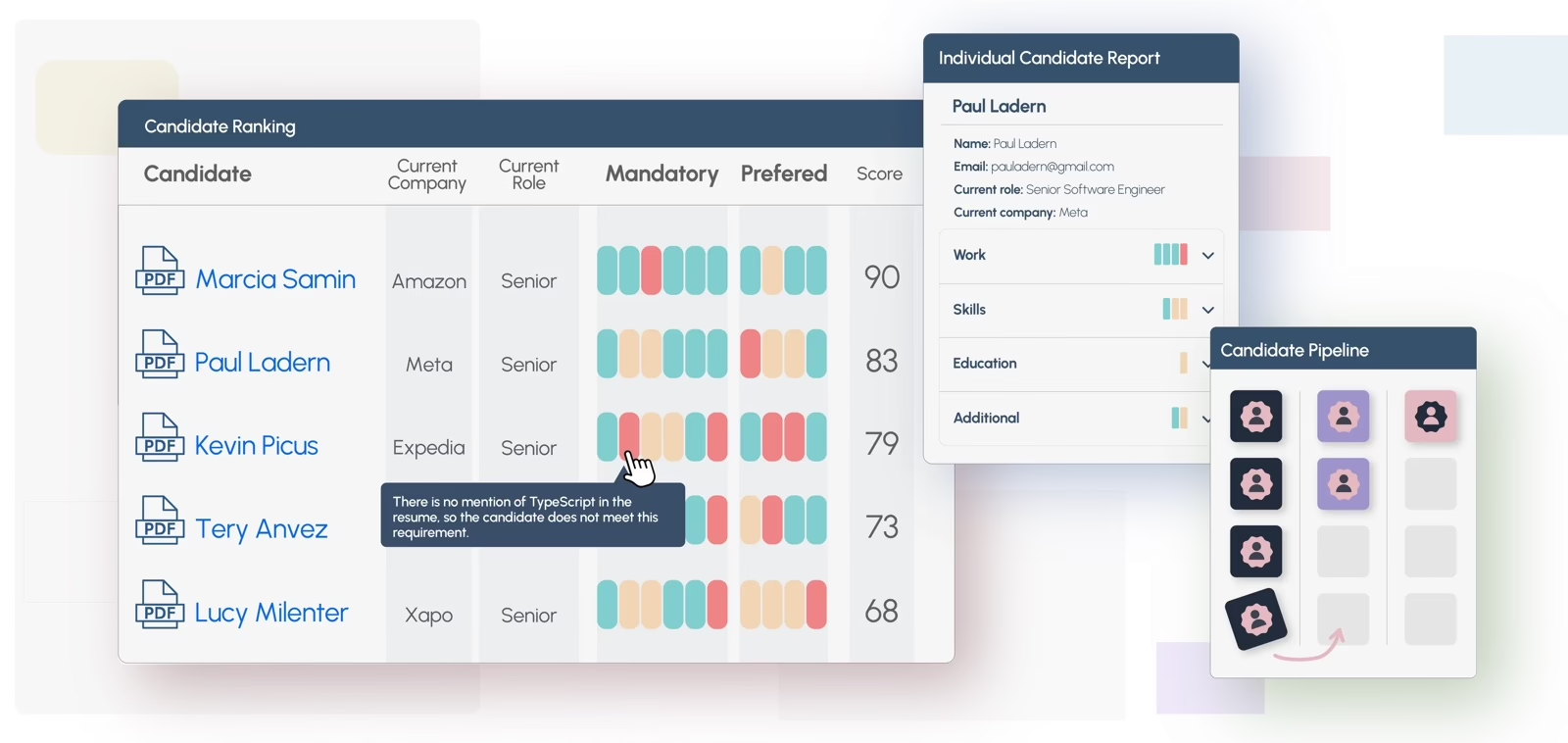
Lever combines an applicant tracking system with a recruiting CRM, so teams can manage active applicants while building relationships with people who might suit future roles. Its strengths are sourcing, email campaigns, candidate pipelines, and interview feedback, which makes it a good fit for companies that recruit proactively instead of waiting for applications.
Key features:
-
Sourcing and email campaigns: Reach prospects and organize outreach activities.
-
Pipeline analytics: Identify stages where candidates are progressing slowly.
-
Interview feedback: Keep panel feedback associated with candidate records.
-
Candidate pipeline: Track applicants and prospects through the recruitment process.
Pros and Cons of Lever:
| Pros of Lever | Cons of Lever |
|---|---|
| Pipeline visibility helps recruiters identify where candidates are getting stuck. | Support response can be slow for teams in India. |
| Easy setup and scheduling help reduce the volume of manual coordination. | Reporting and smart features feel basic, and Slack integration is also unavailable. |
Pricing: Lever offers customized pricing based on organizational requirements.
Best for: Teams that source proactively and want ATS and CRM on one platform.
Not for: Teams that require extensive built-in reporting or need confirmed India-based support coverage.
Darwinbox: Best for Large Enterprises Hiring at Volume
G2 Rating: 4.4/5
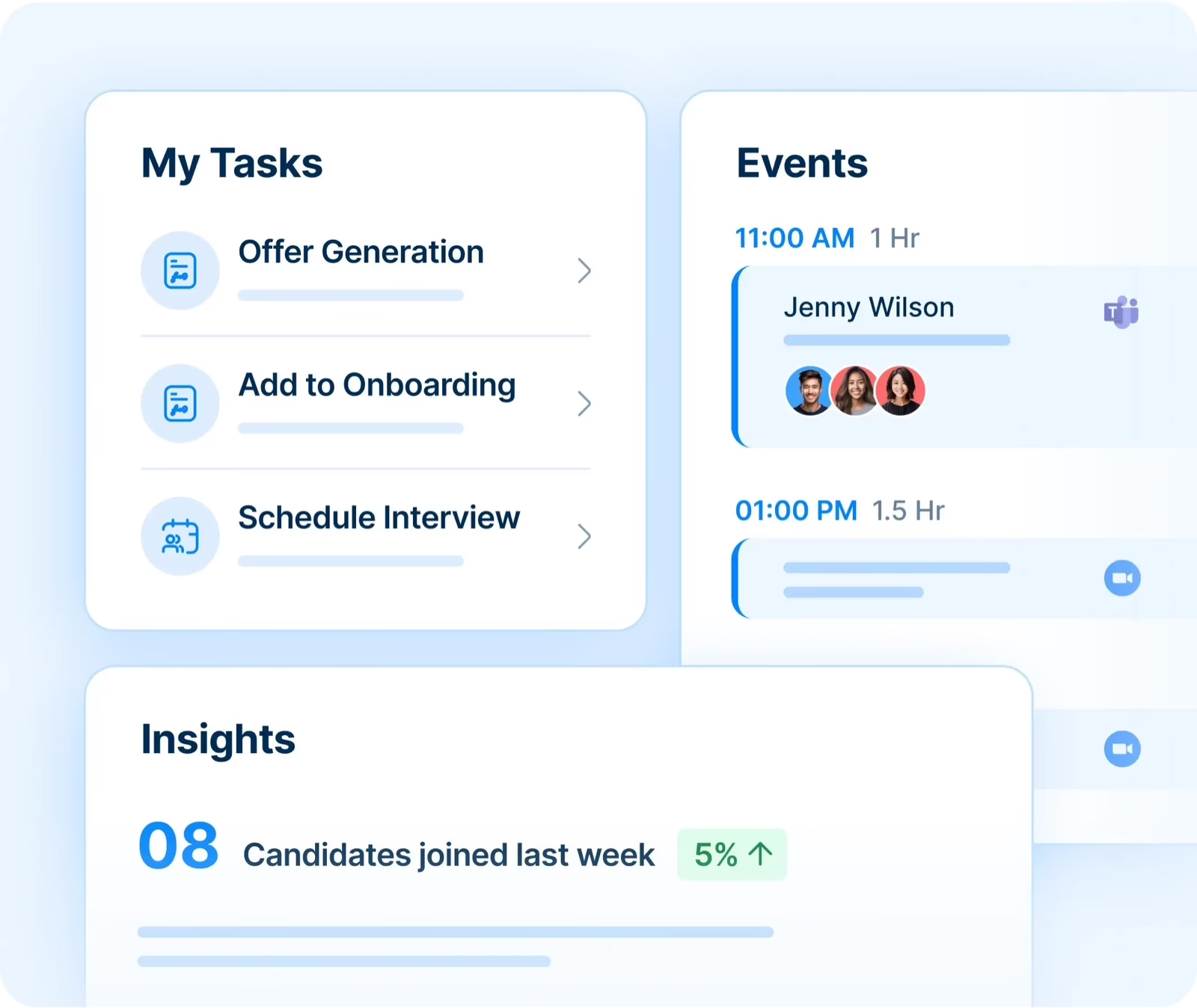
Darwinbox is an enterprise HCM platform built in India, with recruitment capabilities integrated into the wider HR system. It supports requisitions, career sites, AI-assisted screening, interview scheduling, offers, and the handoff to onboarding.
This setup can suit large organizations that manage hiring across business units or locations and want recruitment connected to other employee processes.
Key features:
-
AI-assisted screening: Support candidate shortlisting across large applicant volumes.
-
Interview scheduling: Coordinate interviews with hiring panels.
-
Offer management: Manage offers within the recruitment workflow.
-
Connected HR processes: Link recruitment with other functions on the HCM platform.
Pros and Cons of Darwinbox:
| Pros of Darwinbox | Cons of Darwinbox |
|---|---|
| Multiple HR functions, including attendance and payroll activities, sit within the same platform. | The mobile app can experience slow loading and performance issues. |
| Payroll and learning tools connect with the wider HR system. | Punch-in status may not always be clear on the mobile home screen. |
Pricing: Darwinbox offers customized, quote-based plans. Contact the vendor for pricing based on your requirements.
Best for: Large Indian enterprises hiring at volume across multiple entities.
Not for: Small teams looking for a self-service ATS with minimal implementation.
Naukri RMS: Best for Teams Sourcing Primarily Through Naukri
G2 Rating: N/A
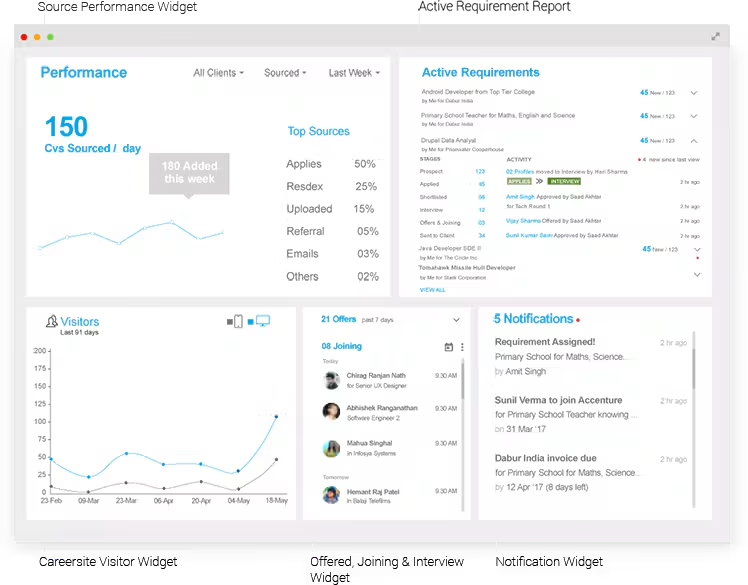
Naukri RMS is the recruitment management system from Info Edge. It supports job posting, career sites, candidate pipelines, and access to Naukri’s resume database.
Its main appeal is for recruiters who rely heavily on Naukri to find candidates and want to manage applications through a recruitment workflow.
Key features:
-
Job posting and career site: Publish roles and collect applications in one place.
-
Candidate pipelines: Track applicants as they move through recruitment stages.
-
Resume database access: Search Naukri’s resume database from the RMS.
-
Cloud-based setup: Manage recruitment without installing desktop software.
Pros and Cons of Naukri RMS:
| Pros of Naukri RMS | Cons of Naukri RMS |
|---|---|
| The interface and recruitment workflow are straightforward, with automatic candidate shortlisting. | Search can return irrelevant results even when recruiters use accurate keywords. |
| Applicant tracking and candidate management are available in one place. | Candidate data may require regular cleanup to maintain database quality. |
Pricing: Naukri RMS doesn’t publicly list their plans.
Best for: Indian teams that source mainly through Naukri.
Not for: Teams that want recruitment deeply connected to onboarding and payroll through a broader HR platform.
SmartRecruiters: Best for Global, High-Volume Hiring
G2 rating: N/A
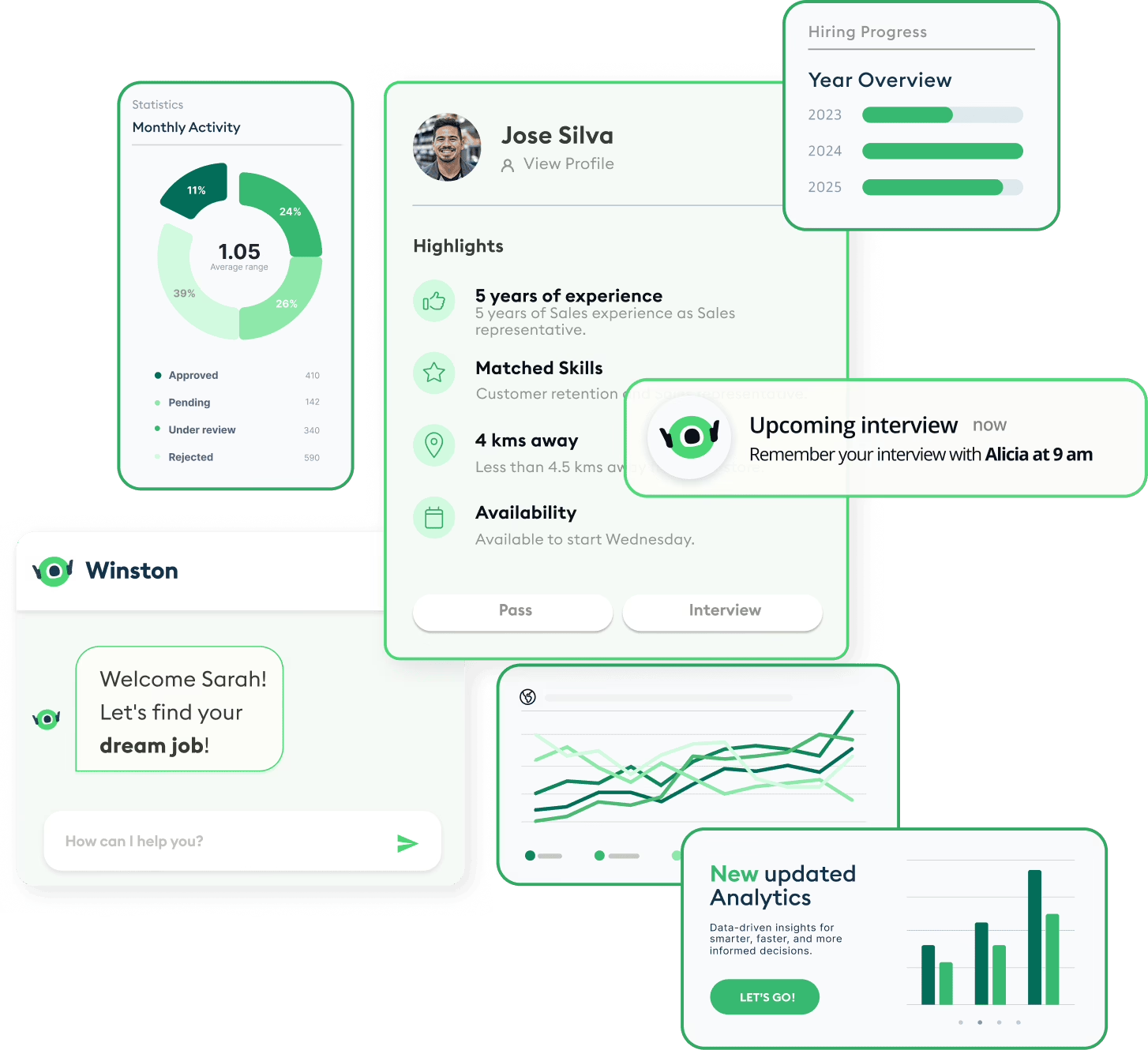
SmartRecruiters is an enterprise talent acquisition suite with job board distribution, AI-assisted candidate matching, recruiting CRM capabilities, and collaborative hiring workflows.
It is designed for organizations that recruit across multiple locations and need hiring teams to work together within a shared system.
Key features:
-
Job board marketplace: Distribute openings across multiple job boards.
-
SmartAssistant AI matching: Support candidate-to-role matching.
-
Recruiting CRM: Maintain talent pools for future hiring needs.
-
Collaborative hiring: Enable recruiters and hiring managers to review candidates together.
Pros and Cons of SmartRecruiters:
| Pros of SmartRecruiters | Cons of SmartRecruiters |
|---|---|
| Reporting provides insight into recruitment performance and hiring trends. | Candidate portal branding is less flexible, and candidate statuses can be difficult to customize. |
| Security controls help protect sensitive candidate data. | Costs can increase with team size. |
Pricing: SmartRecruiters uses quote-based pricing. Contact the vendor for a quote based on hiring volume and requirements.
Best for: Global enterprises hiring at high volume.
Not for: Small teams that need a simple ATS with minimal configuration.
iCIMS: Best for Complex Enterprise Recruitment
G2 rating: 4.2/5
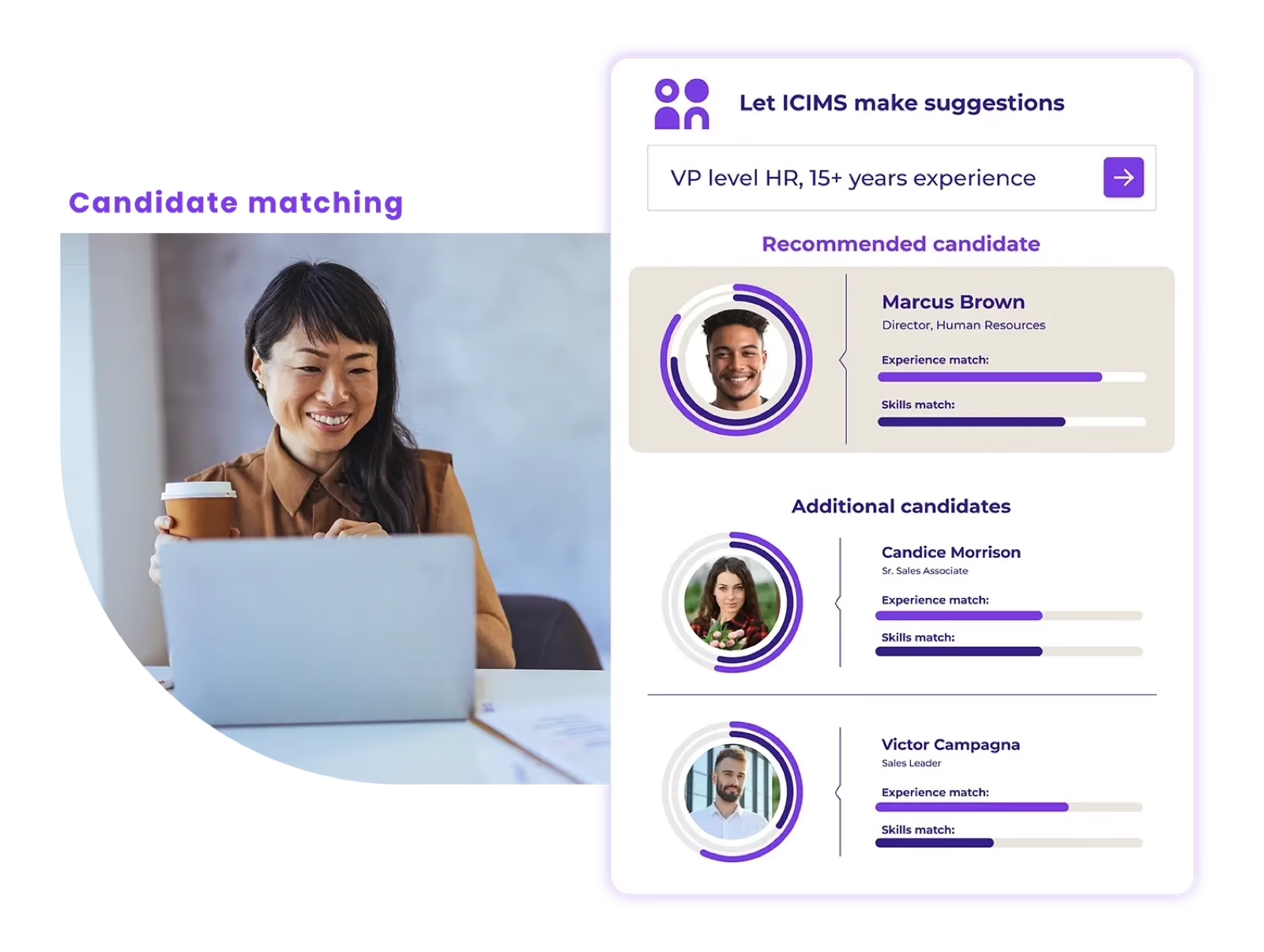
iCIMS is an enterprise recruiting platform that brings applicant tracking, a candidate CRM, career sites, recruitment marketing, text messaging, and AI tools into one system. It’s highly configurable, which suits large companies with specific hiring workflows. But that flexibility comes with a lengthy setup and ongoing admin work.
Key features:
-
Text recruiting: Communicate with candidates by text.
-
AI tools: Support screening and candidate engagement.
-
Administrative controls: Configure the platform to fit organizational requirements.
-
Multi-brand recruitment: Support hiring across different brands or business units.
Pros and Cons of iCIMS:
| Pros of iCIMS | Cons of iCIMS |
|---|---|
| Flexible admin controls let teams shape the platform around their business. | Support and implementation can be tough at first. |
| Offer management and multi-brand setup suit companies with complex operations. | SMS and mobile forms need work, so most candidate communication still happens by email. |
Pricing: iCIMS offers customized quote-based plans.
Best for: Large enterprises with complex, multi-region recruiting.
Not for: Small and mid-sized teams that need a lightweight ATS.
Recruitee: Best for Collaborative Hiring
G2 rating: 4.5/5
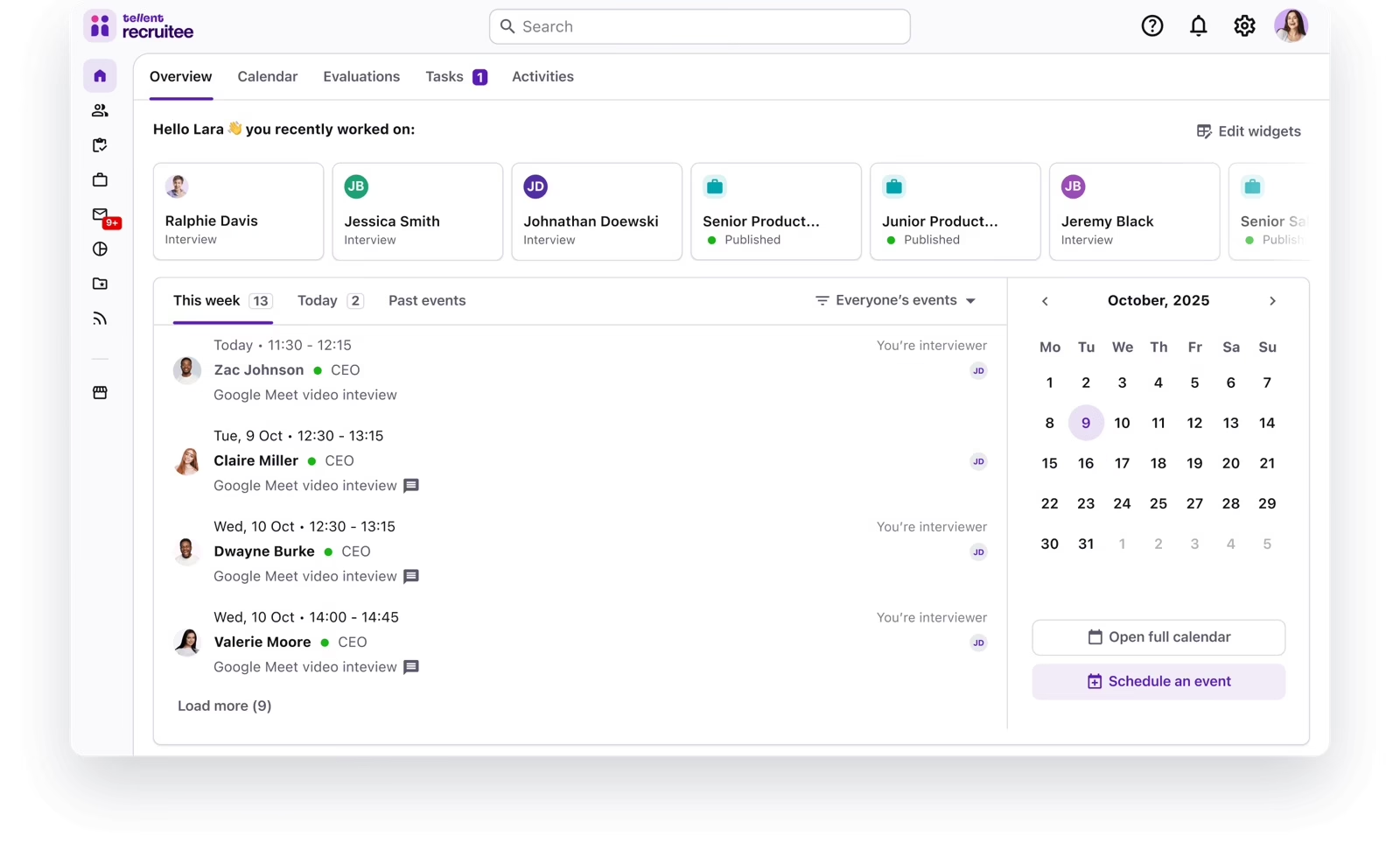
Recruitee, now part of Tellent, is an applicant tracking system built for small and mid-size teams. It includes a careers site builder, job posting, drag-and-drop candidate pipelines, team evaluations, and workflow automation. Its focus is helping recruiters and hiring managers work together at every step of hiring.
Key features:
-
Job posting and pipelines: Publish openings and move candidates through recruitment stages.
-
Team evaluations: Collect feedback from hiring managers.
-
Workflow automation: Automate reminders and candidate stage updates.
-
Self-scheduling: Reduce manual coordination when arranging interviews.
Pros and Cons of Recruitee:
| Pros of Recruitee | Cons of Recruitee |
|---|---|
| An easy, all-in-one interface keeps jobs, candidates, and hiring teams in one place. | Job board integrations could be deeper. |
| Workflow automations and self-scheduling reduce manual follow-ups. | The dashboard gets crowded when multiple roles are open. |
Pricing: Recruitee offers customized quote-based plans. Contact the vendor for current pricing.
Best for: Small and mid-sized teams that hire collaboratively.
Not for: Large enterprises that need extensive compliance controls and complex enterprise workflows.
Bullhorn: Best Recruitment Software for Staffing Agencies
G2 rating: 4.2/5
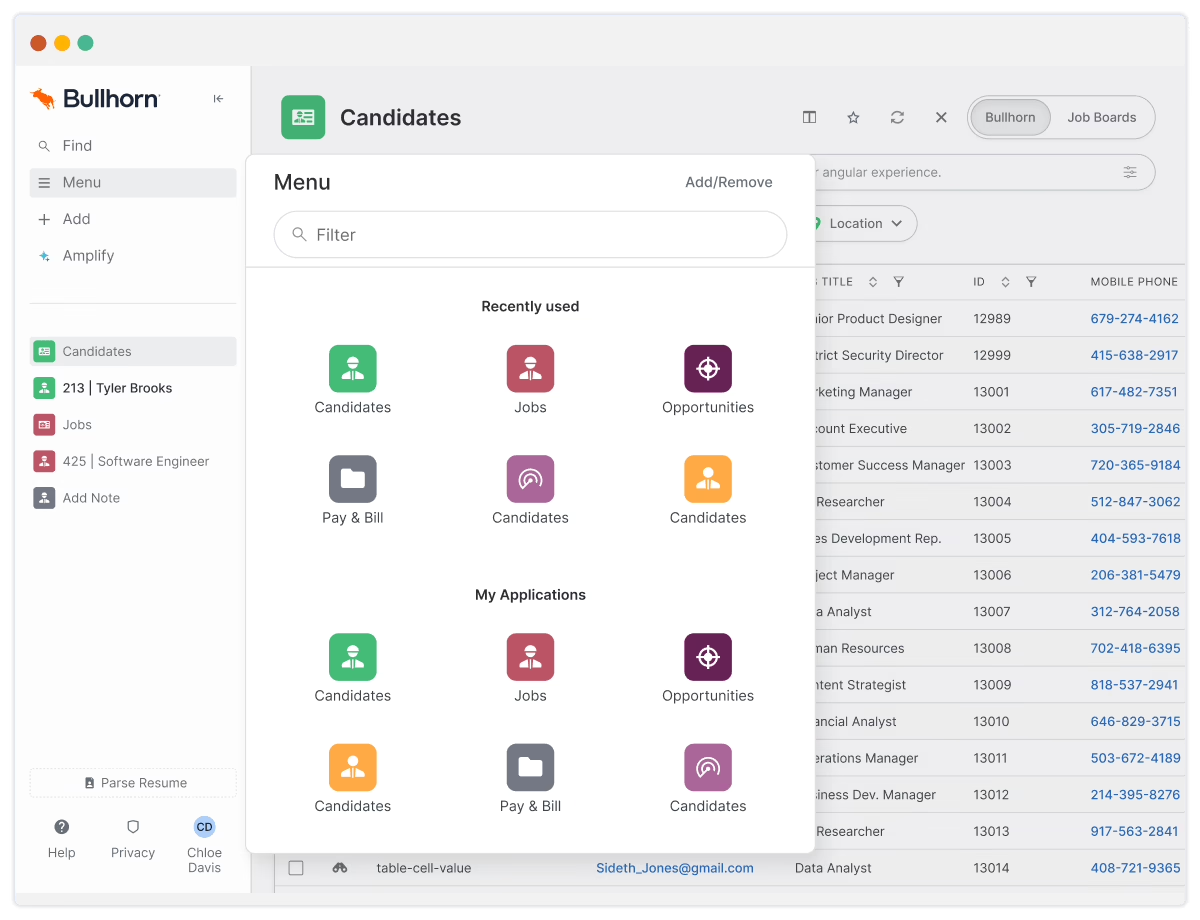
Bullhorn is a recruitment CRM and ATS built for recruitment and staffing agencies. It manages client relationships, candidate records, job orders, placements, and integrations with back-office systems. Unlike tools primarily designed for in-house HR teams, Bullhorn focuses on the agency workflow, where recruiters manage candidates and client requirements simultaneously.
Key features:
-
Client and candidate management: Keep client and candidate records within one CRM.
-
Job orders: Track client requirements from opening to fulfilment.
-
Placement management: Record placements and follow them through to billing.
-
Back-office integrations: Connect placement information with other operational systems.
Pros and Cons of Bullhorn:
| Pros of Bullhorn | Cons of Bullhorn |
|---|---|
| Automations and back-office integrations help agencies keep recruitment pipelines organized. | Occasional lag and slow loading can affect day-to-day work. |
| Reports are easy to build and run in seconds. | Some features, such as the sales pipeline view, may sit outside your plan. |
Pricing: Bullhorn’s basic plans start from $99/user/month.
Best for: Recruitment and staffing agencies managing client and candidate pipelines.
Not for: In-house HR teams looking for recruitment connected to their core HR platform.
Expert Verdict: Bullhorn is a relevant option for agencies that manage client requirements and candidate placements in the same system. Check which reporting and sales features are included in your quote before choosing a plan.
Ceipal: Best for Staffing Firms and GCC Hiring Teams
G2 rating: 4.6/5
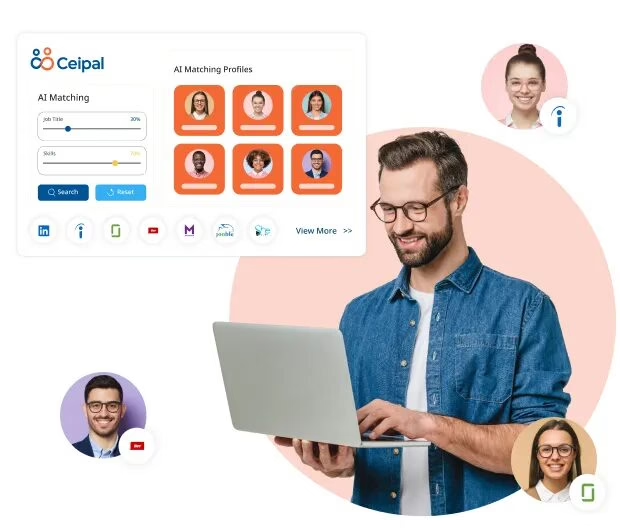
Ceipal is an applicant tracking platform used by staffing firms, corporate recruiting teams, healthcare staffing businesses, and global capability centers (GCCs). It combines ATS capabilities with a vendor management system (VMS) and workforce management.
Recruiters can use the platform to post jobs, match candidates to roles with AI-assisted tools, and manage client and vendor records.
Key features:
-
Applicant tracking: Manage requisitions, candidates, and recruitment pipelines.
-
AI matching: Rank candidates against job requirements using fit scores.
-
Integrations: Connect job boards, email, calendars, and other recruitment tools.
-
Vendor management: Manage vendor relationships alongside hiring activities.
Pros and Cons of Ceipal:
| Pros of Ceipal | Cons of Ceipal |
|---|---|
| Job board and tool integrations help expand candidate reach. | Resume downloads and report accuracy can frustrate recruiters. |
| The interface brings job portals and recruitment activities together in one place. | Search filters and keyword matching could be sharper. |
Pricing: Ceipal provides a quote-based plan.
Best for: Staffing firms and GCC hiring teams.
Not for: Teams that need a full HR platform with core HR and performance management built in.
How to Choose the Best Recruitment Software for Your Business: 5 Things to Consider
The right recruitment software depends on your hiring volume, team structure, budget, and existing HR systems. Use these factors to narrow down your options.
1. What kind of hiring do you do?
Start with your primary hiring needs. Different platforms suit different recruitment models.
| Primary Need | Pick |
|---|---|
| Hiring connected to onboarding, payroll, and HR | Keka |
| Budget-friendly ATS | Zoho Recruit |
| Quick setup and wide job posting | Workable or Recruitee |
| Structured hiring at scale | Greenhouse or SmartRecruiters |
| Large Indian or global enterprises | Darwinbox or iCIMS or Keka |
| Proactive sourcing and nurturing | Lever |
| Naukri-led sourcing | Naukri RMS |
| Recruitment agencies | Bullhorn or Ceipal |
Use this as a starting point and compare shortlisted tools against your actual workflows.
2. How big are you, and how fast are you growing?
Smaller teams may prioritize easy setup, manageable costs, and simple workflows. Larger organizations may need multi-entity hiring, approval chains, role-based permissions, and campus recruitment support.
Choose a platform that can accommodate your expected growth without making you pay for features you do not need.
3. Which features do you use every day?
Shortlist tools based on the features your team uses regularly:
-
Job posting across relevant Indian job boards and branded career pages.
-
Resume parsing, AI-assisted screening, and candidate assessments.
-
Interview scheduling, scorecards, and panel feedback.
-
Offer letters, approvals, and e-signatures.
-
Analytics for funnel conversion, source quality, and time to hire.
-
Candidate communication through email, mobile, WhatsApp, or SMS.
-
Onboarding handoff for successful candidates.
Test how each feature works in a demo, not just whether it’s on the list. AI screening, for example, works very differently from one tool to the next.
4. Does it connect to your HR and payroll?
Check whether candidate details transfer to onboarding and employee records without repeated data entry. Review integrations with calendars, assessment tools, job boards, and your existing HR software.
Confirm which integrations are included in the plan and whether data transfers automatically.
5. What will it really cost, and is support available in India?
Compare the total cost, not just the starting subscription. Check the following before signing a contract:
-
Pricing model: Per recruiter, user, employee, or custom quote.
-
Currency: INR or USD.
-
Included features, job slots, and usage limits.
-
Additional costs for implementation, training, and integrations.
-
GST applicability and monthly or annual billing.
-
Customer support availability during Indian business hours.
Ask each vendor for a quote based on your number of recruiters, open roles, and hiring volume, so you can compare them fairly.
Wrapping it Up
The best recruitment software in India depends on how your team hires. Keka is worth considering if you want recruitment connected to onboarding, payroll, and HR. Zoho Recruit is a practical option for teams prioritizing INR pricing, while Greenhouse suits organizations that need structured interviews. For staffing agencies, Bullhorn and Ceipal offer recruitment-focused workflows.
Before you decide, compare the features you’ll actually use, the total cost, and how much work setup will take. A good demo should show how the tool handles your hiring process, not just what’s on its feature list.
If you want hiring connected to onboarding and the rest of HR, book a demo with Keka to see how it works.


