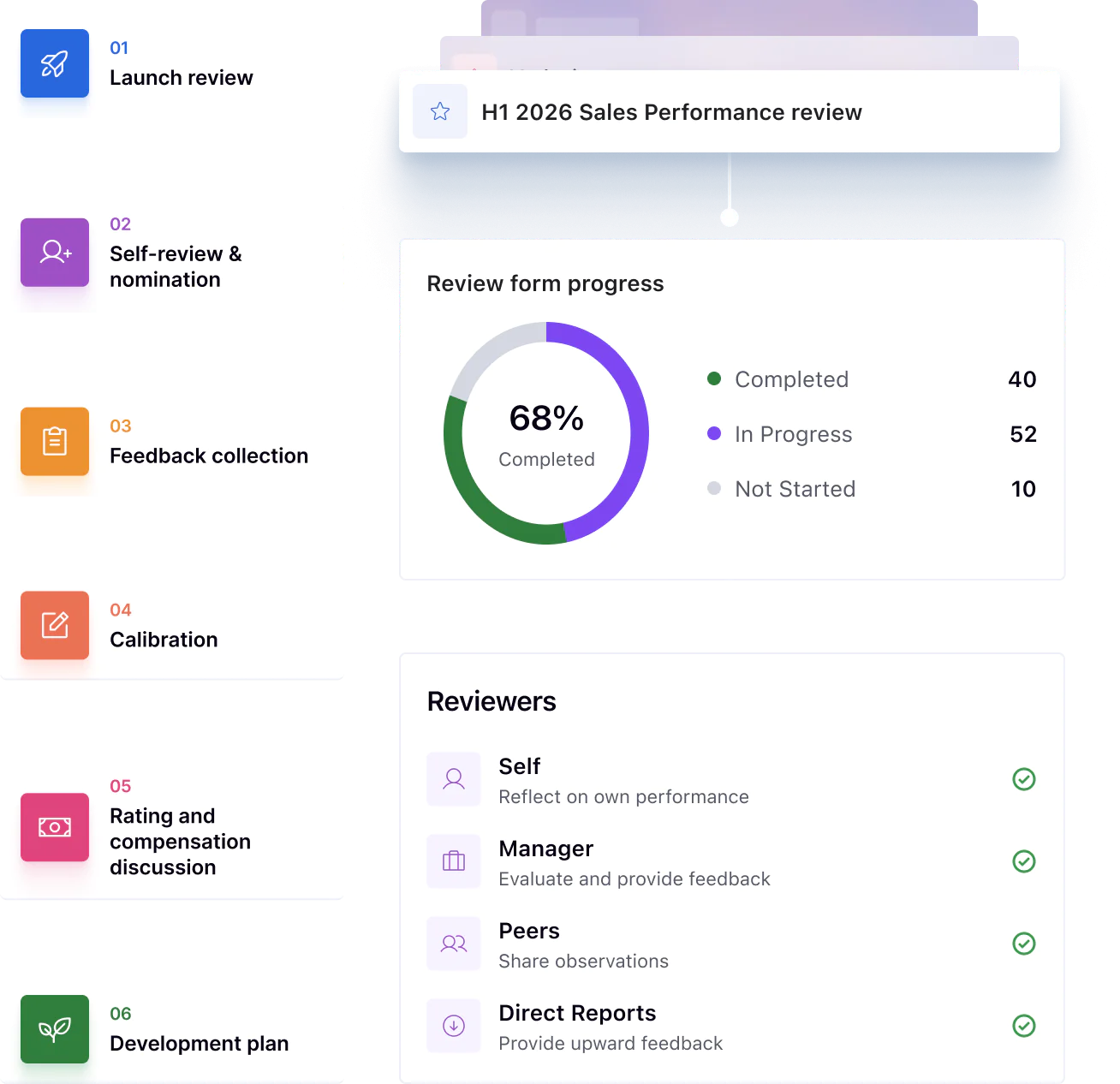
The quality of a review depends on the quality of inputs. Keka structures every
submission – self, manager, and peer, so the data you get is specific, comparable,
and actually useful for decisions.
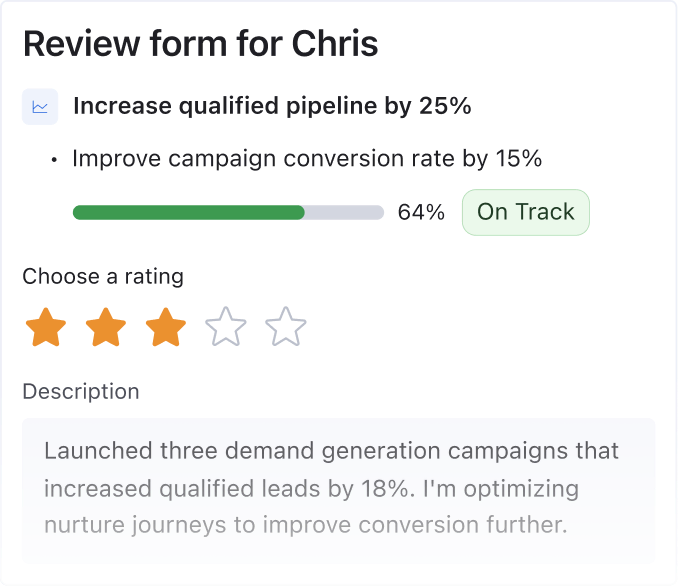
AI helps employees move from vague statements to specific, outcome-driven responses. Goal progress and past feedback surface automatically so employees account for their full contribution, not just what they remember.
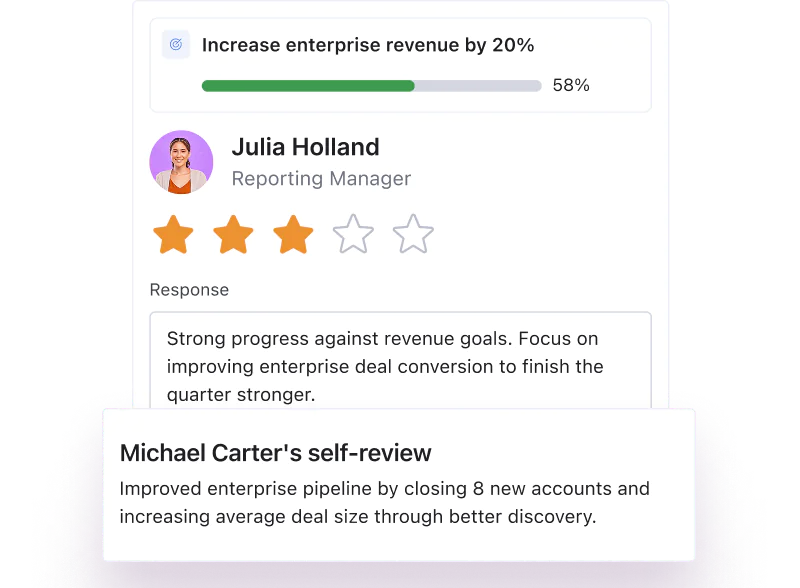
Every manager sees the employee’s self review, goal completion, and review history before assessing. Inconsistencies between self and manager ratings are flagged before submission.
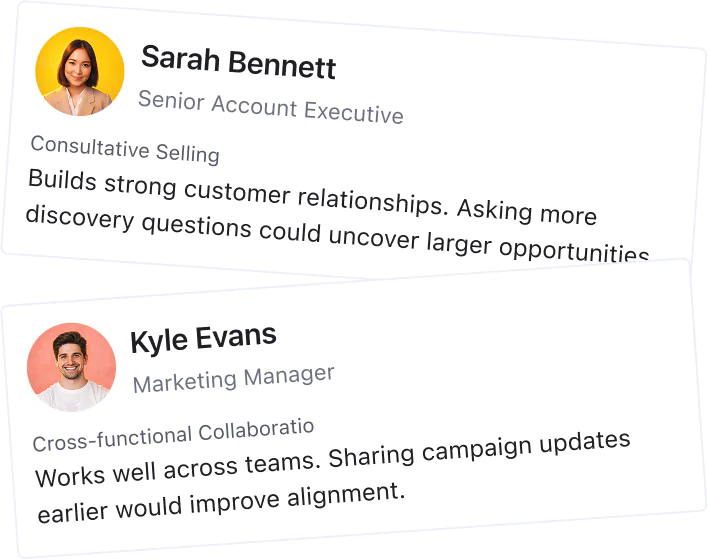
Peers answer targeted, role-specific questions instead of open prompts, which means responses are comparable across reviewers and actually inform the final evaluation. Anonymous submission removes the fear of retaliation that makes peer feedback unreliable.
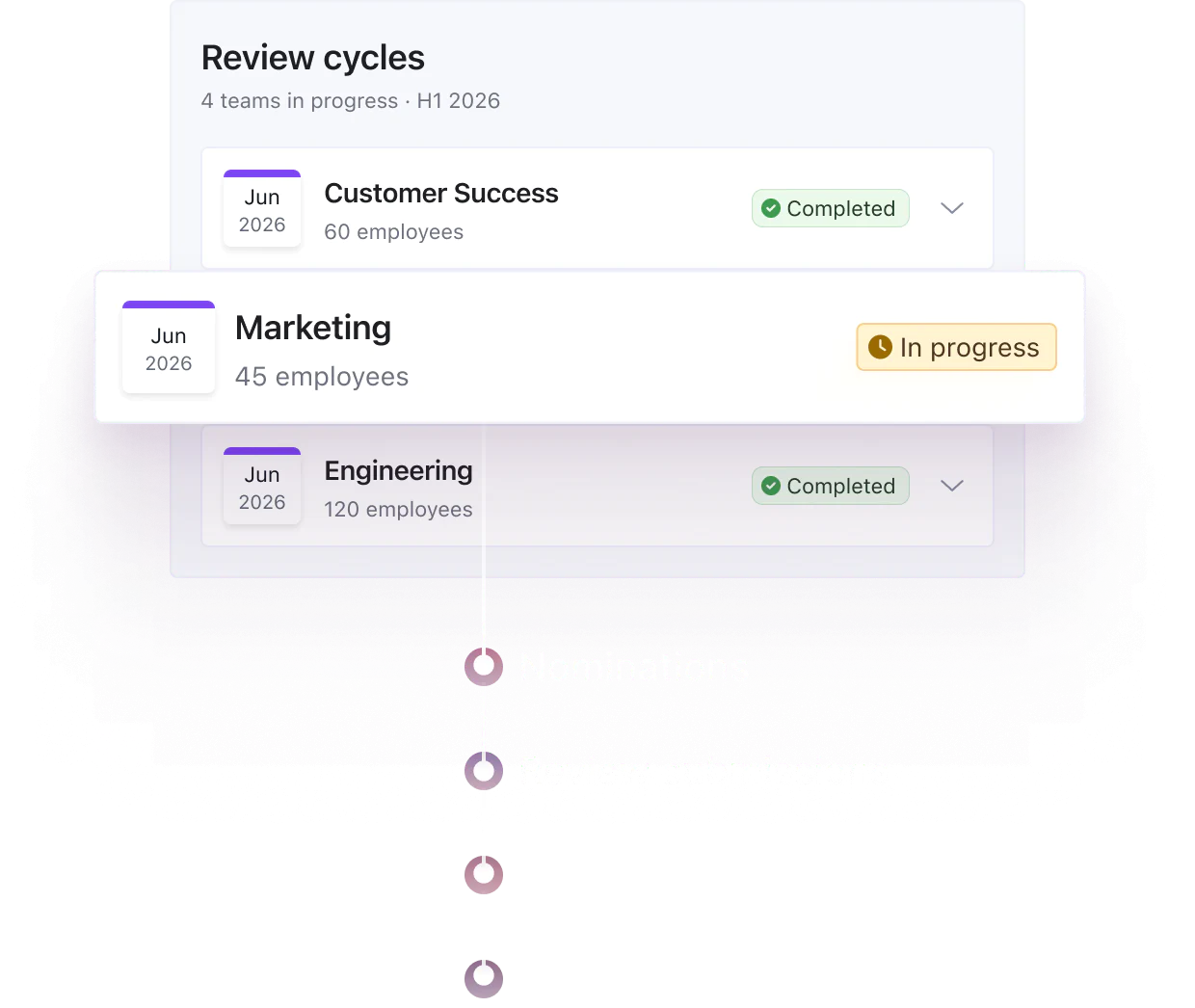
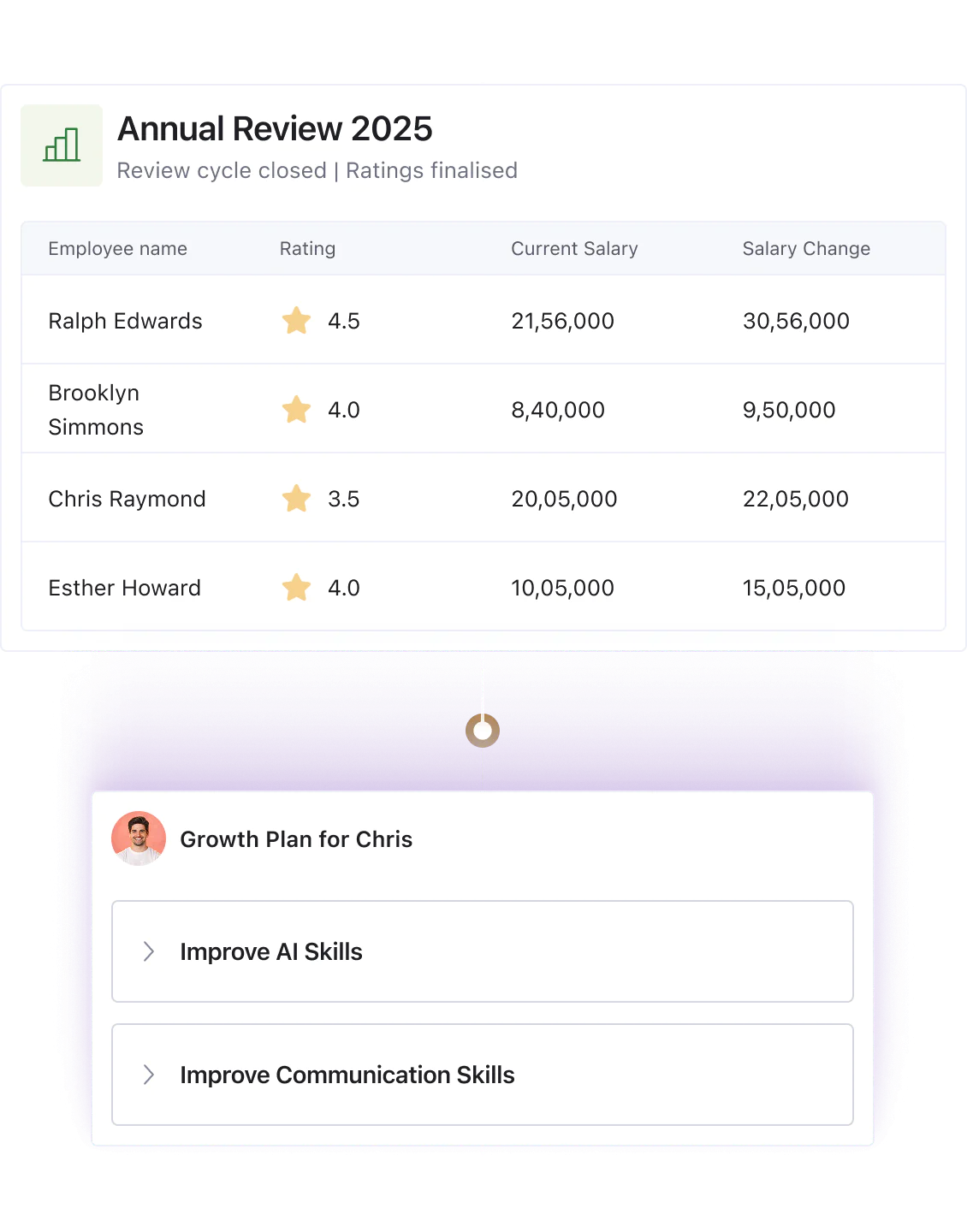
Aggregate inputs from all reviewers into a single calibrated view. Compare ratings across teams, spot outliers, and normalise scores before any outcome is finalised, so high performers get recognised and rating inflation gets caught.
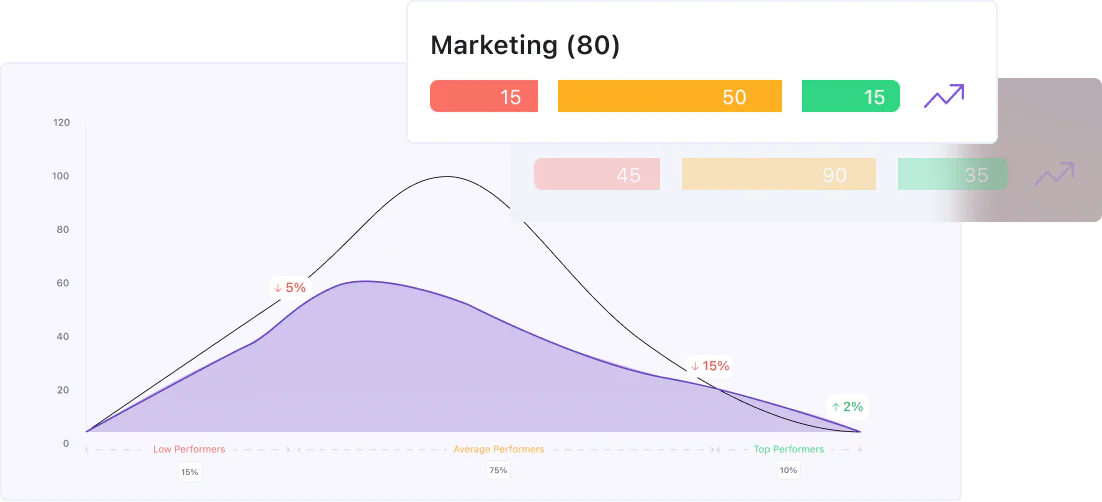
Get a clear picture of how 360 performance review ratings distribute across your organisation – who’s excelling, who’s average, and who needs attention. Calibrate ratings across teams so no department inflates or deflates the curve.
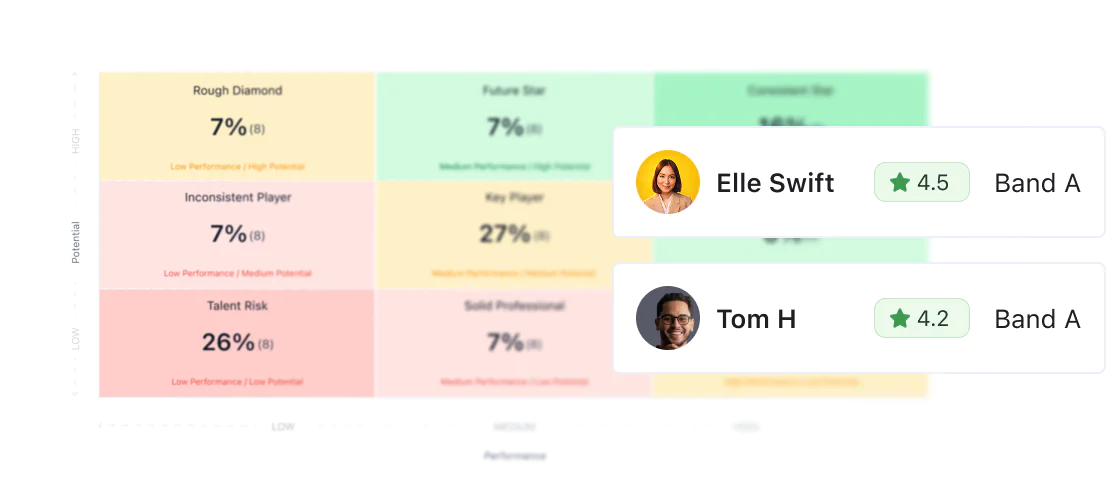
Plot every employee on performance against potential. Identify your future leaders, your consistent stars, and your talent risks, so succession and development decisions are based on data, not assumptions.
SOC2
ISO 27001
GDPR
A 360 performance review collects feedback from managers, peers, direct reports, and the employee themselves. It gives organizations a balanced, multi-rater view of performance to support growth, development, and engagement decisions.
The 360 performance review process gathers structured feedback from managers, peers, and direct reports. Responses are compiled into reports that support fair evaluations and individual development plans.
360 performance review software automates feedback collection, reporting, and analysis. It reduces manual effort, improves participation rates, and helps organizations make informed talent and performance decisions.
A good 360 performance review platform should offer customizable review cycles, anonymous feedback, competency frameworks, reporting dashboards, and integration with your existing HR systems.
Keka streamlines the 360-performance review process with automated workflows, customizable feedback forms, reminders, and real-time analytics so HR teams spend less time administering reviews and more time acting on results.
Keka streamlines the 360 performance review process with automated workflows, customizable feedback forms, reminders, and real-time analytics so HR teams spend less time administering reviews and more time acting on results.
Keka’s 360 performance review tool offers configurable review templates, anonymous feedback, competency-based assessments, and actionable reports, so managers can make fair, data-driven performance decisions with confidence.
Keka brings performance management, employee feedback, and analytics together in one 360 performance review platform. Organizations can run structured reviews, track progress, and build a culture of continuous improvement at scale.
Define, track, and apply findings consistently so every role, team, and decision stays aligned.