Login


Disregarded Entity
Read Time: 1 Mins


PRODUCTS
 Payroll Suite
 HR Suite
 Talent Suite
 Project Services Suite

Meet the platform tailored to your business
Core system of record
One platform for the entire employee journey

BY INDUSTRY
BY COMPANY SIZE
LEARN
EXPLORE KEKA
A disregarded entity is recognized for state law purposes but ignored for federal income tax purposes. It is a business structure in which the entity is not considered separate from its owner for federal income tax purposes.
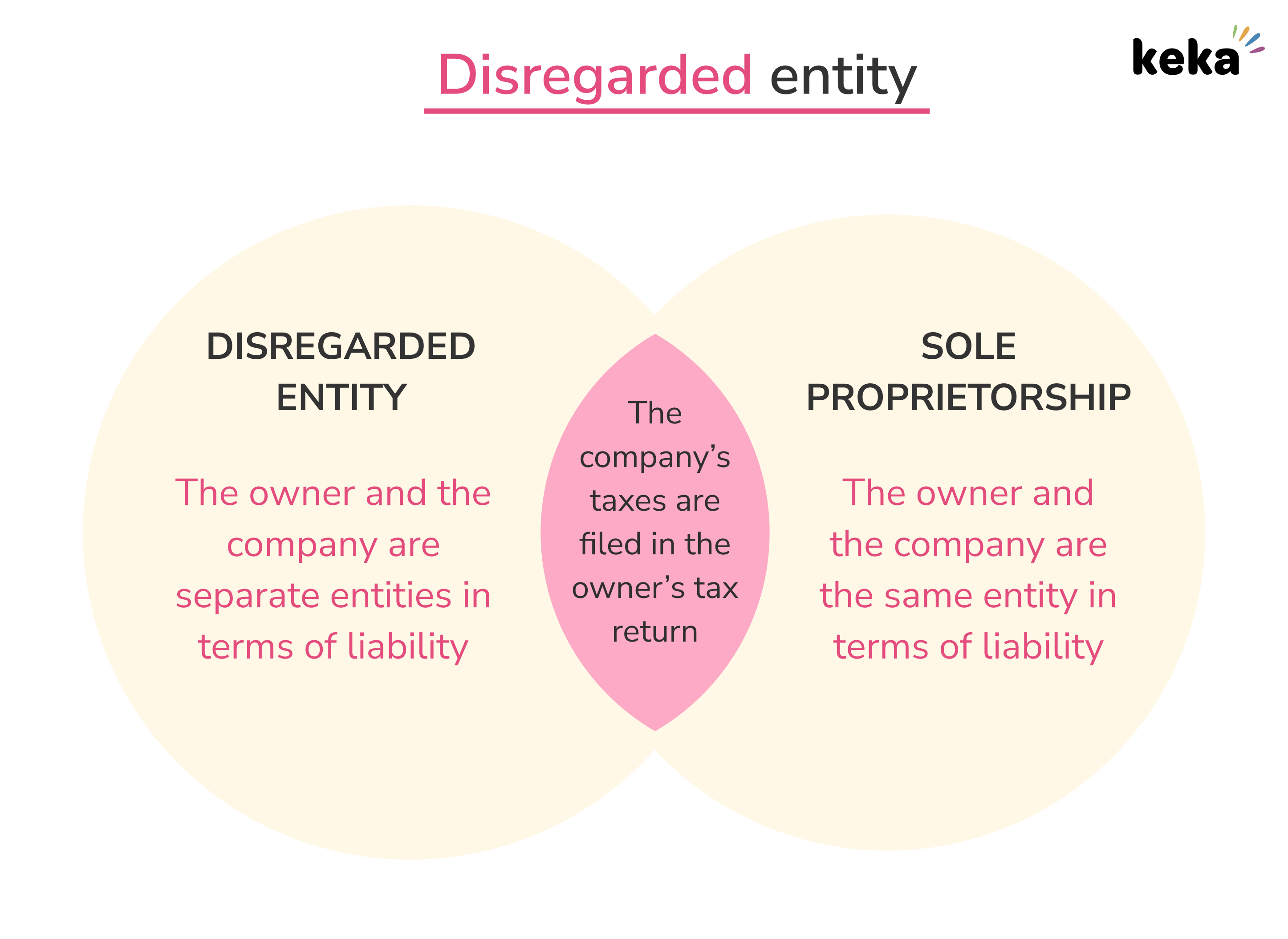
This means the owner reports and pays taxes on the entity’s income on their personal tax return. The most common example of a disregarded entity is a single-member limited liability company (LLC). Among others include;
QSubs, qualified real estate investment trust subsidiaries, and grantor trusts (not business entities but treated as disregarded for income tax purposes).
A disregarded entity has a single underlying owner that the IRS disregards for federal income tax purposes. The owner pays the entity’s income tax liability as part of their income tax return (Form 1040, Schedule C, E, or F).
For state law purposes, however, a disregarded entity is a legal entity distinct from its owner. Thus, it has separate and limited business liability and creditor exposure from its owner.
Subscribe to keep up with the latest strategic finance content.
Request a demo