


 Login


Quick overview
The applicant tracking systems large hiring teams shortlist in 2026: Keka (hiring connected to HR, payroll and workforce plans), Greenhouse (structured interviewing), Lever (ATS with recruiting CRM), Ashby (recruiting analytics), Workable (AI sourcing), iCIMS (high-volume talent acquisition), BambooHR (hiring inside an HRIS), JazzHR (budget hiring), Zoho Recruit (Zoho stacks) and Manatal (AI matching for agencies).
Every ATS posts jobs, parses resumes and moves candidates through stages. The differences show up after the offer letter: whether the new hire lands in HR and payroll without retyping, whether the system produces the EEOC and OFCCP records your compliance team needs, and whether AI screening explains its scores.
This guide compares ten platforms on those points, with who each one fits and what it costs.
10 best applicant tracking systems at a glance
| Tool | Best for | Pricing |
|---|---|---|
| Keka | Organizations hiring at scale that want requisitions, offers and onboarding connected to HR and payroll | Custom quote |
| Greenhouse | Structured interviewing | Custom quote |
| Lever | ATS combined with a recruiting CRM | Custom quote |
| Ashby | Recruiting analytics | From $270/mo billed annually (up to 100 employees) |
| Workable | AI sourcing with published pricing | From $299/mo |
| BambooHR | Basic hiring inside an HRIS | $10 to $25 per employee/mo |
| JazzHR | Budget hiring with unlimited users | $1,000 to $5,508/yr billed annually |
| Zoho Recruit | Teams already on Zoho | Free plan; paid from $25/user/mo |
| iCIMS | High-volume talent acquisition | Custom quote |
| Manatal | AI matching for agencies | $15 to $55/user/mo billed annually |
How we built this list
Each platform was judged on four questions that decide whether an ATS works for a US employer at scale:
- Hiring volume: does it hold up for 2,000 hires a year across locations and business units, not just 20?
- Connections: does a hired candidate reach HRIS and payroll without re-entry, and does it work with your calendar, background check and assessment tools?
- Compliance: can it support EEOC and OFCCP reporting, and handle candidate data in line with data protection rules for hiring outside the US?
- Cost clarity: is pricing published, and what will it cost after implementation and extra seats?
We reviewed vendor documentation, product demos and G2 and Capterra review themes for each tool.
Disclosure: Keka publishes this guide and appears in it.
The 10 best ATS tools in 2026, reviewed
What each platform does, where buyers find gaps, and who it fits.
1. Keka
Keka runs recruiting on the same platform as core HR, payroll, time and performance. Requisitions tie to workforce plans and headcount approvals, interviews and offers follow your organizational hierarchy, and an accepted candidate’s profile becomes the employee record. Nothing gets typed twice between offer letter and first paycheck.
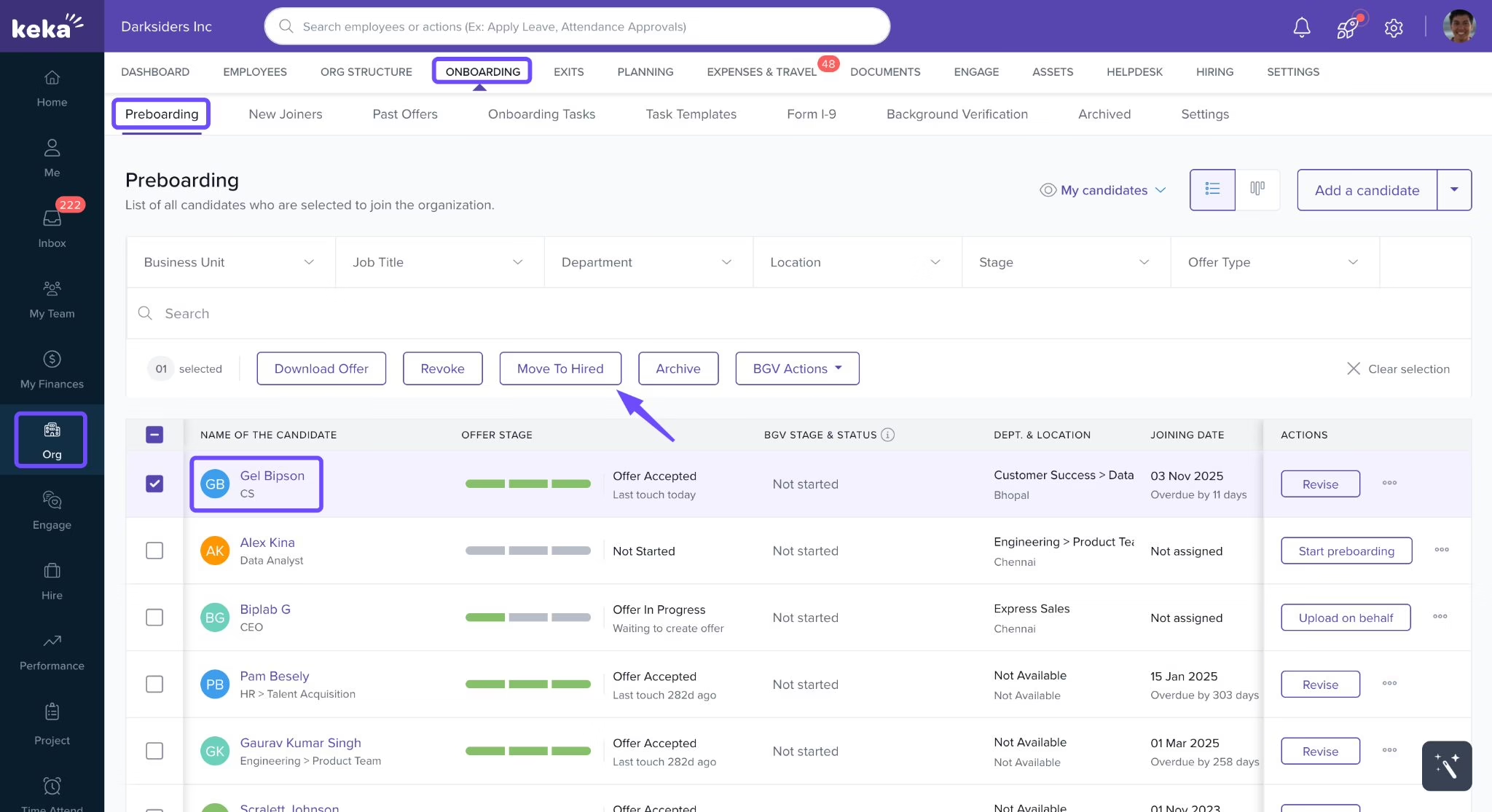
Keka supports hiring at large, multi-location organizations, with SOC 2 Type II and ISO 27001 certification, role-based access, SSO and data privacy controls aligned with data protection regulations. Keka offers native payroll in the US, India, the GCC and the Philippines, so new hires in those countries move straight into payroll.
Why it matters
Recruiting teams that run a separate ATS, onboarding tool and HRIS still re-key every new hire, even with integrations in place. With hiring, onboarding and payroll on one record, that step disappears, along with the errors it creates.
Key features of Keka Hire
- Requisitions linked to workforce plans and headcount approvals
- Weighted profile scoring that you set per role across five criteria
- AI-assisted job description drafting, skill-based interview questions and summaries of interviewer feedback, with recruiters making every decision
- Structured scorecards averaged by section, interviewer and round
- An agency portal with candidate lock-in, so the first recruiter to submit a candidate owns that submission for a set period
- One posting to job boards, your careers site and referrals, with resume parsing into searchable profiles
- Self-scheduling synced to interviewers’ Google or Outlook calendars
- Pre-employment assessments, Mercer Mettl and HackerEarth integrations, and DEI reporting
| Strengths | What to plan for |
|---|---|
| Offer, onboarding, core HR and payroll share one employee record | Keka Hire runs on its own, but the full value comes when onboarding and payroll run on Keka too |
| Every source feeds one candidate database that stays searchable for future roles | Replacing an existing ATS means planning how candidate records and workflows move across; Keka’s implementation team runs that migration |
| Interview stages, scorecards and approval chains are configured by HR, without IT | Map those stages before setup so automation can move candidates forward without manual follow-up |
Pricing: Custom quote.
Best for: CHROs, talent acquisition leaders and finance teams at organizations hiring across locations and business units who want hiring connected to HR and payroll.
2. Greenhouse
Greenhouse builds hiring around structured interviews. Teams define the skills for a role, and each interviewer gets a kit and scorecard tied to those skills.
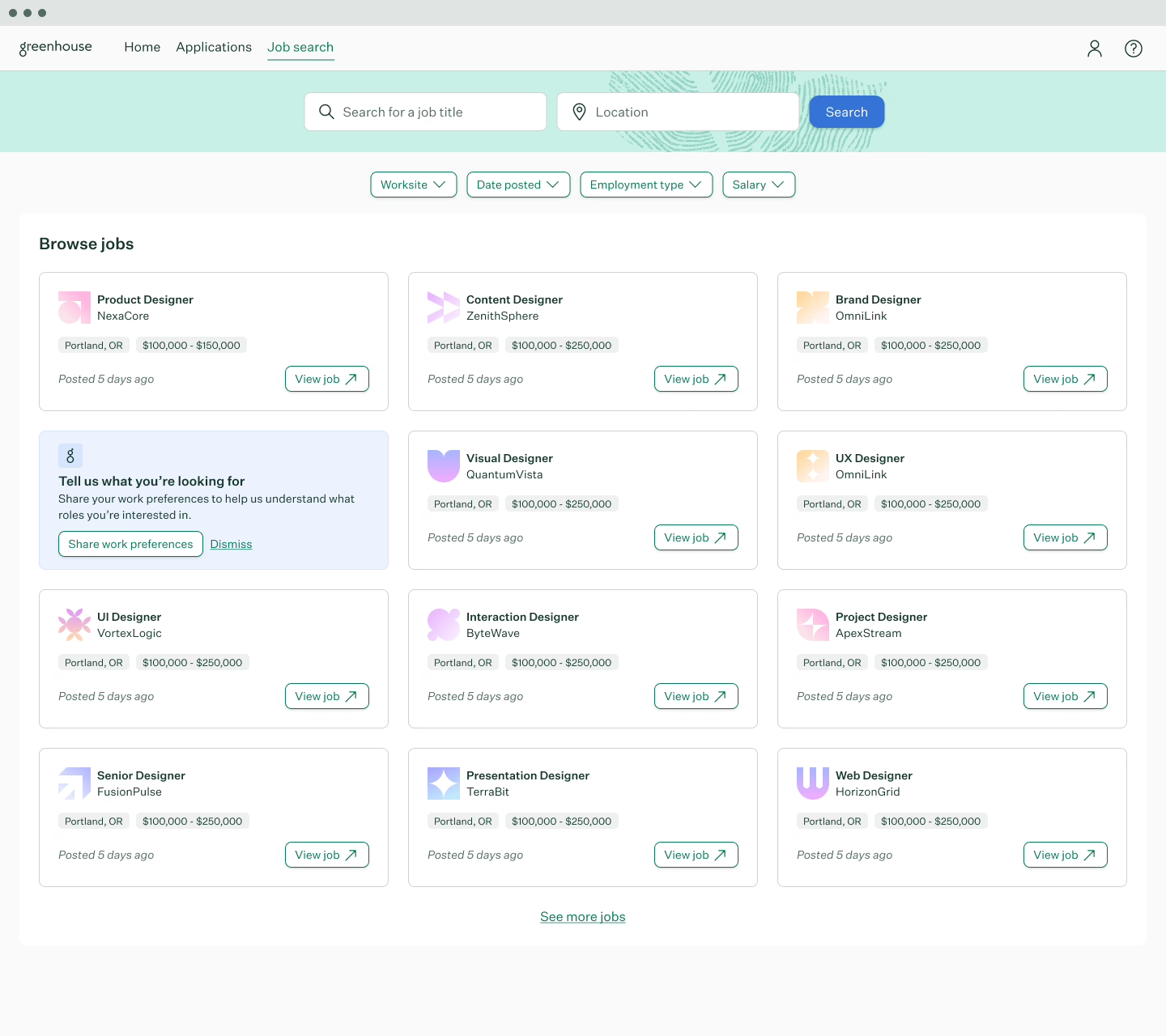
Its Real Talent add-on adds CLEAR identity verification and fraud screening.
Key features of Greenhouse
- Interview kits and four-point scorecards
- Real Talent add-on for identity checks and fraud flags
- Anonymized resume review
- Voice AI for early-stage interviews
- 500+ integrations, including Checkr, HireRight, HackerRank and DocuSign
- Custom pipeline reporting takes manual work, and bulk actions are limited for high-volume hiring
- Occasional hiring managers can find the interface heavy
- Recruiting stays separate from HR and payroll, so hires need an integration to reach payroll
Pricing: Custom quote on all plans.
Best for: Recruiting teams with dedicated coordinators who want structured, defensible interview decisions.
3. Lever
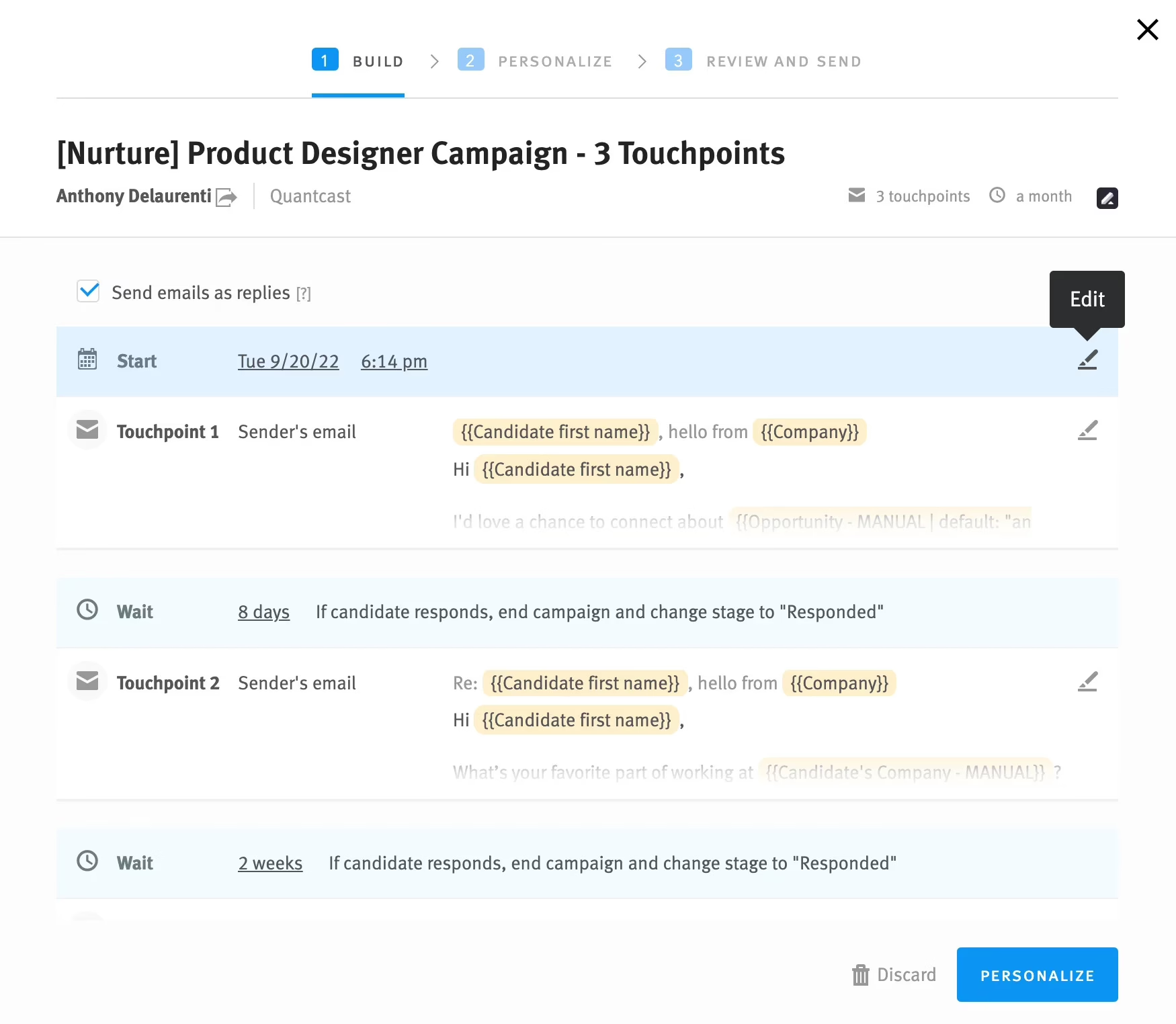
Lever, now part of Employ, keeps one profile per candidate across every role they have been considered for, which suits teams that nurture passive talent.
Key features of Lever
- Multi-step nurture email campaigns
- AI matching and drop-off risk alerts
- Identity, document and location checks
- EEO surveys for sourced, referred and agency candidates
- 300+ integrations and add-ons
- All jobs share one set of pipeline stages
- Reviewers report that support quality has declined as AI agents replace human support
Pricing: Custom quote only, no free trial.
Best for: Recruiting teams that source passive candidates as much as they process applicants.
4. Ashby
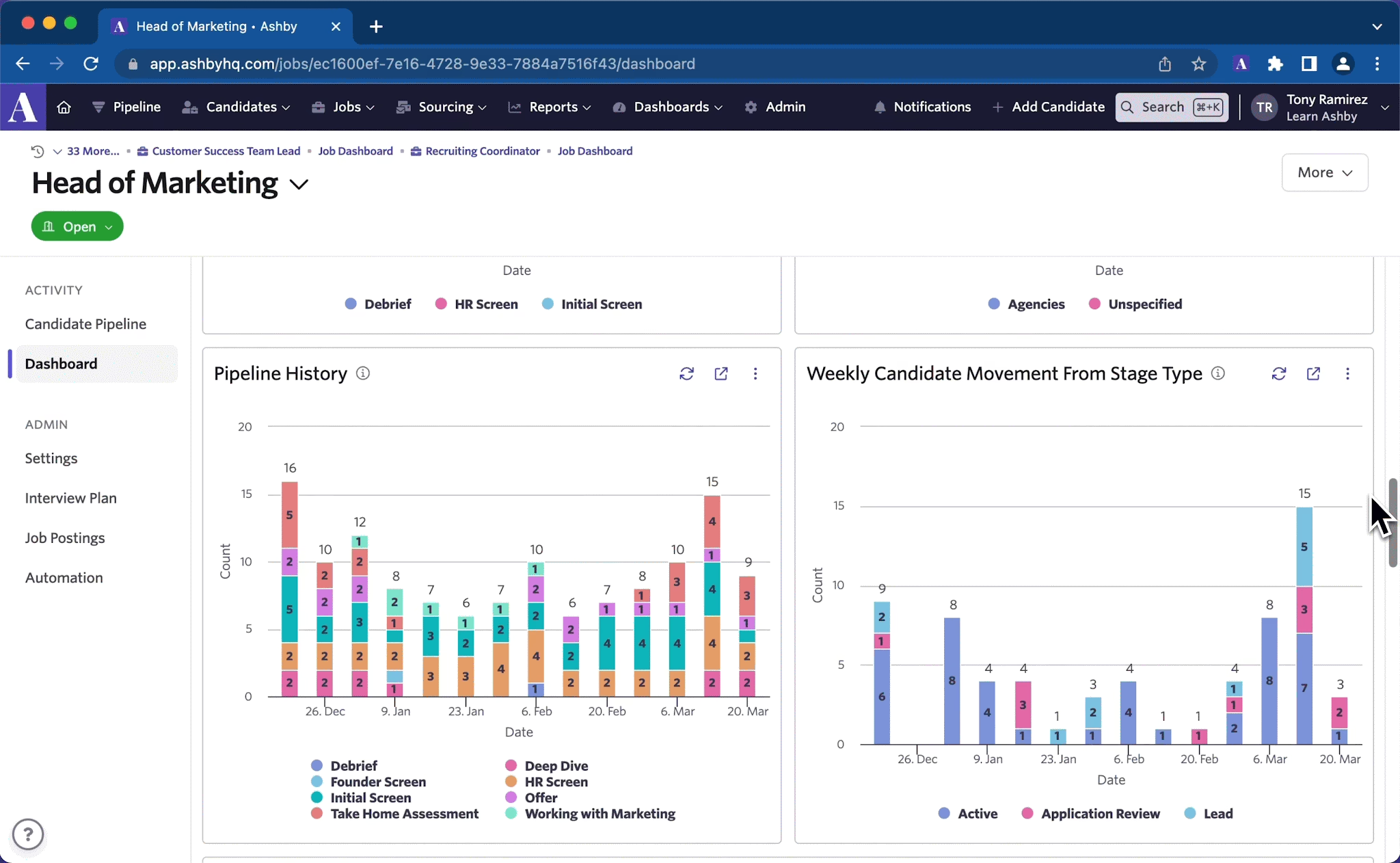
Ashby combines ATS, CRM, scheduling and analytics in one product, aimed at venture-backed teams that hire quickly.
Key features of Ashby
- AI application review with cited reasoning
- Controls over when interviewers see each other’s feedback
- Interviewer training and certification
- Automated rescheduling
- Candidate surveys, offer approvals and e-signatures
- Setup is technical and demanding
- Wider access means paying for more seats
Pricing:
- Foundations starts at $300/month
- $270/month billed annually, for up to 100 employees
- Plus and Enterprise are custom quotes
Best for: Startups that want recruiting analytics without a BI tool.
5. Workable
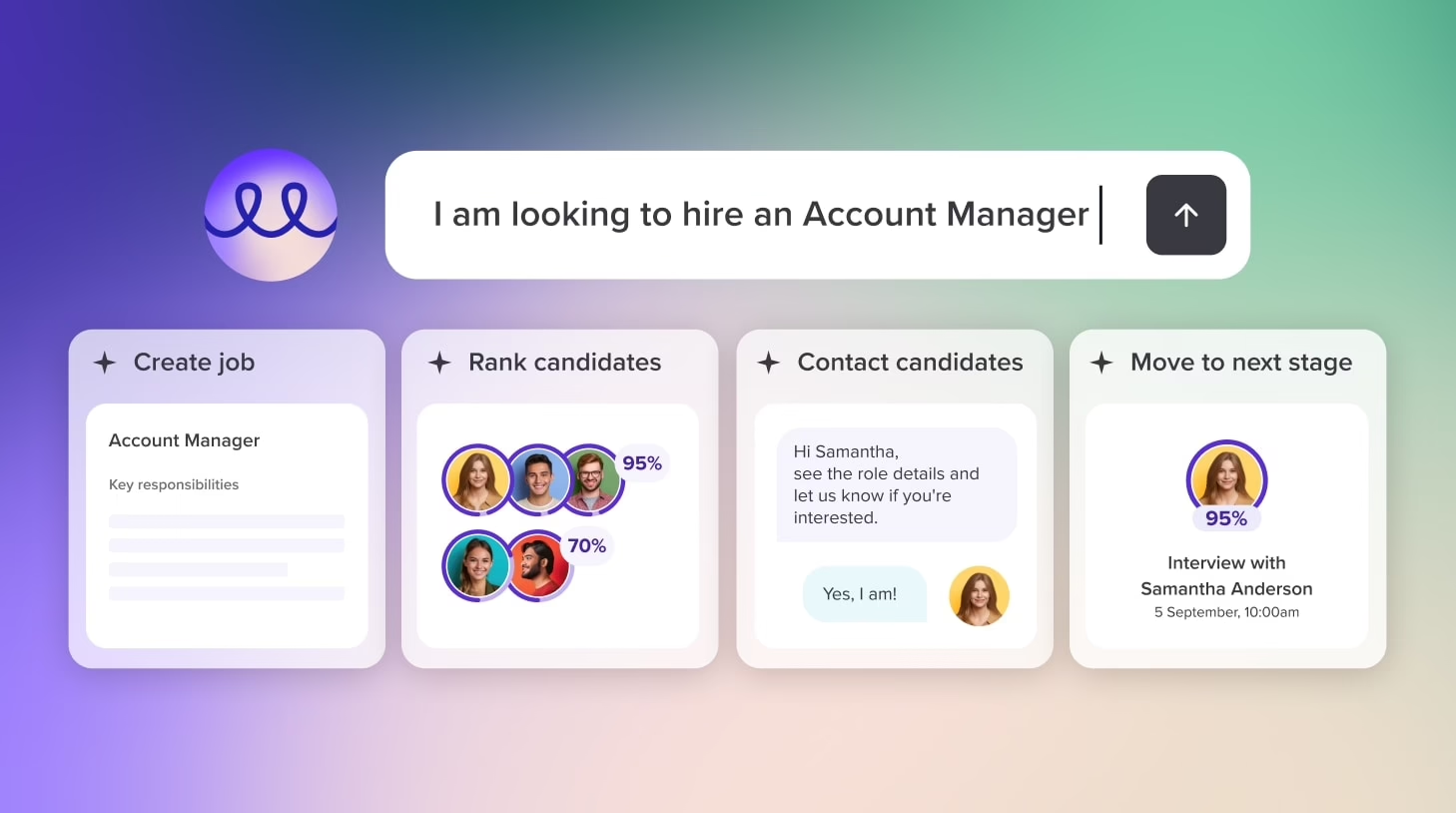
Workable started as a recruiting tool and now adds employee records, onboarding, time tracking and performance for lean HR teams.
Key features of Workable
- An AI agent that screens and sources candidates
- Anonymized screening
- Knock-out questions that can be reversed
- Search across a large passive candidate database
- One-way video interviews and job posts in nine languages
- Candidates cannot be contacted unless they are attached to an active job
- Duplicate candidates across jobs are not reliably caught
Pricing: For companies with 1 to 20 employees, Standard is $299/month and Premier is $599/month. Prices rise with company size.
Best for: Smaller companies that want AI sourcing and published pricing.
6. BambooHR
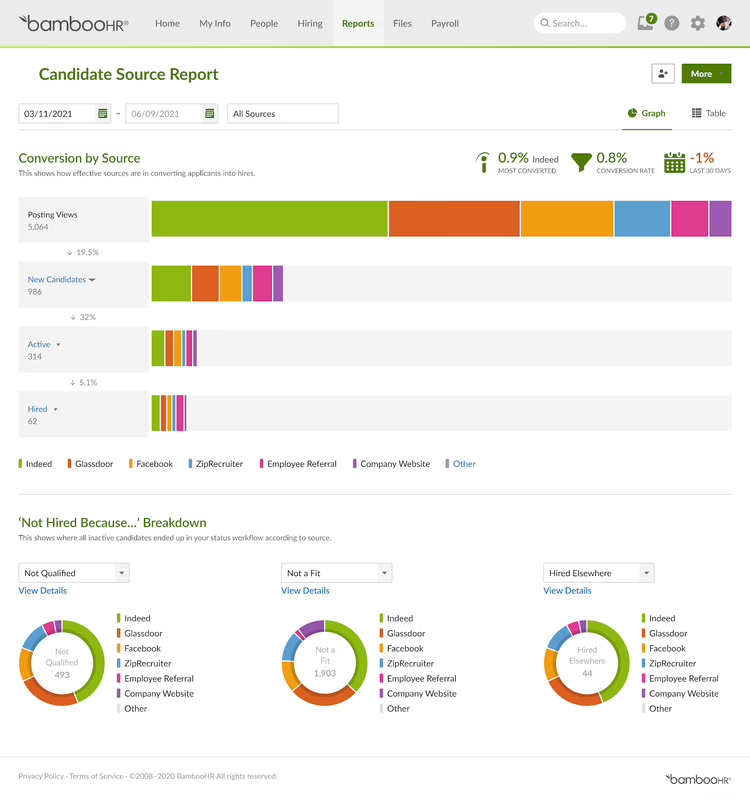
BambooHR is an HRIS with an applicant tracking system included in every plan. The plans differ mainly in how many jobs can be open at once: 5 on Core, 25 on Pro and 50 on Elite.
Key features of BambooHR
- Background checks inside BambooHR
- Candidate source and funnel reports
- Self-scheduling from preset slots
- Offer letters that carry candidate data into the employee record
- Posting to Indeed, ZipRecruiter and LinkedIn
- Caps on open jobs by plan
- Complex reports often need finishing outside BambooHR
- Screening questions allow yes or no answers only, and duplicate detection is weak
Pricing: About $10, $17 or $25 per employee per month for Core, Pro and Elite. Companies with 25 or fewer employees pay a flat $250, $425 or $650/month.
Best for: Small companies that want basic hiring inside an HRIS.
7. JazzHR
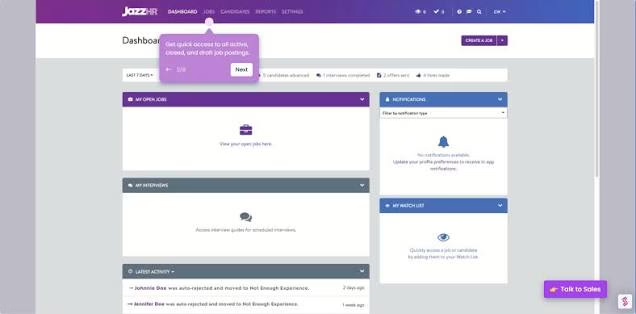
JazzHR is the small business option within Employ, the group behind Lever and Jobvite.
Key features of JazzHR
- EEO and OFCCP data collection and reporting
- Pay-per-applicant LinkedIn distribution through VONQ
- One-way new-hire push into ADP Workforce Now or TotalSource
- Free job boards, an embeddable careers page and a referral portal
- Reviewers report frequent outages and bugs
- Job details sometimes post incorrectly to boards such as Indeed and ZipRecruiter
Pricing: Hero $1,000/year, Plus $3,480/year and Pro $5,508/year, billed annually. Monthly billing is $110, $350 and $549.
Best for: Small businesses that hire steadily on a tight budget.
8. Zoho Recruit
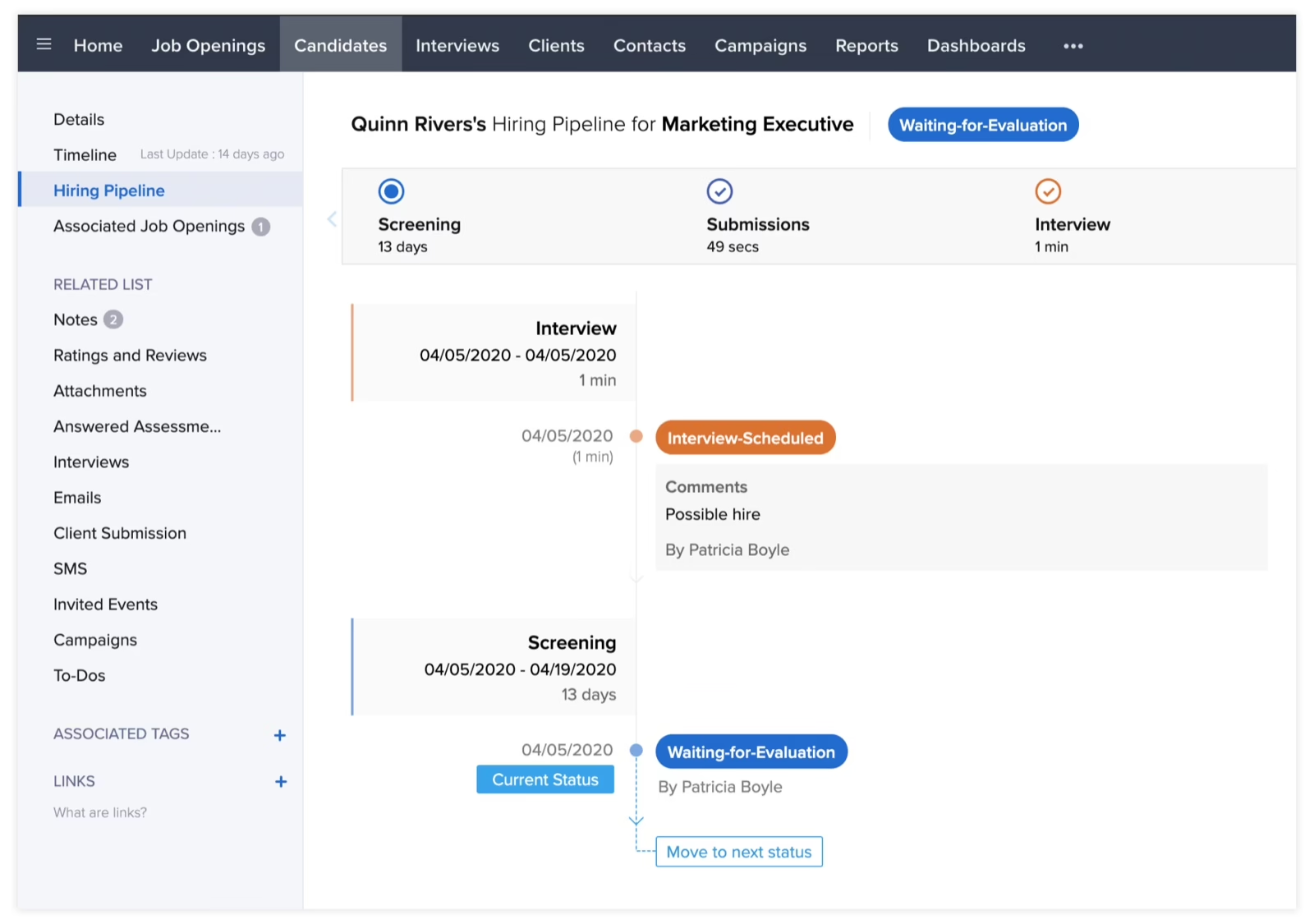
Zoho Recruit has separate editions for corporate HR teams and staffing agencies, and fits stacks already running Zoho One, Zoho People or Zoho CRM.
Key features of Zoho Recruit
- Zia job matching (on Enterprise for corporate HR)
- OFCCP search and applicant flow logs
- Calling and texting through Zoho PhoneBridge
- Matching that weighs skill depth and recency
- The interface gets busy when managing several roles
- Lower plans limit language features for multi-region teams
Pricing: Free plan with one active job per recruiter. Corporate HR Standard is $25/user/month and Enterprise is $50/user/month.
Best for: Teams already using Zoho.
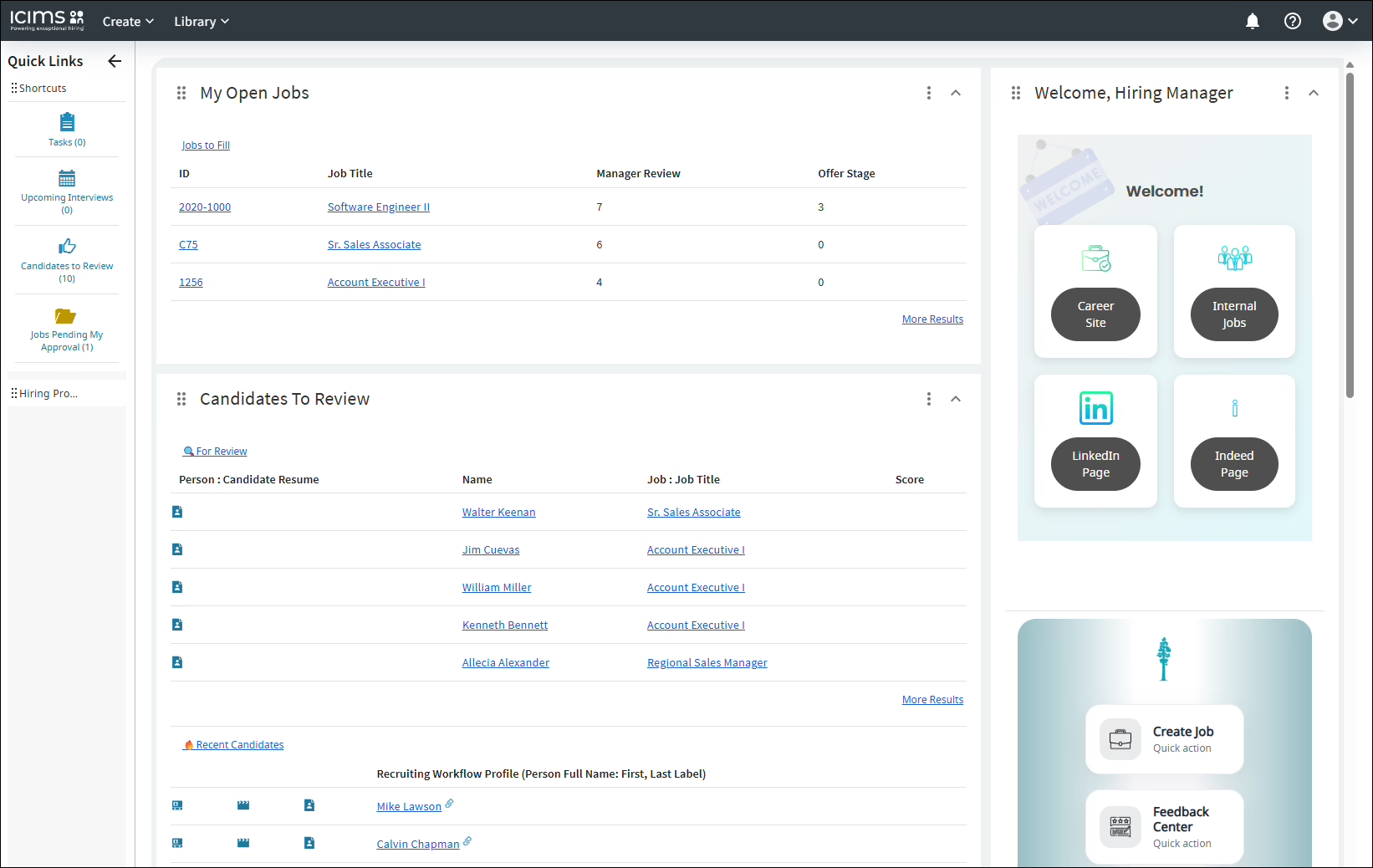
9. iCIMS
iCIMS is a talent acquisition suite designed to be configured heavily for very different hiring campaigns. Gartner named it a Leader in its May 2026 Magic Quadrant for Talent Acquisition (Recruiting) Suites.
Key features of iCIMS
- A career-site chatbot in 20 languages
- Rediscovery campaign templates
- Internal mobility signals
- Entry criteria for each candidate status
- Setting up marketplace assessment tools is a project of its own, and failures are hard to trace
- Duplicates are not checked, and reports export 50,000 records at a time
- Recruiting stays separate from HR and payroll
Pricing: Custom quote.
Best for: Very large employers running high-volume, multi-region recruiting with a dedicated TA operations team.
10. Manatal
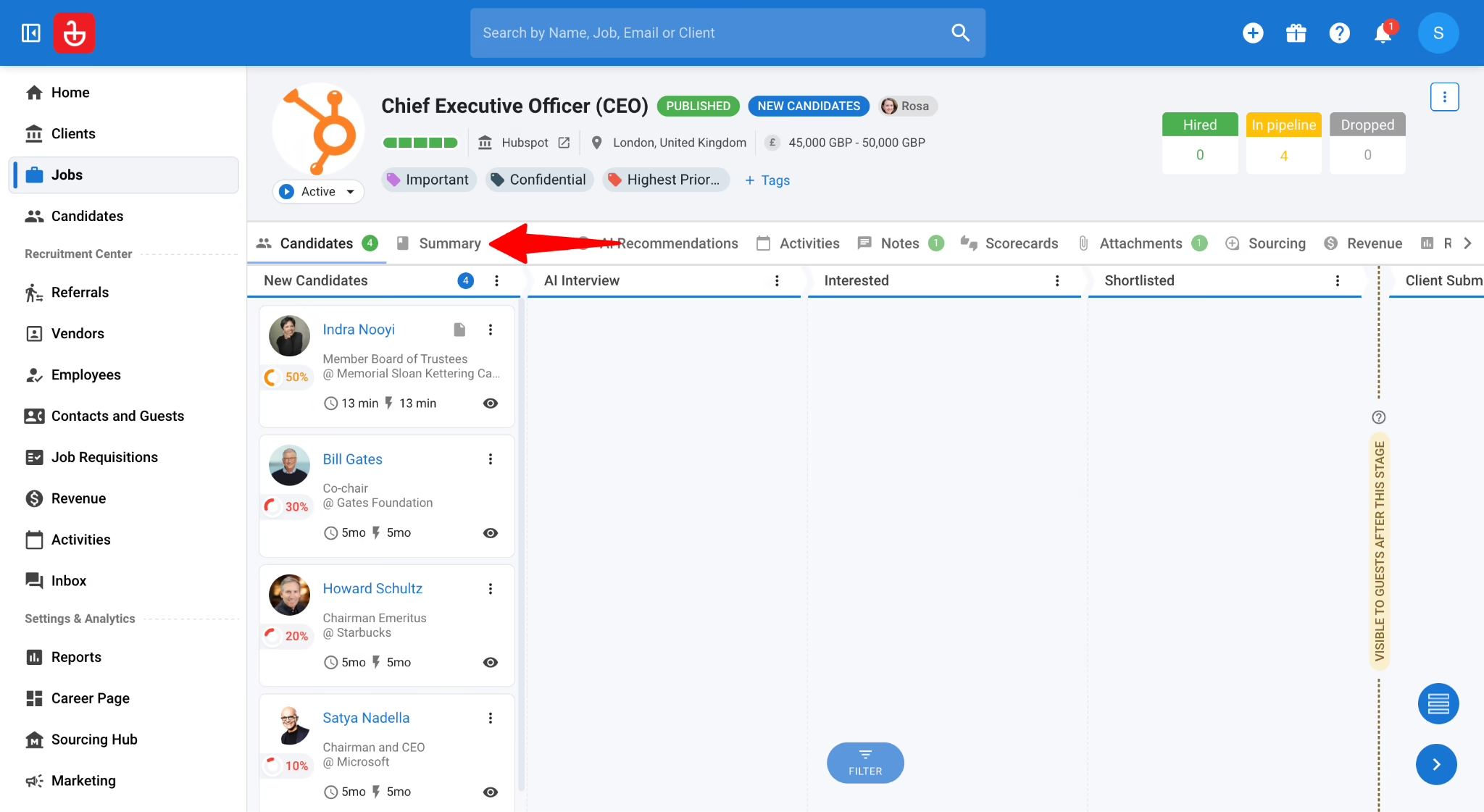
Manatal is an AI-led ATS and recruitment CRM for agencies and in-house teams, with an optional AI interviewer and an MCP connection to tools such as ChatGPT and Claude.
Key features of Manatal
- AI interviewer add-on for asynchronous video interviews
- A Chrome extension for sourcing from LinkedIn and GitHub
- MCP server and AI copilot
- Profile enrichment from public sources
- No recruiter performance reporting and limited Microsoft integration
- Applications cannot be filtered by custom criteria
Pricing: Professional $15, Enterprise $35 and Enterprise Plus $55 per user per month, billed annually.
Best for: Recruitment agencies that want AI matching at a low per-seat price.
How to choose an applicant tracking system for your organization
Work through five questions before you book a demo.
1. How many people will you hire this year?
Start with annual hires, applicant volume and the number of roles open at once in your busiest quarter. Some tools cap active jobs at 3, 5 or 20 on lower tiers, so 30 open roles can force a higher plan on day one.
| Hiring profile | What to look for | Tools to compare |
|---|---|---|
| Steady hiring at one location | Quick setup and low entry pricing | JazzHR, Zoho Recruit, BambooHR |
| Hiring across several locations or business units | Structured hiring, reporting, and a direct link to HRIS and payroll | Keka, Greenhouse, Workable |
| High-volume, multi-region hiring | SSO, audit trails, approval chains, custom workflows | Keka, iCIMS, Greenhouse |
2. What should it handle without extra cost?
A customer support role can draw 200 applications a week. Without automated screening for basics such as work authorization and shift availability, a recruiter spends days on resumes that were never a fit.
Watch the seat model too
Per-seat pricing quietly shrinks how many hiring managers get access. When reviewers have to share updates outside the ATS, the system stops being the record of the hire.
Check these basics before any demo:
- Resume parsing that reads PDF and Word files correctly
- Hiring workflows you configure per role
- Interview scheduling synced with Google or Outlook calendars
- AI screening that shows why a candidate scored the way they did
- A mobile app hiring managers actually use for reviews and feedback
- Offer letters with e-signatures
3. Will it support US hiring compliance?
US employers with 100 or more employees file an annual EEO-1 report, and federal contractors can be audited by the OFCCP. An audit asks who applied for each role, how they were screened and why they were rejected.
Choose a system that keeps voluntary demographic data separate from hiring decisions and produces applicant records on request. If you also hire in the EU or UK, check consent and data deletion controls.
4. Will it connect to the rest of your stack?
Your ATS should connect to:
- HR and payroll, so new hires are never typed in twice
- Background check and assessment providers
- Job boards such as LinkedIn, Indeed and Glassdoor
- Calendar, email and video interview tools
With Keka, the HR and payroll hand-off does not exist: hiring, HR and payroll share one employee record.
5. How hard is the switch, and how long until go-live?
Moving off spreadsheets is simple. Moving off an ATS with 40,000 candidate records and three years of reports is not, so confirm before you sign which data comes across and which reports you lose.
Typical setup times from G2 reviewers:
| About two months | Greenhouse, Lever |
| About three months | iCIMS |
Ask every vendor:
- What format does candidate data export in, and what imports cleanly?
- Will past hiring reports carry over?
- Who sets up integrations and trains recruiters and hiring managers?
- Is implementation included or billed separately?
Choosing the best ATS in 2026
The right ATS depends on hiring volume, the systems around it and the compliance obligations you carry. A staffing agency and a 5,000-person employer hiring across states need different tools.
If hiring, HR and payroll sit in separate systems today, adding one more standalone tool adds one more hand-off. Keka keeps requisitions, offers, onboarding, HR and payroll on one employee record, so every new hire starts work and gets paid without re-entry. Talk to an expert to see it with your hiring workflow.


