Login


All you need to know about Salary Structure in India



PRODUCTS
 Payroll Suite
 HR Suite
 Talent Suite
 Project Services Suite
Meet the platform tailored to your business
Core system of record
One platform for the entire employee journey
How Srijan Technologies streamlined timesheets management with Keka
Read customer story
BY INDUSTRY
BY COMPANY SIZE
LEARN
EXPLORE KEKA
Navigate every labor law, wage regulation, and statutory requirement across all 28 states and 8 union territories without the legal headaches.
Learn More
A CTC of 12 lakhs breaks into basic, HRA, special allowance, PF, gratuity, and bonuses in different ways. Understand how each component affects take-home, taxes, and benefits so you can read offers clearly, design competitive packages, and stay on the right side of payroll law. It's simpler once you see the pattern.
Salary structure is the systematic breakdown of an employee’s total compensation into its individual components: basic salary, allowances, statutory deductions, and retirement contributions. Understanding it matters for employers designing compliant, competitive packages and for employees trying to read an offer letter or payslip correctly.
Three terms get used almost interchangeably but mean different things:
CTC (Cost to Company): the total amount a company spends on an employee, including salary, benefits, and employer contributions. CTC = Gross Salary + Gratuity + Employer’s PF contribution.
Gross Salary: everything paid before deductions. Gross Salary = Basic Salary + HRA + Other Allowances.
Net (take-home) Salary: what actually lands in the employee’s bank account after deductions. Net Salary = Gross Salary minus Professional Tax, Employee PF contribution, and Income Tax (TDS).
Since 21 November 2025, India’s four New Labour Codes have been in force, and they set a binding floor: basic pay plus Dearness Allowance must equal at least 50% of an employee’s total wages. This is a current legal requirement, not a proposed change, and it directly affects how salary structures can be designed, along with the PF, gratuity, and other calculations tied to the “wages” definition throughout this guide.
Basic salary is the fixed, core component of pay before allowances or benefits, and it’s the base on which PF, gratuity, and several other statutory calculations are computed. Under the New Labour Codes’ wage definition, Basic plus Dearness Allowance must now make up at least 50% of an employee’s total remuneration, up from the roughly 30-40% many companies used before the Codes came into force. A lower basic component, once a common way to reduce PF and gratuity outgo, is no longer compliant.
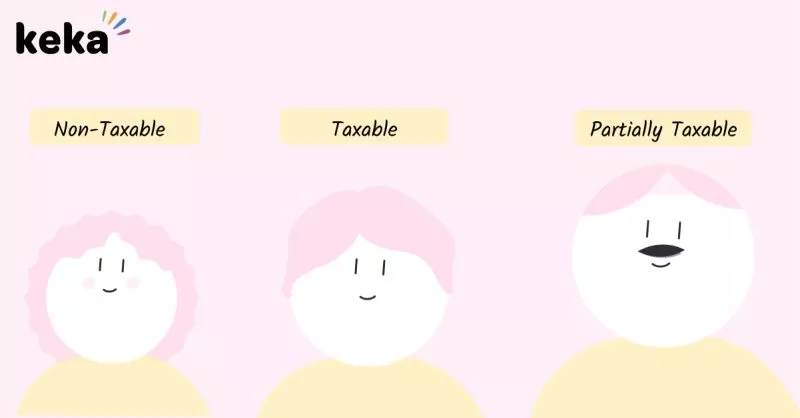
Allowances are monetary benefits paid over and above basic salary, and Indian tax law splits them into three broad categories:
Fully taxable: added entirely to taxable income (special allowance is the most common example)
Partially taxable: exempt up to a specified limit, with the balance taxed (HRA and LTA fall here)
Fully exempt: not taxed at all, within limits set by the Income Tax Act (certain reimbursements and specific allowances)
The next section covers the allowances that make up most salary structures in detail.
HRA compensates employees for rental housing costs and is typically structured as 40-50% of basic salary. The tax exemption under Section 10(13A) of the Income Tax Act is the lowest of three amounts: the actual HRA received, rent paid minus 10% of salary, or 50% of salary for metro residents (40% for non-metro), where “salary” here means Basic plus DA.
DA is a percentage of basic salary meant to offset inflation. It’s near-universal in government and public-sector pay, linked to the Consumer Price Index and revised periodically, and far less common in private-sector structures, where its role is often folded into basic salary or special allowance instead.
LTA reimburses domestic travel costs incurred while an employee is on leave, covering air, rail, or public transport fares. It’s exempt from tax under Section 10(5) of the Income Tax Act, but only for two journeys within a government-notified block of four calendar years, so unused exemptions don’t carry forward indefinitely.
This covers an employee’s commuting costs between home and workplace. Employers set the amount as a fixed sum or a percentage of basic salary, and it’s typically a smaller component than HRA or special allowance.
Special allowance is the balancing figure: whatever remains after basic salary, DA, HRA, and other named allowances are subtracted from gross salary. It’s fully taxable, which is why employers with a low basic component, now constrained by the 50% wage floor, historically used a large special allowance to keep gross pay flexible.
Across most private-sector structures, HRA typically runs 20-25% of basic, conveyance a smaller fixed amount, and special allowance absorbs whatever share is left after basic, statutory contributions, and other allowances are accounted for.
Both employer and employee contribute 12% of wages, meaning Basic plus DA plus any retaining allowance, toward EPF, up to a statutory wage ceiling of ₹15,000 per month, though many employers contribute on the full basic salary voluntarily. It applies to organizations with 20 or more employees, and is compulsory for employees at or below the wage ceiling.
ESI applies where gross salary is at or below ₹21,000 a month, in organizations with 10 or more employees (20 in some states, including Maharashtra and Chandigarh). The employee contributes 0.75% of wages and the employer 3.25%, for a combined 4%.
State governments levy professional tax on salaried employees and professionals, with rates and slabs varying by state. Under Article 276(2) of the Constitution, no state can charge more than ₹2,500 per person per year, regardless of how its slabs are structured.
Employers deduct TDS on salary under Section 192 of the Income Tax Act based on an employee’s projected annual income and the tax regime they choose, spreading the deduction across the financial year rather than taking it as a lump sum. Employers must issue Form 16 confirming the tax deducted and deposited, typically by 15 June following the end of the financial year.
Employers are responsible for depositing PF and ESI contributions, filing periodic returns for each, and remitting TDS to the government within the prescribed due dates. Missing these deadlines attracts interest and penalties on top of the outstanding amount.
This example assumes a metro location and Basic pay set exactly at the New Labour Codes’ 50% wage floor, which is now the legal minimum rather than a design choice.
| Component | Monthly (₹) | Annual (₹) | % of CTC |
| Basic Salary | 50,000 | 6,00,000 | 50.0% |
| HRA (metro, 50% of basic) | 25,000 | 3,00,000 | 25.0% |
| Special Allowance (balancing) | 16,596 | 1,99,154 | 16.6% |
| Employer PF (12% of basic) | 6,000 | 72,000 | 6.0% |
| Gratuity accrual (basic × 15/26, per year) | 2,404 | 28,846 | 2.4% |
| CTC total | 1,00,000 | 12,00,000 | 100% |
Gross Salary (Basic + HRA + Special Allowance) works out to roughly ₹91,596 a month. To reach net salary, subtract:
| Deduction | Amount |
| Employee PF (12% of basic) | ₹6,000/month |
| Professional tax | ₹200-2,500/year, depending on the state |
| TDS | Varies by tax regime chosen and investments declared |
Before the New Labour Codes, many employers set Basic closer to 30-40% of CTC and pushed more of the package into a fully taxable special allowance, which lowered employer PF and gratuity cost but also reduced the retirement benefits an employee accumulated. The 50% floor now pushes more of every structure into Basic-linked, retirement-building components regardless of how an employer would otherwise prefer to design it.
Gratuity is paid to eligible employees when they leave the organization, provided they’ve completed at least five years of continuous service under the Payment of Gratuity Act, though it’s provisioned and deducted from CTC every year rather than only at exit. Since 21 November 2025, gratuity is calculated under the New Labour Codes’ wage definition as (Basic + DA) × 15 × years of service ÷ 26, using Basic plus DA rather than basic salary alone.
A bonus and an incentive aren’t quite the same thing. Statutory bonus, mandated for eligible employees under the Payment of Bonus Act, ranges from a minimum of 8.33% to a maximum of 20% of wages (Basic plus DA) for employees earning up to ₹21,000 a month. A performance bonus, by contrast, is discretionary, tied to individual or company performance targets rather than a statutory floor, and isn’t guaranteed regardless of tenure or eligibility.
Reimbursements cover actual official expenses, such as travel, client meals, or hotel stays, paid against submitted bills. Since they’re paid against real, documented expenses rather than as compensation, they aren’t taxable to the employee.
A payslip is the monthly document itemizing every salary component and deduction for that pay cycle. Form 16 is the annual certificate confirming the TDS deducted and deposited on an employee’s behalf; employers must issue it by 15 June following the end of the financial year in which the tax was deducted.
Ad hoc components and investment declarations round out the picture. Ad hoc items are one-off payroll adjustments made to correct a specific error, and investment declarations, filed at the start of each financial year, determine how much tax an employer withholds from each paycheck.
Employers weigh a few factors when designing a salary structure: industry norms and competitor packages, the employee’s seniority and role, and how much of the package should optimize for take-home pay versus retirement benefits like PF and gratuity.
Since the New Labour Codes’ 50% wage floor came into effect on 21 November 2025, employers have far less room to manipulate that trade-off than before. The two traditional approaches to structuring still apply, but within that constraint:
Top-down: define each component (Basic, DA, HRA, and so on) individually and add them up to reach gross salary.
Bottom-up: start from a target gross or CTC figure and divide it across components, for example, setting basic at 50% of gross and building allowances around it.
Whichever approach a company uses, Basic plus DA must now clear the 50% wage floor, which pushes up statutory PF and gratuity costs compared to the lower-basic structures common before the Codes took effect, but also puts more of an employee’s compensation into components that build retirement savings rather than disappearing into a fully taxable special allowance.
What are the main components of a salary structure in India?
A salary structure breaks down into Basic Salary, allowances (HRA, DA, LTA, conveyance, special allowance), statutory deductions (PF, ESI, professional tax, TDS), and retirement contributions (PF, gratuity). Basic salary anchors most calculations, allowances top it up, and deductions determine the gap between gross and take-home pay.
What is the new 50% wage rule under India’s Labour Codes?
Since 21 November 2025, India’s four New Labour Codes require Basic Salary plus Dearness Allowance to equal at least 50% of an employee’s total wages, up from the 30-40% many companies used earlier. This is a binding legal floor, not a design choice, and it directly affects PF and gratuity calculations.
Is basic salary 50% of gross salary or of CTC?
Neither term is used precisely in the law. The New Labour Codes define it against total “wages,” which functions closer to CTC than gross. Basic plus DA must equal at least 50% of this wage base. Gross salary, by contrast, is simply Basic plus HRA plus other allowances, a separate figure entirely.
How is net salary calculated from CTC?
Net salary is what actually reaches an employee’s bank account. Starting from CTC, subtract employer contributions like PF and gratuity to reach Gross Salary (Basic + HRA + Allowances). From Gross Salary, subtract Professional Tax, the employee’s own PF contribution, and TDS to arrive at Net Salary.
What are the components of CTC (Cost to Company)?
CTC represents the full amount an employer spends on an employee annually. It equals Gross Salary plus the employer’s Provident Fund contribution plus gratuity accrual. Unlike gross or net salary, CTC includes employer-side costs the employee never directly receives as cash, making it the broadest of the three figures.
How is HRA exemption calculated on salary in India?
Under Section 10(13A) of the Income Tax Act, HRA exemption is the lowest of three amounts: actual HRA received, rent paid minus 10% of salary, or 50% of salary for metro residents (40% for non-metro), where “salary” means Basic plus DA. Only the exempt portion escapes tax.
Subscribe to keep up with the latest strategic finance content.
Request a demo