


 Login


Frictional Unemployment
Read Time: 6 Mins


PRODUCTS
 Payroll Suite
 HR Suite
 Talent Suite
 Project Services Suite

Meet the platform tailored to your business
Core system of record
One platform for the entire employee journey

BY INDUSTRY
BY COMPANY SIZE
LEARN
EXPLORE KEKA
Frictional unemployment is the period of temporary joblessness during career transitions or market entry. Also known as search unemployment, it occurs when individuals seek better roles and employers take time to hire the right fit.
Given it is deliberate, workers voluntarily choose short-term unemployment over unsuitable roles.
Frictional unemployment is inevitable since it’s generally categorized as ‘voluntary unemployment’—workers choose to remain unemployed rather than pursue any job that comes along.
It’s always there, but how much of it exists depends on how fast job seekers move through the labor market.
There are several causes of frictional unemployment, such as:
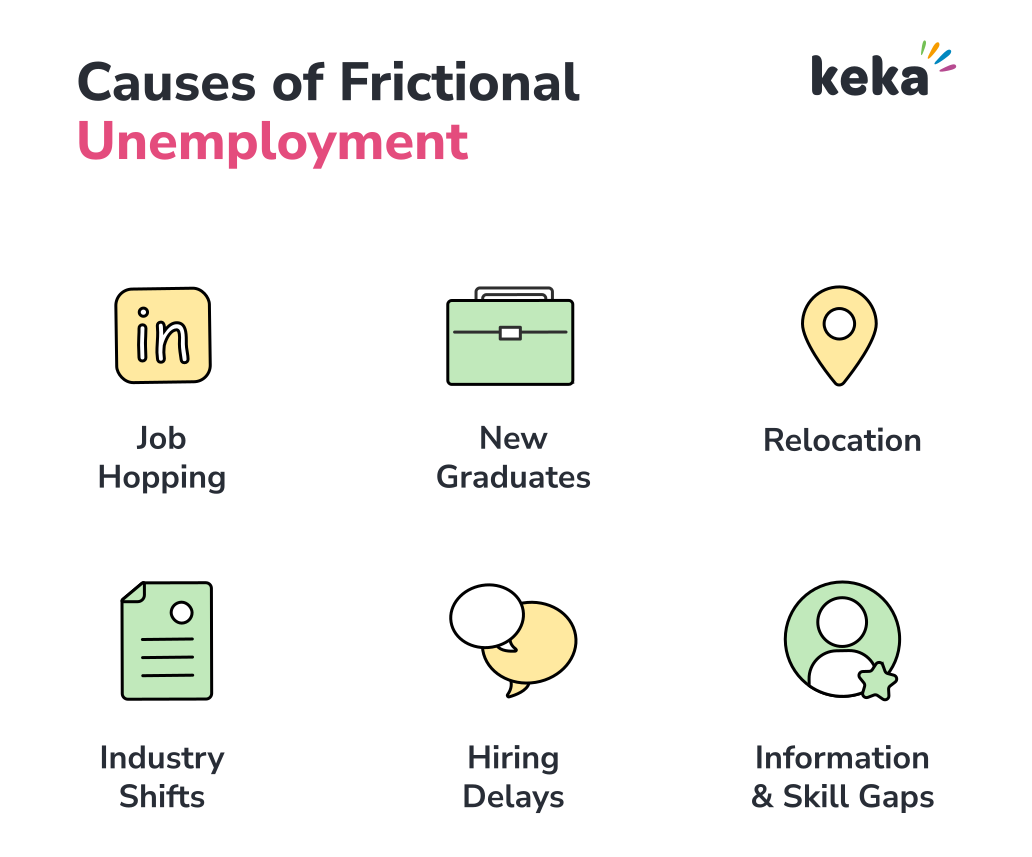
While advanced recruitment software and assessment tools can help reduce the gap to an extent, frictional unemployment is dynamic and inevitable.
The following are the positive effects of frictional unemployment:
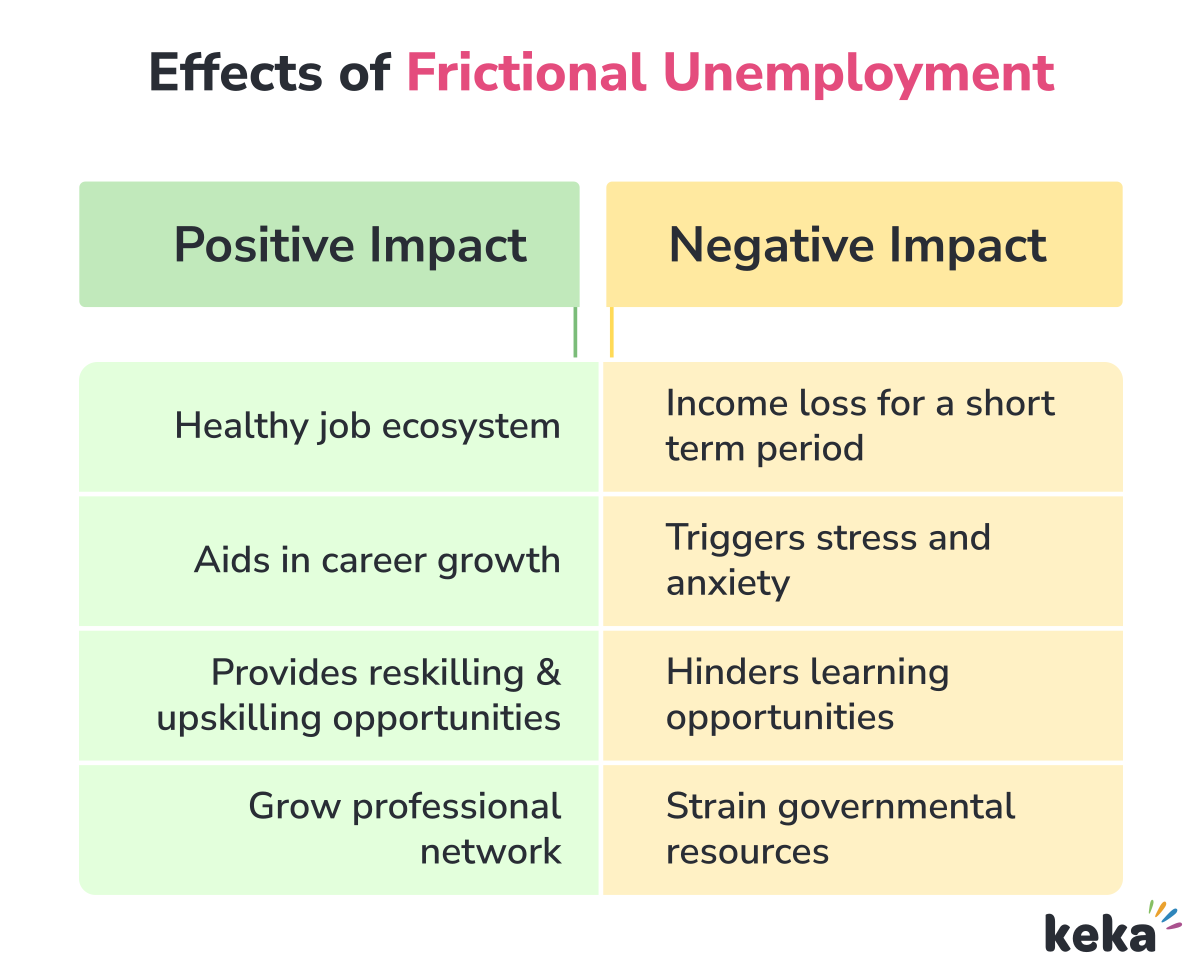
On the flip side, frictional unemployment has several drawbacks, such as:
Frictional unemployment is a key indicator of a healthy economy and a free-moving labor force.
While it suggests that individuals are voluntarily seeking better positions, it creates short-term inefficiencies and a misleading perception of labor market stability.
Yes, frictional unemployment exists in the long run.
It’s a natural part of a healthy job market as people switch roles, enter the workforce, or relocate. Even when the economy is at full capacity, this type of unemployment doesn’t disappear.
Regardless of the changes in inflation, frictional unemployment remains constant.
Following are 10 common examples of frictional unemployment:
An increase in GDP can create more job opportunities, helping individuals find job opportunities faster and thereby reducing frictional unemployment. However, as businesses continue expanding, they tend to create more employment opportunities, which narrows the job search window.
Other factors, like AI adoption and online job platforms like LinkedIn, Indeed, etc., also play a significant role, creating a direct impact on the economy.
Ironically, short-term unemployment benefits do not lower frictional unemployment, although they may affect structural or cyclical unemployment.
Well, frictional unemployment exists regardless of wage policies. When searching, workers have a reservation wage (the lowest pay they’re willing to accept).
However, this can change over time based on factors like financial pressure, job market awareness, and the offers they receive. The easier it is to access job information, the faster workers will find suitable jobs, reducing frictional unemployment.
Although frictional unemployment is inevitable in a dynamic job market, it can be minimized through better job-matching systems, streamlined hiring processes, and improved workplace conditions.
Here are some key strategies that can be used to decrease frictional unemployment rates:
Here are three steps to calculate frictional unemployment:
1. Access the Bureau of Labor Statistics’ (BLS) Employment Situation Summary Table A, which reports monthly employment figures.
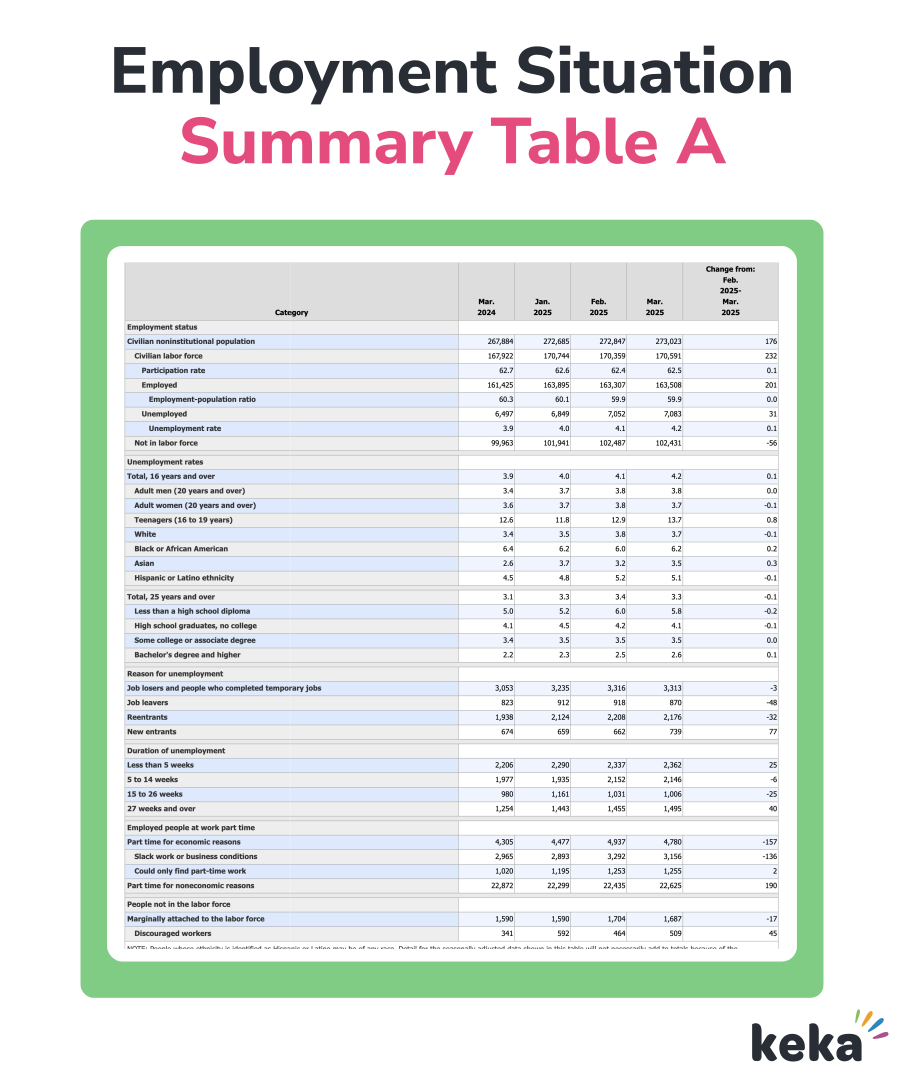
(Source: Employment Situation Summary Table A. as of March 07, 2025)
2. Sum the number of Job Leavers, Reentrants, and New Entrants from the report.
3. Multiply this total by 100. Divide by the total number of Unemployed Persons (not the unemployment rate).
4. The result is the percentage of unemployed individuals experiencing frictional unemployment.
When it comes to frictional vs structural unemployment, structural unemployment occurs when job seekers’ skills do not match employers’ requirements, often due to technological advancements or industry shifts. Unlike frictional unemployment, structural unemployment can lead to long-term joblessness as workers struggle to adapt.
When industries evolve, outdated skills become obsolete, creating a mismatch between available jobs and workforce capabilities. Without proper retraining, affected individuals face prolonged unemployment. Structural unemployment is not tied to economic cycles but rather to fundamental shifts in the labor market, such as automation or declining industries, making it harder for displaced workers to find suitable employment.
Subscribe to keep up with the latest strategic finance content.
Request a demo


