Login
Login

Women in leadership: A priority no business can afford to ignore



PRODUCTS
 Payroll Suite
 HR Suite
 Talent Suite
 Project Services Suite
Meet the platform tailored to your business
Core system of record
One platform for the entire employee journey

BY INDUSTRY
BY COMPANY SIZE
LEARN
EXPLORE KEKA
Women are still far too few in jobs and the reasons lie in daily routines unfair hiring, a weak middle layer and little chance to get sponsorship not because women lack ambition or skill. Fixing this gap means looking at hiring, promotion, succession planning and DEI plans in HR and for the bosses. This guide explains what stops women what truly brings change and gives tips, for women who want to lead.
Americans say it’s more likely that humans will colonize Mars and make space travel for tourism a reality before we see half of women as CEOs in Fortune 500 companies.
In 2016, only 21 women held the position of CEO within Fortune 500 companies. This grew to 52 by 2023.
In sectors such as consumer goods, industrials, and technology – industries that drive significant economic growth and innovation – women occupy less than a quarter of C-suite roles. Even more telling is the fact that only 34% of companies are actively prioritizing the advancement of women into leadership positions.
These barriers are cultural and often unconscious, making them more challenging to break.
Women have historically been underrepresented, underpaid, and undervalued in the workplace – leading to a slow and arduous journey toward leadership positions.
Yet, despite these challenges, the progress women have made is nothing short of miraculous. In 2019, women made up over half of the US workforce. The fact that these strides, though significant, still result in such small numbers at the top reveals the magnitude of the work that remains to be done. It’s not about simply getting women into the workplace – it’s about breaking the glass ceilings that remain.
The progress we’ve made is commendable, but it’s not enough. The future of business leadership must be inclusive, representative, and equitable. For that to happen, companies need to take bold, decisive actions to ensure that the women who are already making strides in the workforce can rise to the top where they belong.
Imagine a barrier that you can see through but cannot break past – a barrier that’s almost invisible and prevents you from reaching your goals. This is the essence of “glass ceiling,” a term that captures the invisible barriers obstructing women’s progress to top leadership roles. Unlike blatant discrimination, the glass ceiling is more subtle. It’s not always immediately visible or openly acknowledged; instead, it’s a subtle form of bias and inequality that operates behind the scenes, making it difficult for those affected to pinpoint or confront.
For women, the glass ceiling manifests in numerous ways, from being passed over for promotions to being excluded from key decision-making processes. These barriers create an unfortunate situation where women, no matter how talented or qualified, find their career progression stalled at mid-level management or lower, while the top roles remain largely out of reach.
It’s a barrier that, though invisible, is very much real, and it’s one that we must actively work to dismantle if we are to see true equality in leadership.
This phenomenon is a result of gender roles and societal norms. In American culture specifically, women are expected to be polite and accommodating, which often nudges them to find a career in caretaking roles. Also, people tend to prefer one gender over another, negatively affecting women more than men. Such biases can be unintentional and automatic, stemming from traditions, norms, cultures, or experiences.
There are also some other major barriers that strongly obstruct women:
Even at the earliest stages of their careers, women face discrimination. Imagine two candidates with identical qualifications, experience, and potential. Yet, one is overlooked simply because of her gender. To counteract this, organizations must take steps to train hiring managers. Only then can we begin to level the playing field and ensure that talent, not gender, determines who gets the job.
Starting at the manager level, the number of women available for promotion diminishes, creating a “hollow middle” in the corporate hierarchy. Even if hiring and promotion rates improve at senior levels, the lack of women in mid-level management makes it difficult to build a pipeline of future female leaders. Companies must address the early gaps in hiring and promotion to ensure women are represented at all levels.
One of the most frustrating experiences women face is being dismissed in meetings or decision-making processes. It’s a common scenario: a woman shares an idea, only to have it overlooked until a male colleague repeats it, suddenly receiving validation. Coupled with microaggressions and subtle discrimination, this environment wears down confidence and deter women from pursuing leadership roles.
Taking on high-profile projects showcases leadership potential. However, women are frequently given roles that do not offer the same level of exposure as those given to their male counterparts. Furthermore, women are excluded from networking, such as after-hour gatherings, where important connections and decisions are made, which is not ideal.
If after-hour gatherings are not feasible for women, their absence should be respected. Important decisions made during these times must be revisited with all stakeholders, ensuring that those who cannot attend after-hour gatherings feel their voices are included. Avoid making any critical decisions outside of regular work hours when women, or others, may be unable to participate.
Lastly, many women find themselves without mentors to guide them or sponsors to advocate for their advancement. This absence of support further contributes to the “hollow middle.”
Assumptions that women may be less committed or capable due to family responsibilities often lead to them being excluded for leadership roles. Additionally, when women display strong, direct communication styles – traits often celebrated in men – they are labeled as “bossy.”
Such discrepancies can make it challenging for women to embrace assertive behaviors that are often important for leadership.
One often overlooked aspect of advancing to leadership roles is the potential for women to uplift and support each other. Through collaboration and mutual encouragement, women can together drive greater representation in leadership.
Women may sometimes feel insecure or challenged in competitive environments, leading to unintended friction. However, when women support and celebrate each other’s successes, they can build a strong, united front. When we recognize that one woman’s success is a success for all, women can create culture of empowerment that benefits everyone.
It’s common for women to experience moments of self-doubt and question if they are “ready enough” or qualified for leadership opportunities. This hesitation can be a barrier, but it can be overcome. When women acknowledge and challenge self-limiting beliefs, they can seize opportunities with confidence. Organizations also play a role in creating environments where women feel supported and encouraged to assert their value and pursue leadership roles without hesitation.
To genuinely progress, organizations must not only acknowledge women’s leadership but also recognize the distinct values and skills they contribute. This acknowledgement is not about positioning women as superior to men or vice versa; rather, it’s about appreciating that each gender – and each individual – brings different strengths to the table.
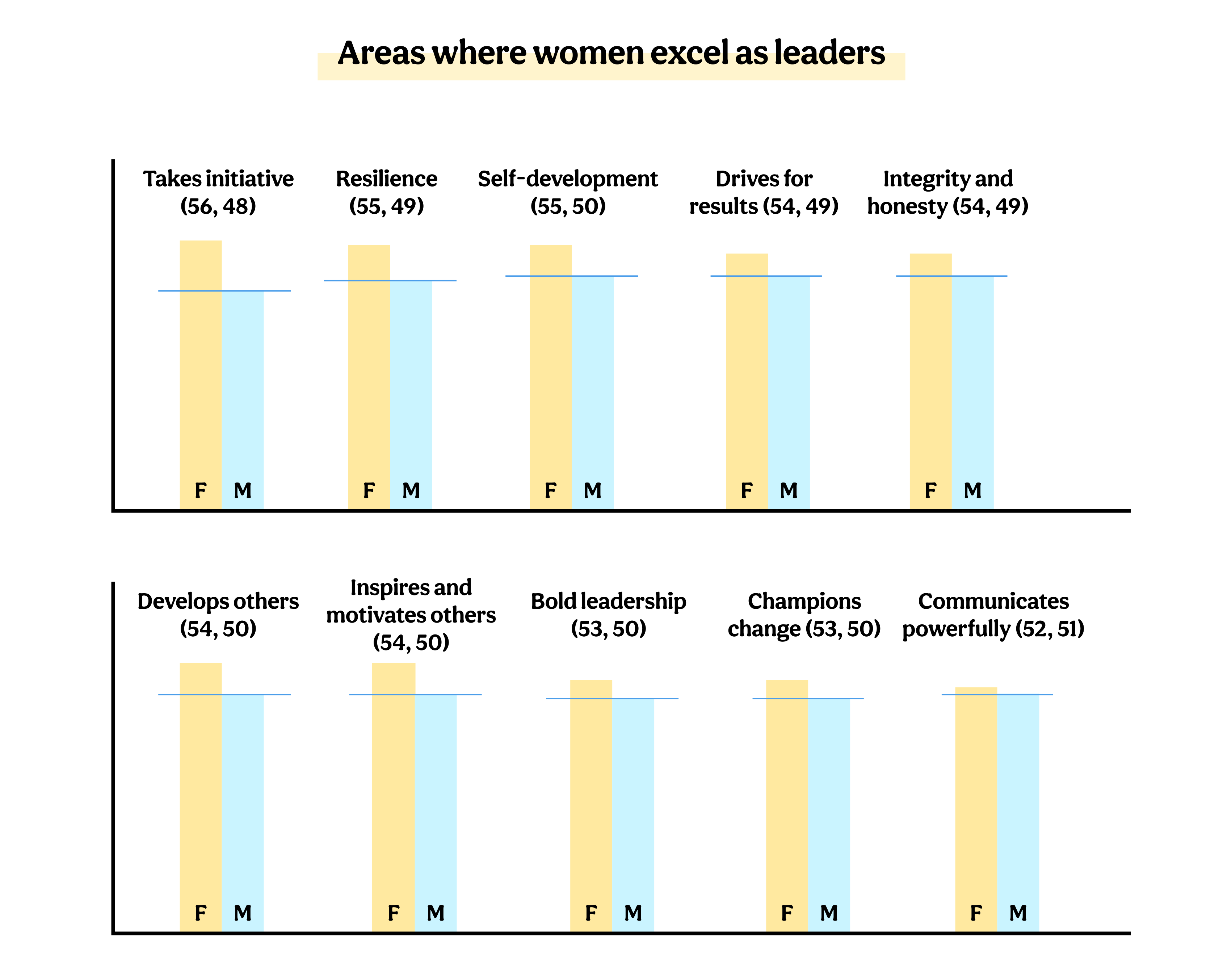
However, the reality is that many male leaders still feel uneasy about women in decision-making positions. They perceive the presence of women as a disruption. Moreover, despite women often having higher levels of education—60% of whom are college educated—they are paid 23% less than men.
To move beyond these challenges, organizations must not only recognize women’s contributions, but also take concrete action. Acknowledging the unique skills women bring is just the beginning. Leaders must work to break stereotypes and ensure that leadership positions are awarded based on merit and proven capabilities. As a result, organizations can create environments where all talent is valued and given the opportunity to succeed, regardless of gender. Only then can they truly benefit from the diverse perspectives and innovative solutions that women leaders offer.
While having women in top leadership roles brings significant benefits, it’s also crucial that these positions are filled based on merit rather than gender. Success and deserving candidates should be the focus, yet women often face barriers that make it challenging for them to access these opportunities.
Why focus on advancing women into leadership?
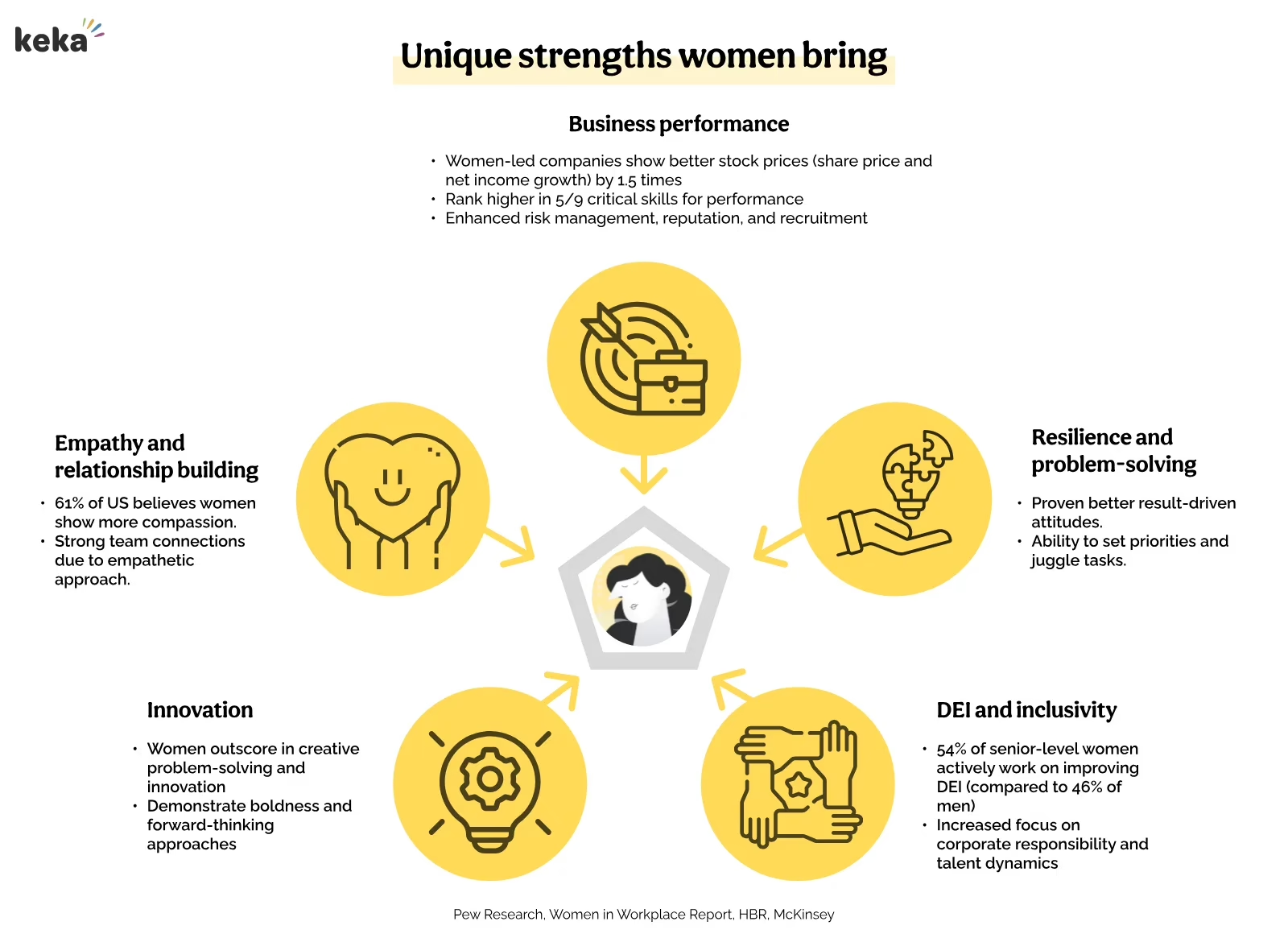
Women bring unique skills and perspectives that are often overlooked due to gender biases. When they are made into leaders, it strengthens the leadership team with diverse perspectives and skills. It’s about addressing the biases that held them back all these years and recognizing the value women often bring. Here are some targeted strategies for breaking key barriers and creating a clear path for advancing women to leadership roles:
The first step in advancing women to leadership roles is to address any gender-related discomfort and make sure that gender does not influence hiring or leadership decisions. Targeted training for hiring managers and colleagues should focus on aligning with long-term organizational goals, promoting fair practices and moving beyond personal biases.
Hiring managers need to be educated on recognizing and overcoming unconscious biases that may lead them to overlook qualified women candidates. This training should focus on ensuring fair evaluations and equitable consideration for employment.
Managers also need guidance on including women in all major initiatives and decision-making processes. Consider readjusting after-work gatherings and informal networking opportunities to be more inclusive, ensuring women have equal access to relationship-building events.
Develop a framework to assess the current state of women in the organization. Begin by analyzing the number of women at each level, including current positions, entry-level roles, middle management, and senior leadership. Understanding this distribution provides a baseline for evaluating progress. Next, evaluate the trajectory to their current positions from their initial roles. This should reveal whether women move up in the ranks at a similar pace as their male counterparts, or if they face any specific obstacles. This pipeline should be continuously monitored to track strategies and adjust.
Address any specific challenges women face compared to their male counterparts. This isn’t about giving women extra resources but about addressing the inherent inequalities that are stalling their process. Ensure that the action taken also rectifies systemic imbalances. If women are stuck in management positions for extended periods, take swift action to invest in their leadership development. Assign them to lead major projects, offer training, or bring in experts.
Consider developing a skill development model that women can opt into when they are ready to advance. This model should focus on building leadership skills through mentorship and training. Leadership training can be provided by women who have successfully faced similar challenges or by industry experts. Mentorship can come from experienced leaders or external professionals.
One question organizations must ask themselves is whether there are women in top leadership positions who can serve as role models for other women. If such role models are lacking, it signals that the organization lacks crucial opportunities for women’s advancement.
Consider implementing a sponsorship strategy. This goes beyond mentorship and involves other senior leaders, men, and women who can act as sponsors – advocating for women. Such sponsors can create opportunities and recommend them for promotions. Keep in mind that the sponsors should be prepared to advocate for women solely based on their skills and performance.
As you implement programs to support women’s advancement, you should also be prepared to address bias head-on. Despite training efforts, instances of discrimination may still arise. Implement regular assessments and feedback channels to identify areas where bias may still be present, impacting decisions and behaviors. Consider enforcing policies that target such bias. These should outline clear procedures for identifying, reporting, and addressing biased behavior. Place a strong emphasis on adherence and accountability. Lastly, establish a proper responsive system so that employees can speak up about discriminatory behavior or incidents. Maintain confidentiality, investigate complaints, and act where there’s unfairness and inequity.
Quotas fall short when you want to create genuine diversity and inclusion. While temporarily increases female representation, quotas can lead to tokenism, where women are placed in leadership roles not based on their merit, but to meet numerical targets. This approach risks undermining the women’s value and contributions, perpetuating stereotypes that women are only in positions of leadership due to enforced mandates.
Quotas also mask issues, like bias and inequality. Genuine representation demands a deep-rooted commitment to creating an environment where women are valued for their skills and leadership potential. Implement a framework that supports women through mentorship programs, leadership training, and career development opportunities. Embed these supportive practices into the organizational culture, creating a pipeline where women rise to leadership positions based on their proven skills and potential, not just as a response to quotas.
Women must become their own strongest advocates. Self-support lays the foundation for a successful career. This means prioritizing career ambitions, maintaining a healthy work-life balance, and knowing when to walk away. Speaking confidently is also important – your voice matters, and it should be heard in every room you enter.
Incorporating women into leadership roles is also a major step towards DEI goals. Supporting women enriches leadership teams with diverse perspectives and strengthens commitment to an inclusive workplace culture. Integrating these efforts into your DEI initiatives ensures that women are not only present but also actively contributing and excelling at the highest levels. True DEI success starts with eliminating biases right from the hiring process and ensuring that opportunities are awarded based on skills and potential.
Subscribe to keep up with the latest strategic finance content.
Request a demo