Login
Login

The difference between Vacation and Paid time off



PRODUCTS
 Payroll Suite
 HR Suite
 Talent Suite
 Project Services Suite
Meet the platform tailored to your business
Core system of record
One platform for the entire employee journey

BY INDUSTRY
BY COMPANY SIZE
LEARN
EXPLORE KEKA
Vacation and PTO are often used the way when people talk but they work differently when it comes to company rules. The decision between them affects how time off is added, how it is paid out and how easy it is for workers to take time away from work. It also involves how companies keep track of time off how much money is owed to employees and following rules from the state, for resources and finance teams. This guide explains what each word means how they are different the bad parts of each and how companies should decide which one to use.
Taking breaks from work isn’t just nice—it’s a necessity.
Taking breaks from work helps employees:
Recharge and rewind
Stay healthy and happy at work
Enjoy a quality work life balance
When everyone understands the different types of leave available, employees can make better choices about their time off, and employers can create fairer, more effective workplace policies.
However, Vacation and Paid Time Off (PTO) are often mistaken for the same when they’re two distinct leave options with some key differences.
In this article, we will discuss the vacation and PTO policies in detail to have a clear understanding.
So, shall we begin?
Vacation (n) – It is:A period spent away from home or business in travel or recreation.
A respite or a time of rest from usual responsibilities or obligations.
Well, vacation indeed is a break.

It’s time away from your usual responsibilities — that can be a relaxing trip to the beach, an adventure in a new city, or simply a staycation to recharge.
In a workplace context, vacation implies paid leave companies grant to their employees. Generally, when an employee applies for time off to visit somewhere, enjoy a break or attend any function, it is called vacation; however, under the company’s dedicated leave policy.
Vacation eligibility mostly depends on factors like employment type and tenure.
For instance, full-time employees may enjoy more generous leave compared to part-timers, while temporary staff might not qualify at all. Some companies offer prorated vacations, ensuring fairness across the board.

Paid Time Off (PTO) combines different types of leave—like vacation, sick days, and personal time—into one comprehensive package. This approach gives employees more freedom to use their time away from work.
This allows employees to use leaves in ways that support their well-being.
By offering PTO, companies promote a healthy work-life balance, reduce burnout, and improve employee satisfaction. The PTO structure is heavily based on factors like industry standards, company size, location, and employee tenure.
Many European countries provide more generous allocations compared to U.S. companies.
To understand this better, let’s scroll down in-depth to PTO Policy inclusions and more.
Paid Time Off (PTO) policies provide a clear framework for how employees can earn, request, and use their paid leave for personal needs like vacations, sick days, or family commitments.
These policies define accrual methods, carryover limits, and usage rules, letting employees make informed decisions about their time off while promoting fairness and consistency across the organization.
The following are the elements included in a PTO policy:
| Element | Details |
| Accrual Methods | Explains how employees earn PTO, whether through an annual allotment, hourly accrual, or tiered systems based on seniority. Defines timeframes like annually, per pay period, or continuously throughout the year. |
| Types of Time Off Covered | Breaks down all covered leave types, including vacation, sick leave, personal days, bereavement, and holidays. Clarifies whether these are separate or combined in one PTO pool. |
| Carryover Policy | States if unused PTO can roll over into the next year and any caps on the amount. Includes “use-it-or-lose-it” rules where applicable. |
| Notice Requirements | Outlines the required notice for planned leave, balancing employee flexibility with business needs. Emergency leave may allow retroactive reporting. |
| Approval Process | Describes how to request leave, from submitting forms through HR systems to manager approvals. Highlights expected timelines for decisions. |
| Blackout Periods | Identifies times when PTO may be restricted due to peak business demands, like holidays or seasonal rushes. Stresses clear communication to avoid misunderstandings. |
| Payment During Leave | Details how employees are paid during PTO, whether fully, partially, or unpaid, depending on the leave type. Covers any restrictions on how PTO can be used. |
| Leave Donation Programs | Covers programs that let employees donate unused PTO to colleagues facing hardships. Includes details on eligibility and how to participate. |
| Tracking and Monitoring | Explains how PTO accrual and usage are tracked, often through HR or payroll systems. Employees are usually updated through pay stubs or dedicated portals. |
| Compliance with Laws | Ensures the PTO policy meets local and federal labor laws, from minimum leave requirements to payout rules for unused time. Adapts to regional regulations as needed. |
With a well-structured PTO policy, you promote transparency, fairness, and work-life balance among employees.
Here’s a table outlining the differences between PTO and vacation:
| Aspect | Vacation | Paid Time Off (PTO) |
| Definition | Time off given specifically for leisure or rest. | An all-encompassing leave category covers various types of time off. |
| Usage | Reserved primarily for vacations or travel. | Often does not roll over; treated as a combined balance. |
| Rollover Policy | May roll over to the next year if unused (varies by policy). | Often does not roll over; treated as a combined balance. |
| Payout for Unused Days | Some companies pay for unused vacation days upon exit. | Generally, not paid out unless specified in the company’s policy. |
| Tracking Requirements | Separate balance and usage tracking. | Combined tracking system for various leave types. |
| Employee Flexibility | Restricted to vacation or recreational use. | Offers flexibility to use leave for diverse needs, including sick days. |
In a nutshell, leave is all about rest and recreation, which allows employees to manage time off in a way that works best for them. And for companies, it is the best way to encourage employee morale and well-being.
Now that you’ve learned about the differences, let’s look into the pros and cons of Vacation and PTO policy.
| Policy | Pros | Cons |
| Vacation | Clearly separates vacation and sick leave, making management easier. | Less flexibility as employees are restricted by specific vacation days. |
| Encourages employees to take time off, reducing burnout. | Unused vacation days can lead to potential loss. | |
| Easier to plan around known vacation periods. | Requires tracking different types of leave, adding administrative complexity. | |
| PTO | Provides flexibility for employees to use time off for any reason. | Potential for employees to take excessive time off, impacting productivity. |
| Simplifies management by pooling all time off together. | Scheduling conflicts can arise if multiple employees take PTO simultaneously. | |
| Attractive benefit that appeals to potential hires. | Without clear guidelines, employees might not take enough time off, leading to burnout. |
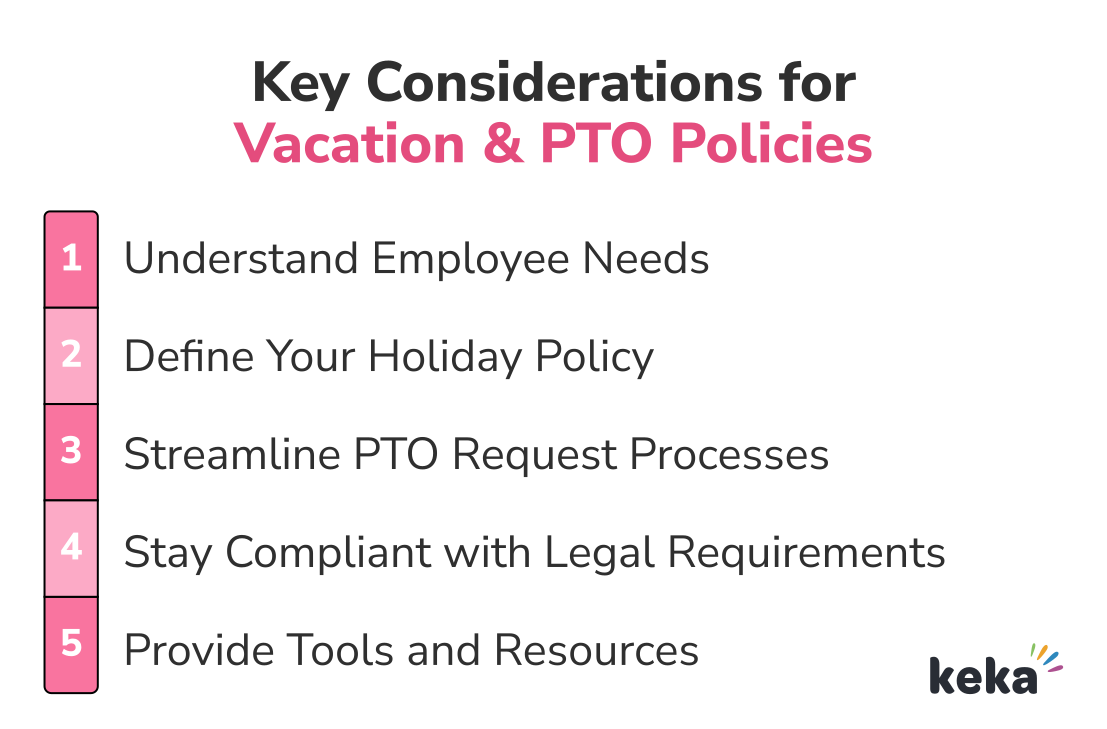
Designing the right holiday and Paid Time Off (PTO) policy isn’t just about checking boxes—it’s about finding a balance.
The goal? Meet legal requirements, support employee well-being, and ensure the business keeps running smoothly. Here’s how to make the best choice for your organization.
Flexibility vs. Structure: PTO policies allow employees to decide how to use their time off, whether for vacation, personal days, or illness. For example, at Stone Press, employees accrue PTO at a rate of 10 hours per month and can use it as needed. On the other hand, separating vacation and sick leave provides clearer boundaries, which some employees may prefer.
Work-Life Balance: PTO often empowers employees to manage their time without restrictions, promoting balance and autonomy. For instance, companies like Netflix offer unlimited PTO, allowing employees to take time off as they see fit.
Fixed Holidays: These include company-wide closures, like federal holidays, ensuring consistency across the team. For example, a typical holiday policy might include New Year’s Day, Independence Day, and Christmas Day. However, these may not reflect every employee’s cultural or personal priorities.
Floating Holidays: Offering flexible options lets employees observe what matters most. A hybrid approach—combining fixed holidays with floating ones—can meet the needs of both the business and your team. For example, some companies offer one or two floating holidays that employees can use for personal or religious observances.
Transparent Guidelines: Employees need clear instructions about notice periods, how overlapping requests will be handled, and expectations during peak times. For instance, a PTO request form might include sections for employee information, PTO request details, and manager approval.
Manager Training: Equip managers to handle requests fairly and efficiently, ensuring team coverage and minimizing scheduling headaches. Regular training sessions can help managers stay updated on policy changes and best practices.
Separate Sick Leave: Some jurisdictions require that sick leave be kept distinct from other types of PTO. For example, California mandates that employers provide a minimum amount of paid sick leave separate from other PTO.
Unused Days: Be clear about what happens to unused time off. Will employees be allowed to carry it over, receive a payout, or forfeit it? Transparency avoids confusion and builds trust. For instance, some companies allow unused PTO days to roll over to the next year, while others have a “use it or lose it” policy.
PTO Toolkit: Create resources like request forms, FAQs, and an outline of recognized holidays to help employees navigate their options. For example, a PTO toolkit might include a detailed FAQ section addressing common questions about accrual rates, request procedures, and holiday policies.
Manager Training: Regularly update managers on policy changes and equip them to handle time-off requests fairly and inclusively. This can include workshops, online training modules, and regular policy review sessions.
No matter what type of vacation, sick leave, or PTO policy your company offers, fostering a culture that encouragement and engagement is vital. A culture led by examples and open conversations —is not just for employees but for the entire organization.
Note that, when employees see leadership valuing rest and recovery, they’ll feel more comfortable doing the same.
By creating an environment where taking time off is seen as a strength rather than a weakness. Organizations today must build an engaged, creative, and productive workforce.
Well-rested employees bring their best selves to work, driving innovation and success for years to come.
Accrual typically depends on hours worked, tenure, or job role. Some companies offer gradual accrual per pay period, while others provide a set allotment annually. Check your employer’s policy for specifics.
Vacation time is reserved for relaxation or personal trips and requires prior approval. PTO (Paid Time Off) is a catch-all category covering vacation, sick days, and personal leave, offering broader flexibility.
Yes, PTO is often usable for vacation. Its flexibility allows employees to allocate it for vacations, personal obligations, or rest, depending on the company’s policy.
It varies by employer. Some allow carryover with limits, while others enforce a “use-it-or-lose-it” rule where unused days expire. Review your company’s vacation rollover policy for clarity.
Yes, PTO offers more flexibility as it covers various needs beyond vacations, like sick days or personal matters. This versatility makes it a preferred option for modern workplaces.
It depends on state laws and company policy. Some states mandate payout for unused vacation, but general PTO (including sick days) may not qualify. Policies should be clearly outlined to prevent disputes.
Subscribe to keep up with the latest strategic finance content.
Request a demo