Login
Login

Top 10 Policies for your Employee Handbook



PRODUCTS
 Payroll Suite
 HR Suite
 Talent Suite
 Project Services Suite
Meet the platform tailored to your business
Core system of record
One platform for the entire employee journey

BY INDUSTRY
BY COMPANY SIZE
LEARN
EXPLORE KEKA
An employee handbook is where rules, benefits and ways to handle problems are put in writing. Without it new workers don't know what to expect. Managers have to make things up as they go. The handbook also has legal importance. It talks about at-will employment rules against harassment, types of jobs and how people get paid. This guide explains what an employee handbook should have the ten important policies, who is responsible, for writing it and how to make one.
“Your employees come first. If you take care of your employees, they will take care of the customers.” – Richard Branson, Founder of the Virgin Group.
Employee handbooks are part of taking care of employees as they offer clarity, structure, and support.
Remember your first day at a new job? You probably spent the week guessing whether jeans were acceptable, wondering if you could expense your lunch, and tiptoeing around office politics you didn’t understand. Maybe you even violated some policy you didn’t know existed.
Without clear guidelines, employees make assumptions, managers enforce rules inconsistently, and small misunderstandings can snowball into bigger problems. That’s exactly why employee handbooks matter. They answer those basic questions, set clear expectations, and reduce confusion from day one.
Whether you’re running a five-person startup or managing a growing team, this guide will show you exactly what to include in your handbook and how to build one that actually works for your business.
An employee handbook is a written document that outlines a company’s policies, procedures, and expectations for employees. It covers everything from working hours and leave policies to workplace behavior and benefits.
It serves multiple purposes: clarifies rights and responsibilities for both employers and employees, ensures consistent policy enforcement across the organization, helps with legal compliance, and sets clear expectations about company culture and acceptable behavior.
An employee handbook helps both the company and its employees stay aligned. It sets expectations, reduces confusion, and protects the organization by documenting key rules and procedures.
Whether it’s about how to apply for leave, what behavior is expected at work, or how compensation works, the handbook gives everyone a clear point of reference. It also plays a strategic role in shaping culture, reinforcing values, and ensuring legal compliance.
Here’s a breakdown of the core components and why they matter:
| Core Components | Strategic Importance |
| Workplace Policies | Sets clear rules for behavior, performance, and consequences to maintain consistency |
| Compensation Package | Highlights pay, benefits, and incentives to reduce confusion and build trust |
| Organizational Values | Communicates mission and expected conduct to shape and sustain company culture |
| Regulatory Compliance | Ensures alignment with labor laws, preventing legal risks and liability |
| Mutual Expectations | Clarifies what the company expects from employees and what employees can expect in return |
| Operational Clarity | Standardizes day-to-day processes so teams know how things work |
| Decision Support | Acts as a reliable guide for handling common and complex workplace situations |
| Cultural Reinforcement | Keeps core values visible and actionable across the employee lifecycle |
| Risk Management | Minimizes exposure to disputes or non-compliance issues through documented policies |
| Information Consistency | Provides a single source of truth for policies to avoid mixed messages across teams |
Now that you understand the importance of employee handbooks, let’s understand what they should include.
A well-crafted employee handbook acts as a legal reference, cultural guide, and practical playbook. It covers policies that affect every stage of the employee lifecycle, from onboarding to resignation, while also addressing the realities of modern workplaces. Below are key topics every handbook should cover, along with common pitfalls to avoid.
The handbook must reflect current labor laws to protect both the organization and its employees. This includes lawful treatment of wages, overtime, hiring practices, and employee rights. Poorly worded or outdated policies can lead to legal risk or misinterpretation.
| You Must | You Must Not |
| Review all policies with legal counsel | Include rules that restrict legal rights (e.g., discussing wages) |
| Stay updated on federal, state, and local laws | Impose blanket bans (e.g., criminal history) without legal review |
| Clarify overtime and pay policies | Deny overtime pay in violation of wage and hour laws |
A modern handbook introduces new hires to the organization’s mission, work ethic, and values. It also signals cultural alignment by sharing DEI commitments and behavioral expectations that go beyond compliance.
| You Must | You Must Not |
| Share your company’s vision and cultural values | Treat the handbook as just a rulebook with no human tone |
| Include DEI principles and inclusive language | Ignore the cultural impact of company policies |
| Revisit content to reflect evolving social expectations | Use outdated or tone-deaf examples or phrasing |
Handbooks should outline how employees can raise concerns, like harassment, policy violations, or safety issues, without fear of retaliation. Clear pathways help build trust and accountability.
| You Must | You Must Not |
| Offer multiple reporting channels | Require only one reporting method, which may intimidate employees |
| Protect anonymity and confidentiality | Ignore the risk of retaliation |
| Include clear steps for resolution and follow-up | Leave reporting procedures vague or informal |
As work models evolve, handbooks must cover remote expectations, digital conduct, time tracking, and cybersecurity to keep employees productive and protected, no matter where they work from.
| You Must | You Must Not |
| Set expectations for remote availability | Assume remote work doesn’t need oversight |
| Include rules for cybersecurity and device usage | Overlook risks tied to remote access |
| Define communication norms (email, chat, video) | Leave teams to figure out communication on their own |
This section explains that employment can be ended by either party at any time, for any lawful reason, and that only authorized leaders can alter this agreement.
| You Must | You Must Not |
| State that employment is at-will, where applicable | Imply guaranteed or indefinite employment |
| Identify who can change employment terms (usually HR) | Let managers make unauthorized verbal promises |
A zero-tolerance stance must be stated clearly. The handbook should define what constitutes harassment, how to report it, and what happens after a complaint is made.
| You Must | You Must Not |
| Define harassment, discrimination, and retaliation clearly | Use vague language or legal jargon that employees can’t understand |
| Outline how to report and what happens after a report | Ignore retaliation or downplay its seriousness |
Handbooks should include a commitment to hiring individuals authorized to work and outline compliance steps like Form I-9 completion and re-verification policies.
| You Must | You Must Not |
| Include E-Verify or Form I-9 procedures | Use discriminatory or non-standard hiring language |
| Reaffirm commitment to legal hiring practices | Ask illegal or irrelevant questions about immigration status |
Clear definitions for full-time, part-time, exempt, and non-exempt roles help avoid confusion over benefits, work hours, and eligibility for overtime.
| You Must | You Must Not |
| Define full-time, part-time, exempt, and non-exempt | Misclassify employees, risking wage law violations |
| Link classification to benefits and schedules | Let classification terms vary by department |
Employees need to know how time off is earned, used, and approved, including holidays, vacation, sick leave, parental leave, and more. These policies must comply with all relevant laws.
| You Must | You Must Not |
| Explain holidays, PTO, sick leave, and unpaid leave | Leave out accrual and carryover policies |
| Follow applicable leave laws (e.g., FMLA) | Use blanket policies that conflict with state/local rules |
Break rules vary by jurisdiction, so the handbook must specify what applies to different employee groups and regions.
| You Must | You Must Not |
| State meal and rest break duration by region | Apply one standard across locations with different laws |
| Include rules for on-call or interrupted breaks | Assume everyone knows the break schedule |
This section ensures transparency around work hours, time tracking, pay cycles, and deductions. It also helps avoid wage disputes.
| You Must | You Must Not |
| Outline time entry, schedules, and overtime rules | Rely on informal or untracked work hours |
| Explain how holidays, absences, and leaves impact pay | Leave pay practices up to individual manager discretion |
Emergency procedures, safety expectations, and compliance with OSHA or local safety laws must be clearly stated to maintain a secure work environment.
| You Must | You Must Not |
| Follow OSHA or equivalent local safety laws | Leave emergency plans or safety drills undocumented |
| Provide clear instructions for emergencies | Expect employees to rely on word-of-mouth in crises |
Defines how employees should use company equipment, software, and digital platforms, including expectations around privacy and data security.
| You Must | You Must Not |
| Define acceptable use of email, devices, and the internet | Ignore privacy and monitoring disclosures |
| Address the use of personal devices for work | Leave tech policies vague or outdated |
Outlines behavioral expectations, punctuality, absence reporting, and disciplinary procedures. This creates consistency in how issues are handled.
| You Must | You Must Not |
| List behavior standards and attendance expectations | Handle infractions case by case with no documented process |
| Outline the disciplinary process | Allow unclear or inconsistent enforcement |
HR, legal, and leadership work together to create a handbook that is clear, compliant, and aligned with the company’s purpose.
HR writes the handbook by detailing the policies and procedures employees need to follow every day. They focus on making the rules straightforward to understand so everyone knows what is expected.
The legal team then reviews the draft to ensure all policies comply with laws and regulations. They identify and fix any wording that could cause legal problems or conflict with employee rights.
Meanwhile, leadership provides input on the company’s vision, culture, and values. This shapes the handbook’s tone and ensures it supports the company’s goals and fosters a positive work environment.
That said, let’s understand the process of creating an employee handbook.
Follow these steps to create an employee handbook.
Begin by assessing your current policies. Identify outdated, unclear, or missing policies. This ensures your handbook stays relevant and aligned with current laws and business needs.
Create a clear outline covering all necessary topics. When drafting, use simple, specific language and customize the content to fit your company culture and workforce diversity. An inclusive approach helps all employees feel represented.
Here are some tips for drafting:
After drafting the handbook, send it to key internal stakeholders and legal experts for thorough review. Legal experts confirm compliance with employment laws and help avoid policies that could create legal risks. Internal reviewers ensure the policies reflect company culture and operational realities, and check for clarity or contradictions.
Additionally, you can:
Once reviews are complete, apply all approved changes and format the handbook professionally. Make it easy to navigate by adding a table of contents, section headers, and an index if needed. Distribute the handbook to employees in both digital and printed formats. Require employees to sign an acknowledgment confirming receipt and understanding, which serves as a legal record.
Key things to enhance the finalization and distribution process.
Policies must stay current to reflect changes in laws, company goals, or workplace culture. Regular updates keep your handbook relevant and legally compliant. Here are a few tips.
Employee handbooks require a careful balance between clear policies and adaptability to changing business needs. Keka, a leading HRMS platform, helps small and medium businesses create and manage customized handbooks that reflect their unique operations and compliance requirements.
Keka goes beyond handbook creation by integrating compliance tracking, secure document storage, payroll, and workforce management into one seamless system. This reduces administrative burden and ensures policies stay up-to-date and accessible.
Here’s how Keka supports employee handbook management for SMBs and enterprises:
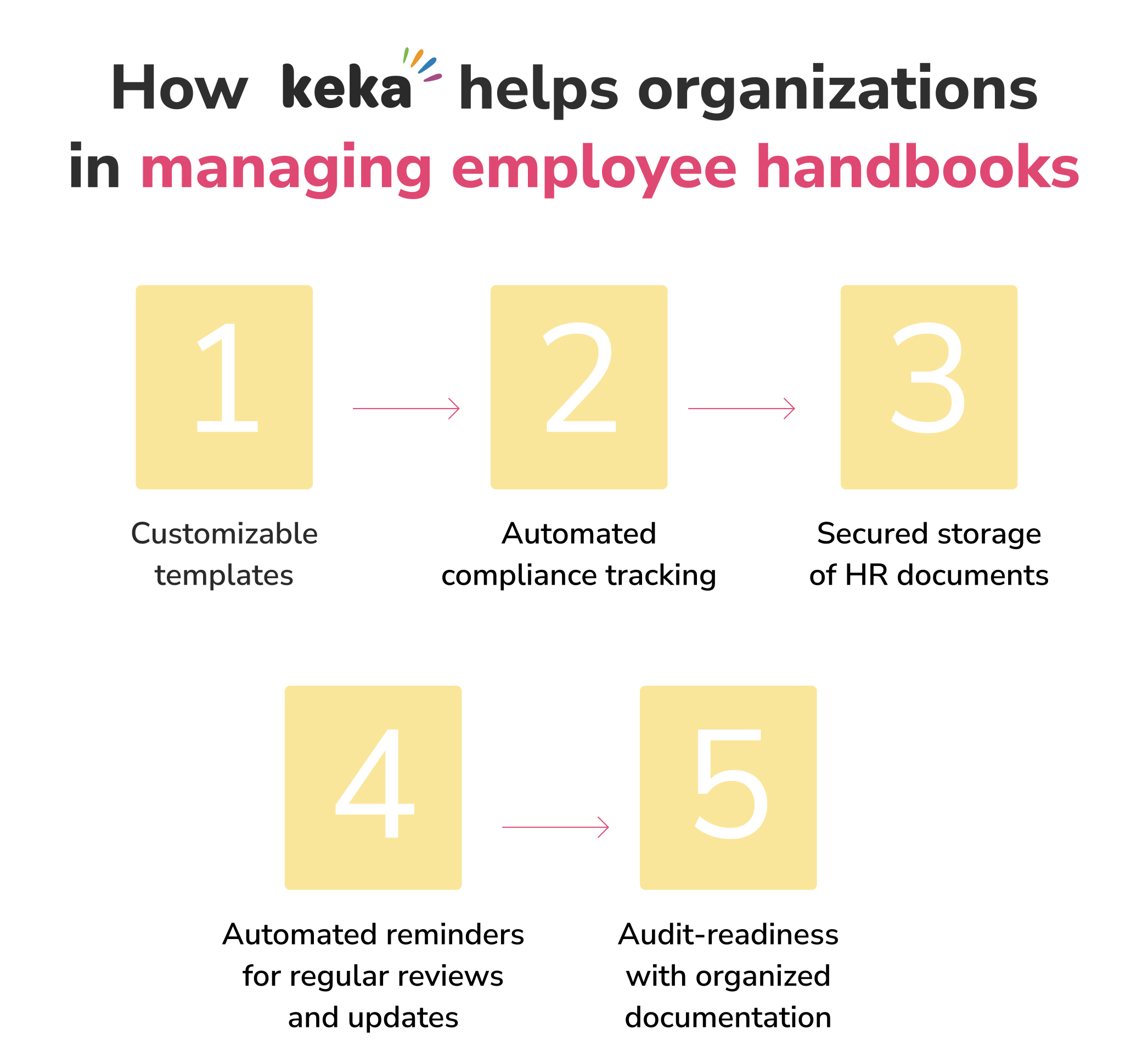
A well-crafted employee handbook plays a crucial role in clear communication and legal compliance while building a positive workplace culture. Keka simplifies this process by offering customizable and secure automated solutions designed for businesses of all sizes. This helps organizations manage handbook updates efficiently, maintain compliance, and improve employee engagement.
An employee handbook is a comprehensive document that outlines your company’s policies, procedures, values, and expectations. It serves as the official reference guide for everything from dress codes and vacation policies to harassment procedures and benefits information.
The purpose of an employee handbook is to clarify expectations for both employers and employees, ensure consistent policy application across the organization, help with legal compliance, and provide a central resource for workplace questions.
The terms are often used interchangeably, but employee manuals typically focus more on specific job procedures and how-to instructions, while handbooks emphasize policies, culture, and company-wide guidelines. Some organizations use separate documents for operational procedures (manual) and workplace policies (handbook).
An employee handbook clearly communicates company policies, expectations, and workplace culture. It sets consistent standards for behavior and performance. It reduces misunderstandings and conflicts by providing clear guidance. The handbook also protects the company legally by documenting rules and procedures. Overall, it supports a professional and organized work environment.
In most regions, an employee handbook is not legally mandatory. However, certain industries or jurisdictions may require specific policies to be documented. Even when not required, a handbook helps demonstrate compliance with labor laws and regulations. It also serves as evidence of communicated policies in case of disputes.
A company should review and update its employee handbook at least once a year. Updates are necessary when laws change, business practices evolve, or new policies are introduced. Regular updates ensure the handbook remains accurate, relevant, and compliant with current regulations.
Subscribe to keep up with the latest strategic finance content.
Request a demo