


 Login
Login


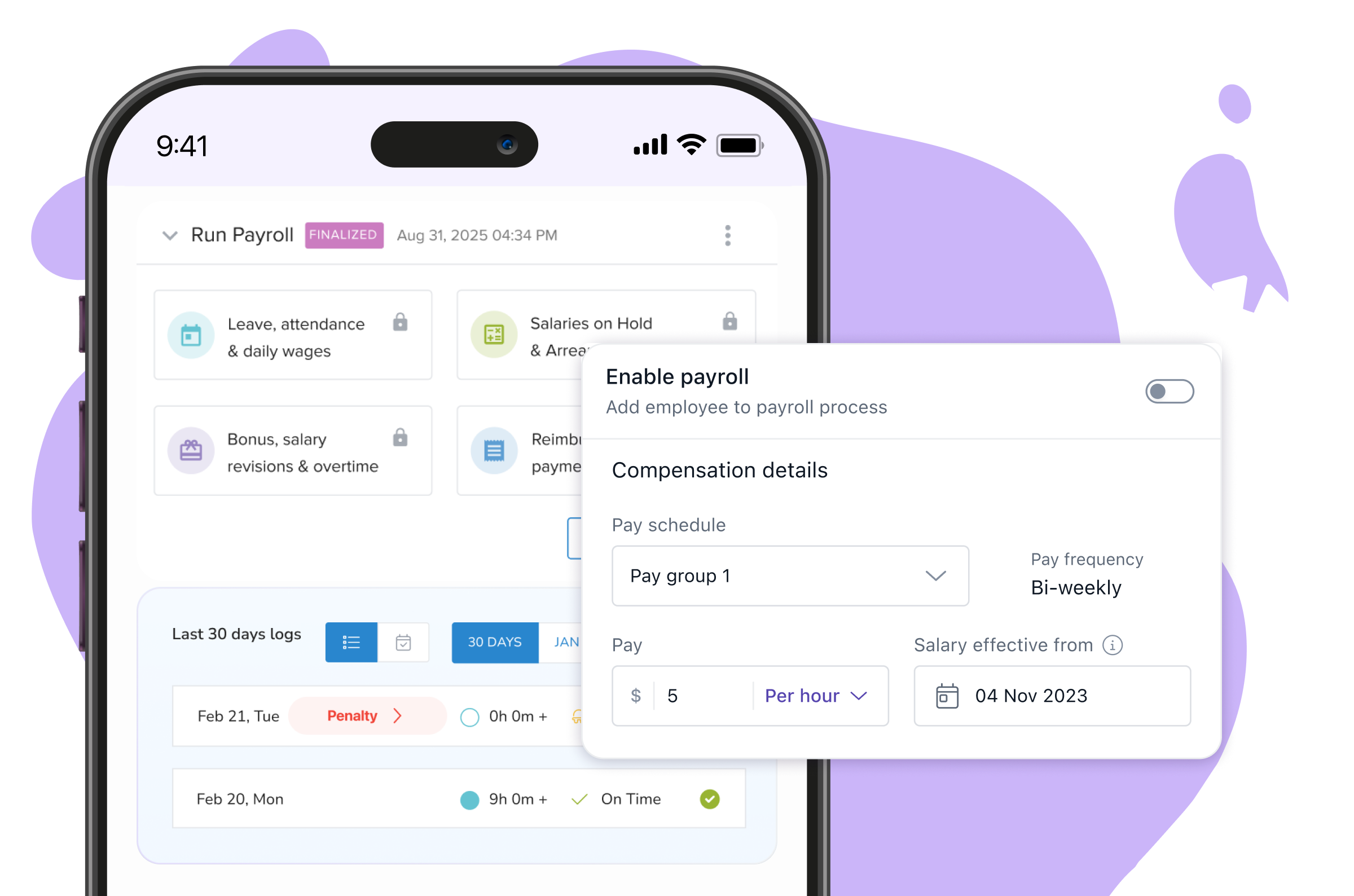
Every month, payroll demands pile up. Overtime calculations, gratuity, WPS compliance, and final settlements all need attention. When companies still depend on spreadsheets or fragmented systems, errors and delays are almost guaranteed. Employees lose trust, and HR is stuck fixing problems instead of moving forward.
The process looks simple on the surface, but gaps appear quickly. Incorrect deductions, missed regulation updates, and limited visibility over costs turn payroll into a recurring source of stress. What should be routine instead creates frustration for both HR and employees.
Payroll software built for the UAE changes this. It unifies wage protection, local compliance, leave and overtime calculations, and transparent reporting in one system. Employees get access to accurate payslips while HR teams save time and reduce mistakes.
In this guide, we will explore the best payroll software in the UAE in 2026, along with their features, pricing, pros and cons, and which solutions work best for different types of businesses.
Research Methodology: How I Evaluated Payroll Software in the UAE
To evaluate payroll software in the UAE for 2026, I assessed each platform against compliance requirements, payroll accuracy, and day-to-day usability. These were the questions I asked while reviewing every tool.
- WPS Compliance: Does the software generate error-free SIF files, integrate directly with banks, and guarantee timely salary transfers? WPS is tightly enforced in the UAE, and even small mistakes can lead to fines or blocked transactions, so I reviewed how well each platform handled these processes end-to-end.
- Gratuity and End of Service: Can the system calculate settlements accurately for different scenarios, such as limited and unlimited contracts, probation exits, or varying tenures? End-of-service benefits are one of the most complex parts of payroll in the UAE, and errors here create immediate compliance risks and employee disputes.
- Leave and Overtime Automation: Does the platform apply the correct rules for accruals, public holidays, and overtime multipliers under UAE labor law? Manual handling of these items often leads to underpayment or overpayment, so I looked for software that removes guesswork and applies rules consistently.
- Localization and Multi-Currency: Is the tool designed for the UAE market with bilingual payslips, multiple currency support, and government-approved formats? Many companies here employ multinational staff, and payroll must meet both employee expectations and inspection standards.
- Employee Self-Service: Can employees view payslips, track leave balances, and download end-of-service letters on their own? This matters because, without it, HR spends time answering repetitive queries that software could handle instantly.
- Reporting and Insights: Does the software provide dashboards that break down payroll costs, forecast liabilities such as gratuity, and prepare audit-ready reports? I focused on whether platforms could go beyond processing to actually help HR leaders plan and stay compliant.
- Integration and Scalability: Can the platform connect with HRIS, attendance, and accounting tools, and will it support growth across both mainland and free zone operations? Payroll needs change as companies expand, and scalability was a key part of my evaluation.
Best Payroll Software in the UAE in 2026
Modern payroll software automates compliance, handles complex salary structures, and ensures employees are paid accurately and on time. With the right platform, HR teams save time, avoid costly errors, and improve employee trust.
Here are the ten best employee payroll software in 2026.
1. Keka
Keka is one of the best payroll software platforms for businesses operating in the UAE. It supports automated payroll runs, compliance with UAE Wage Protection System (WPS) regulations, and calculation of end-of-service benefits. The platform integrates payroll with attendance, leave, and expense management so HR teams can process salaries accurately and on time.


Key Features of Keka Payroll Software:
- WPS Compliance: Generate SIF files and ensure full compliance with UAE Wage Protection System rules.
- End-of-Service Calculation: Automate gratuity and final settlement based on UAE labor laws.
- Multi-Currency Support: Handle salaries and allowances for both local and expatriate employees.
- Integrated Payroll: Sync attendance, leave, and expense data directly into payroll runs.
- Employee Self-Service: Provide access to payslips, salary histories, and tax-related details.
- Custom Salary Structures: Build templates for different job roles and compensation packages.
- Reimbursements and Allowances: Manage recurring or one-time allowances and claims.
- Analytics and Reports: Generate payroll reports for compliance, audits, and financial planning.
Pros and Cons of Keka Payroll Software:
| Pros | Cons |
|---|---|
| Ensures compliance with WPS and UAE labor regulations. | Advanced reporting customization may require support. |
| Automates gratuity and end-of-service benefit calculations. | Some third-party finance integrations need setup assistance. |
| Supports multi-currency payroll for diverse teams. | |
| Improves employee transparency with self-service access. |
Ideal For: UAE-based businesses that need payroll integrated with HR, compliant with WPS, and capable of handling expatriate salaries.
Pricing:
- Foundation: $9/employee/month
- Strength: $16/employee/month
- Growth: $22/employee/month
Expert’s Opinion:
Keka is one of the best payroll solutions for the UAE because it automates compliance with WPS and simplifies end-of-service settlements. It helps companies pay both local and expatriate employees accurately while keeping HR and payroll data connected. For UAE businesses that value compliance and efficiency in payroll, Keka offers a reliable and integrated solution.
2. Bayzat
Bayzat is a UAE-based payroll and HR platform built to align with local labor laws. It automates WPS file generation, calculates gratuity, and supports payroll for both local and expatriate staff. The system also connects payroll with insurance and benefits, which reduces manual work for HR. Employees can access payslips and benefits through the mobile app, which is widely used in the UAE.

Key Features of Bayzat Payroll Software:
- WPS Compliance: Generate and submit SIF files for the UAE Wage Protection System.
- End-of-Service Gratuity: Automate final settlements in line with UAE labor laws.
- Multi-Currency Payroll: Manage salaries for local and expatriate employees.
- Benefits Integration: Link payroll with insurance and perks within the platform.
Pros and Cons of Bayzat Payroll Software:
| Pros | Cons |
|---|---|
| Tailored for UAE regulations, including WPS and gratuity. | Limited use outside the GCC region. |
| Combines payroll with employee benefits and insurance. | Advanced reporting options are less flexible compared to global HCMs. |
| Popular mobile apps improve employee access to payslips and benefits. | Implementation can take time for larger enterprises. |
| Strong presence and support within the UAE market. | Limited scalability for multinational operations beyond the Middle East. |
Ideal For: UAE companies that want payroll compliance, benefits, and employee self-service in one local platform.
Pricing: Bayzat offers customized pricing based on company size and modules, provided directly to businesses.
Expert’s Opinion:
Bayzat is well-regarded in the UAE because it combines payroll with benefits and insurance in a single platform. It helps HR teams stay compliant with WPS and simplifies gratuity settlements. The mobile app is widely used by employees, which improves transparency. For companies operating mainly in the UAE or GCC, Bayzat offers practical coverage, while multinational firms may find its scope outside the region more limited.
3. ZenHR
ZenHR is a cloud-based HR and payroll solution created for businesses in the MENA region. It covers UAE-specific payroll needs such as WPS compliance and gratuity while offering bilingual access for employees. Payroll integrates with leave and attendance data, which helps companies reduce errors in processing. Its regional design makes it a practical choice for organizations with operations in the UAE and surrounding countries.

Key Features of ZenHR Payroll Software:
- WPS Integration: Automatically generate SIF files for UAE payroll compliance.
- Gratuity Calculations: Automate end-of-service settlements based on UAE law.
- Bilingual Access: Provide employee self-service in Arabic and English.
- Attendance and Leave Integration: Link leave and overtime directly to payroll.
Pros and Cons of ZenHR Payroll Software:
| Pros | Cons |
|---|---|
| Built specifically for the MENA region with strong UAE compliance. | Not as widely adopted outside MENA compared to global platforms. |
| Automates gratuity and WPS to reduce manual errors. | Custom integrations may require vendor support. |
| Bilingual access makes it practical for diverse workforces. | Benefits and insurance integration are more limited than local competitors like Bayzat. |
| Attendance and leave data flows directly into payroll. | Reporting depth is less advanced compared to large HCM platforms. |
Ideal For: Companies in the UAE and wider MENA region that want payroll localized for labor laws and compliance.
Pricing: ZenHR offers flexible pricing based on employee count and selected features, shared directly by the vendor.
Expert’s Opinion:
ZenHR is designed for businesses in the MENA region and covers payroll requirements specific to the UAE, including WPS and gratuity. Its bilingual self-service access makes it suitable for diverse workforces. The system is easy to align with regional compliance rules, which reduces manual effort for HR. However, companies looking for deeper benefits integration or operating beyond MENA may prefer a broader HCM solution.
4. Ramco HCM
Ramco HCM is a global HR and payroll platform that supports payroll requirements across the GCC, including the UAE. It automates WPS file generation and gratuity calculations while allowing companies to run multi-country payroll from a single system. The platform integrates payroll with HR and time management and provides a unified approach for enterprises.

Key Features of Ramco HCM Payroll Software:
- Multi-Country Payroll: Run payroll across the UAE and other GCC nations.
- WPS Compliance: Generate compliant SIF files for UAE payroll.
- End-of-Service Benefits: Automate gratuity and settlements under UAE law.
- Unified HCM Suite: Integrate payroll with HR, time, and talent modules.
Pros and Cons of Ramco HCM Payroll Software:
| Pros | Cons |
|---|---|
| Covers UAE payroll compliance, including WPS file generation and gratuity. | Implementation requires significant time and resources before going live. |
| Runs payroll across multiple GCC countries from a single platform. | Reporting dashboards can be complex to configure without technical support. |
| Integrates payroll with HR, time, and workforce modules for unified data. | Mobile access for payroll functions is limited compared to desktop. |
| Scales to handle payroll for large enterprises with regional operations. | Licensing costs can be higher than regional payroll providers. |
Ideal For: Enterprises in the UAE and GCC looking for multi-country payroll within a full HCM suite.
Pricing: Pricing varies based on company size and deployment scope, with Ramco offering tailored enterprise packages.
Expert’s Opinion:
Ramco HCM is widely adopted among enterprises in the GCC because it supports multi-country payroll along with WPS and gratuity compliance in the UAE. Its unified HR and payroll system makes it suitable for larger organizations with complex structures. The platform can scale well across regions, though the implementation effort and cost may be higher than lighter regional tools. Smaller HR teams may find it more than they need.
5. SAP SuccessFactors
SAP SuccessFactors is an enterprise-grade HCM suite that includes payroll for global organizations. It supports UAE-specific compliance, such as WPS file generation and gratuity calculation, and it can manage payroll across multiple countries from one system. The platform integrates payroll with HR, time, and talent management modules, which creates a single source of truth for workforce data.

Key Features of SAP SuccessFactors Payroll:
- WPS and Gratuity Compliance: Automate payroll in line with UAE regulations.
- Global Payroll: Run payroll across multiple countries from one system.
- Integration with SAP Modules: Link payroll with HR, time, and talent data.
- Advanced Reporting: Use analytics for compliance and workforce planning.
Pros and Cons of SAP SuccessFactors Payroll:
| Pros | Cons |
|---|---|
| Supports UAE payroll compliance, including WPS and gratuity. | Implementation requires significant time and resources. |
| Handles payroll for multiple countries within one system. | Reporting and customization may need technical expertise. |
| Integrates with SAP HCM, finance, and HR modules. | User experience can feel complex compared to regional tools. |
| Suitable for enterprises with large and distributed workforces. | Licensing costs are higher than localized payroll solutions. |
Ideal For: Enterprises in the UAE that want payroll integrated into SAP’s broader HCM and finance ecosystem.
Pricing: Pricing is enterprise-specific and based on deployment scope. SAP provides tailored quotes.
Expert’s Opinion:
SAP SuccessFactors payroll is a reliable option for enterprises that want global coverage and UAE compliance within one system. It integrates well with SAP’s finance and HR tools, which helps unify workforce data. However, the system requires time, cost, and technical expertise to implement fully, so it may not suit companies looking for a fast or lightweight payroll solution.
6. ADP Global Payroll
ADP Global Payroll is a multinational payroll platform used by organizations with employees across different regions. It supports UAE-specific compliance, including WPS files and gratuity, while providing multi-country payroll in a single system. The platform offers strong analytics, workforce reporting, and integration with HR systems.

Key Features of ADP Global Payroll:
- Multi-Country Payroll: Run payroll across the UAE and other regions.
- UAE Compliance: Automate WPS file generation and gratuity calculations.
- Centralized Reporting: Consolidate payroll data across locations.
- Integration Options: Connect payroll with HR and financial systems.
Pros and Cons of ADP Global Payroll:
| Pros | Cons |
|---|---|
| Covers UAE payroll rules, including WPS and gratuity. | Implementation and onboarding require significant time. |
| Runs payroll consistently across multiple global regions. | Custom integrations often need vendor involvement. |
| Provides consolidated reporting across countries. | Updating local compliance sometimes takes longer than regional tools. |
| Suitable for large and distributed enterprises. | System complexity can slow down quick payroll changes. |
Ideal For: Multinational organizations with UAE operations that want payroll and compliance handled across multiple regions.
Pricing: ADP provides custom pricing based on employee size, countries covered, and modules selected.
Expert’s Opinion:
ADP Global Payroll is a good choice for enterprises managing payroll across several regions, including the UAE. It provides centralized reporting and reliable compliance, which is useful for large workforces. However, it requires time, cost, and vendor support to configure, which makes it less suitable for companies that need rapid deployment or simpler payroll structures.
7. PaySpace
PaySpace is a cloud-native payroll solution used by companies across Africa and the Middle East, including the UAE. It automates WPS compliance, gratuity processing, and multi-currency payroll for expatriates. The system is updated automatically with local labor law changes, which reduces compliance risk.

Key Features of PaySpace Payroll Software:
- WPS Compliance: Generate SIF files automatically for UAE payroll.
- Gratuity Calculation: Automate end-of-service benefits under UAE law.
- Multi-Currency Payroll: Handle payments for expatriate and local staff.
- Cloud Delivery: Access payroll and compliance updates without local servers.
Pros and Cons of PaySpace Payroll Software:
| Pros | Cons |
|---|---|
| Automates WPS and gratuity for UAE payroll. | Limited ecosystem of partners compared to global HCM vendors. |
| Provides payroll in multiple currencies for expatriates. | Complex payroll setups may require configuration support. |
| Cloud-first delivery reduces IT overhead. | Reporting features are less customizable than enterprise platforms. |
| Regular updates keep the system aligned with local labor laws. | Global coverage is narrower compared to providers like ADP. |
Ideal For: Businesses in the UAE and wider region that want a cloud-based payroll system aligned with local labor law.
Pricing: PaySpace uses subscription pricing based on workforce size and modules, with quotes provided by the vendor.
Expert’s Opinion:
PaySpace is a practical payroll option for companies in the UAE that want a cloud-first system with built-in compliance. It is useful for handling WPS and gratuity while reducing IT management effort. However, larger enterprises with complex reporting or multinational operations may prefer platforms with broader global coverage.
8. QuickBooks Online Payroll
Small and mid-sized businesses use QuickBooks Payroll for its integration with QuickBooks accounting. While its core payroll offering is built around the US and UK markets, it supports payroll in the UAE through third-party integrations and manual WPS file preparation. HR teams can manage allowances, deductions, and basic gratuity setups, but statutory compliance requires configuration.

Key Features of QuickBooks Payroll:
- Accounting Integration: Sync payroll data with QuickBooks accounts.
- Allowances and Deductions: Configure basic pay elements and benefits.
- Compliance Setup: Prepare WPS files manually with add-ons or integrations.
- Employee Self-Service: Provide Payslip and salary history access.
Pros and Cons of QuickBooks Payroll:
| Pros | Cons |
|---|---|
| Integrates payroll directly with QuickBooks accounting. | No built-in WPS file automation for UAE compliance. |
| Easy setup for small businesses with basic payroll. | Gratuity calculation requires manual configuration. |
| Provides accurate payroll records linked to financial data. | Limited support for UAE-specific statutory updates. |
| The employee portal makes payslips accessible. | Regional customer support for payroll is limited. |
Ideal For: Small businesses in the UAE that already use QuickBooks for accounting and want payroll aligned with financial data.
Pricing: QuickBooks Payroll follows subscription pricing, with costs varying by region and features.
Expert’s Opinion:
QuickBooks Payroll works well for SMEs that want payroll tied directly to accounting. It provides clear records and easy-to-use workflows. However, it lacks built-in WPS automation and gratuity processing for the UAE, so companies may need integrations or manual workarounds to stay compliant.
9. Xero Payroll
Xero Payroll is part of the Xero accounting platform and is most popular among small businesses. Like QuickBooks, it is focused on countries such as the UK, Australia, and New Zealand, but UAE payroll can be managed through integrations with local partners. The system handles pay runs, allowances, and employee records while linking directly to accounting data.

Key Features of Xero Payroll:
- Accounting Link: Sync payroll with Xero financials.
- Pay Run Management: Automate basic salary calculations.
- Allowance Setup: Manage variable pay elements.
- Third-Party Integrations: Extend coverage to UAE payroll compliance.
Pros and Cons of Xero Payroll:
| Pros | Cons |
|---|---|
| Works seamlessly with Xero accounting for financial accuracy. | No built-in WPS or gratuity automation for the UAE. |
| Easy for small teams to adopt and manage. | Requires third-party integrations for local compliance. |
| Provides payroll records and employee data in one place. | Limited direct vendor support for the UAE market. |
| Affordable for small businesses with simple payroll needs. | Less suited for enterprises or complex payroll structures. |
Ideal For: Small UAE businesses using Xero accounting that want lightweight payroll with basic compliance managed through integrations.
Pricing: Xero Payroll is subscription-based, with pricing varying by employee count and region.
Expert’s Opinion:
Xero Payroll is effective for small businesses that already use Xero accounting and want to link financial and payroll data. For UAE operations, compliance with WPS and gratuity requires third-party support, which limits its automation. Companies with larger payrolls or more complex compliance needs may prefer dedicated UAE payroll systems.
10. Zoho Payroll
Zoho Payroll is a cloud-based payroll solution from Zoho, with growing availability in the UAE. It supports WPS compliance and gratuity calculations directly, which makes it more regionally relevant compared to QuickBooks or Xero. Payroll integrates with Zoho Books for accounting and Zoho People for HR data, creating a unified experience for businesses already in the Zoho ecosystem.

Key Features of Zoho Payroll:
- WPS Compliance: Generate and submit compliant SIF files.
- Gratuity Automation: Calculate end-of-service benefits under UAE law.
- Zoho Ecosystem Integration: Connect payroll with Zoho Books and Zoho People.
- Employee Self-Service: Provide access to payslips and salary details.
Pros and Cons of Zoho Payroll:
| Pros | Cons |
|---|---|
| Directly supports WPS and gratuity for UAE compliance. | Advanced customization options are limited compared to enterprise tools. |
| Integrates payroll with Zoho’s HR and accounting systems. | The vendor ecosystem for payroll in the UAE is still maturing. |
| Provides employees with self-service access to payslips. | Payroll coverage outside supported regions is limited. |
| Affordable and cloud-based for SMEs. | Larger enterprises may require more advanced reporting and analytics. |
Ideal For: SMEs in the UAE that want payroll compliance integrated with Zoho’s HR and accounting tools.
Pricing: Zoho Payroll offers subscription pricing, with rates based on employee count and features selected.
Expert’s Opinion:
Zoho Payroll is one of the more relevant options for UAE SMEs because it supports WPS and gratuity directly. Its integration with Zoho’s ecosystem makes it easy to manage HR, accounting, and payroll together. While it is well-suited for smaller businesses, larger enterprises with complex payroll requirements may need a more advanced solution.
Best Payroll Software in the UAE in 2026
With so many payroll platforms in the UAE, it can be difficult to decide which one fits your business needs. This table gives you a side-by-side view of the leading options in 2026.
| Software | Key Features | Best For | G2 Rating | Free Trial |
|---|---|---|---|---|
| Keka |
| UAE businesses that need WPS compliance, expatriate salary support, and integrated HR + payroll. | 4.5/5 | Yes |
| Bayzat |
| Companies in the UAE that need payroll and benefits in one local system. | 4.6/5 | No |
| ZenHR |
| Businesses in the UAE and MENA that need bilingual, compliance-focused payroll. | 4.6/5 | No |
| Ramco HCM |
| Large enterprises in GCC that need multi-country payroll and full HCM. | 4.1/5 | No |
| SAP SuccessFactors |
| Enterprises using the SAP ecosystem that need integrated payroll and HR. | 3.9/5 | No |
| ADP Global Payroll |
| Multinationals that run payroll across the UAE and other regions. | 4.4/5 | No |
| PaySpace |
| UAE and regional firms that want a cloud-first payroll system. | 4.9/5 | Yes |
| QuickBooks Payroll |
| SMEs in the UAE already using QuickBooks for accounting. | 3.7/5 | Yes |
| Xero Payroll |
| Small UAE businesses using Xero accounting. | 4.4/5 | Yes |
| Zoho Payroll |
| SMEs in the UAE who are using the Zoho ecosystem. | 4.4/5 | Yes |
Which Payroll Software is the Right Pick for me in the UAE
Choosing payroll software in the UAE depends on the size of your workforce, compliance requirements, and whether you operate locally or across multiple countries. Here’s how the leading platforms compare across different business needs:
1. Compliance with UAE Regulations
For companies that must align with Wage Protection System (WPS) rules and calculate end-of-service benefits correctly.
- Keka: Automates SIF file generation and gratuity payouts, and links compliance directly with payroll, leave, and attendance data.
- Bayzat: Combines payroll with benefits and insurance while staying aligned with UAE labor laws, which reduces HR effort.
- ZenHR: Built for the MENA region with bilingual self-service and payroll features designed specifically around UAE regulations.
2. Multi-Country Payroll for GCC and Beyond
For enterprises that manage employees across several regions and want a consistent payroll in one system.
- Ramco HCM: Handles payroll across the GCC with built-in WPS compliance and integrates with a broader HCM suite.
- SAP SuccessFactors: Provides multi-country payroll at scale and connects payroll with HR, time, and finance data.
- ADP Global Payroll: Centralizes payroll across countries with strong reporting tools to track compliance and costs globally.
3. Cloud-First Payroll for SMEs
For small and mid-sized businesses that need automation without heavy implementation.
- Keka: Offers payroll that is easy to run, compliant with WPS, and includes gratuity automation plus employee self-service.
- PaySpace: Delivers a cloud-native system that updates automatically with UAE labor law changes, minimizing compliance risk.
- Zoho Payroll: Fits SMEs already in the Zoho ecosystem, linking payroll with HR and accounting in a single, affordable system.
4. Payroll Tied to Accounting Systems
For businesses that rely on accounting platforms and want payroll data to flow directly into them.
- QuickBooks Payroll: Integrates payroll with accounting for SMEs, though WPS compliance still requires add-ons or manual work.
- Xero Payroll: Connects payroll with Xero’s accounting platform and manages pay runs with basic allowance tracking.
- Zoho Payroll: Aligns payroll with Zoho Books and Zoho People, making it easy for finance and HR to share the same data.
5. Local Benefits + Payroll in One System
For companies that want payroll and benefits managed together instead of using separate tools.
- Bayzat: Combines payroll with employee benefits and insurance, improving transparency and convenience for staff.
- Keka: Links payroll with reimbursements, allowances, and other perks so HR can manage everything in one system.
Top Picks for Payroll Software
The table below gives a side-by-side view of the leading options in 2026.
| Category | Software | Why It Stands Out |
|---|---|---|
| Compliance with UAE Regulations | Keka | Brings payroll, WPS compliance, and gratuity automation into one workflow so HR can close payroll faster and with fewer errors. |
| Bayzat | Connects payroll with health insurance and perks, making it a familiar choice for UAE-based firms that want both compliance and benefits in one system. | |
| ZenHR | Designed for the MENA region with bilingual access, making payroll simple for diverse workforces while covering local rules. | |
| Multi-Country Payroll for GCC and Beyond | Ramco HCM | Helps enterprises manage payroll across GCC countries from a single system while unifying HR and payroll data. |
| SAP SuccessFactors | Scales payroll across multiple countries and integrates tightly with SAP’s HR and finance modules. | |
| ADP Global Payroll | Provides consistency for multinational companies with centralized reporting and compliance across regions. | |
| Cloud-First Payroll for SMEs | Keka | Makes payroll easy for small teams by linking attendance, leave, and reimbursements directly with salary processing. |
| PaySpace | Cloud-native delivery means instant compliance updates and less reliance on IT support. | |
| Zoho Payroll | Fits SMEs that use Zoho for HR and accounting, giving them one connected system at an affordable price. | |
| Payroll Tied to Accounting Systems | QuickBooks Payroll | Simplifies payroll for SMEs by pushing data directly into QuickBooks accounting, keeping finance records accurate. |
| Xero Payroll | Works best for small firms already on Xero by linking payroll runs with financial tracking. | |
| Zoho Payroll | Adds compliance-focused payroll to the wider Zoho suite so finance and HR data stay in sync. | |
| Local Benefits + Payroll in One System | Bayzat | Goes beyond payroll by integrating benefits and insurance, so employees manage everything from one mobile app. |
| Keka | Ties payroll with allowances and reimbursements, giving HR one system to handle both compliance and employee perks. |
How to Choose the Right Payroll Software in the UAE
Running payroll in the UAE brings unique challenges. From strict WPS compliance to handling multi-currency salaries for expatriates, even small errors can lead to penalties or loss of employee trust. The best payroll system should take these risks off HR’s plate and make every pay cycle reliable.
Key factors to evaluate include:
- WPS compliance and gratuity accuracy: The system should generate SIF files automatically and calculate end-of-service benefits according to UAE labor law without manual intervention.
- Expatriate and multi-currency support: Many businesses in the UAE employ a mix of local and foreign staff. Payroll should handle multiple currencies and varying allowances seamlessly.
- Integration with HR data: Payroll works best when attendance, leave, and expense claims feed directly into salary runs. This reduces duplication and ensures payouts are correct.
- Scalability across GCC operations: If your business plans to expand into Saudi Arabia, Oman, or other GCC countries, choose a platform that supports multi-country payroll.
- Employee self-service: Staff should be able to access payslips, salary history, and settlement details through a portal or mobile app, which reduces HR workload.
- Implementation and vendor support: Strong local expertise and responsive support are essential, especially when labor laws change or compliance checks are introduced.
- Value beyond cost: Subscription fees matter, but accuracy, compliance, and time saved in each pay cycle define the true return on investment.
Conclusion
Payroll in the UAE is more than a back-office function. It is tied directly to compliance, employee trust, and business reputation. Errors in WPS files or gratuity payouts can bring penalties, while delays in salaries quickly erode morale. A reliable payroll system helps HR avoid these risks, reduces manual effort, and ensures every pay cycle runs smoothly.
Among the platforms compared, Keka stands out as the best choice for UAE businesses. It automates WPS compliance, calculates end-of-service benefits with accuracy, and connects payroll with attendance, leave, and expense data in one flow. With multi-currency support and self-service access for employees, it delivers both compliance and transparency.


