Login


The fourteen best HR software platforms for Indian employers in 2026 are Keka, greytHR, Darwinbox, Zoho People, PeopleStrong, ZingHR, HROne, factoHR, Zimyo, Kredily, Pocket HRMS, SAP SuccessFactors, ADP India, and sumHR.
For Indian businesses, an HRMS helps manage employee records, attendance, leave, and payroll in one place while keeping statutory requirements such as PF, ESI, PT, and TDS in view. It reduces manual work for HR teams, helps prevent payroll errors, and gives CFOs better control over payroll costs and compliance. As your workforce grows across teams and locations, an HRMS also makes it easier to maintain consistent processes without adding to the administrative burden.
I’ve put together a list of the best HR software in India for 2026, comparing their features and capabilities to help you find the right fit.
If you’d like a quick overview of all the platforms, refer to the comparison table below before diving into the details.
Let’s get started.
Best HR Software in India at a Glance
| Tool | Best for | Company size | G2 rating | Free trial | Key differentiator |
|---|---|---|---|---|---|
| Keka | Integrated HR and payroll management | All sizes | 4.4/5 | Yes | One data model across HR, payroll, talent and PSA, with native compliance with Indian statutory requirements |
| greytHR | HR administration and payroll | Small and medium businesses | 4.4/5 | Yes | Statutory payroll depth |
| Darwinbox | Enterprise HR management | Enterprises | 4.4/5 | No | Enterprise HCM with native payroll in India, Southeast Asia and the GCC |
| Zoho People | HR processes and employee management | Small to large businesses | 4.5/5 | Yes | Fits the Zoho ecosystem; payroll runs through a separate product, Zoho Payroll |
| PeopleStrong | Enterprise workforce management | Mid-market and large enterprises | 4.5/5 | No | Hire-to-retire suite with multi-country payroll, per the vendor |
| ZingHR | Integrated workforce management | Mid-sized and large enterprises | 4.2/5 | No | Mobile attendance and payroll |
| HROne | Core HR and payroll management | Small and medium-sized businesses | 4.8/5 | Yes | HR workflows and employee management |
| factoHR | HR, attendance, and payroll | Small to mid-market | 4.6/5 | Yes | Core, Premium and Ultimate tiers with expense and performance modules |
| Zimyo | HRMS for growing businesses | Startups and SMBs | 4.5/5 | Yes | Hiring-to-payroll modules on one record |
| Kredily | Core HR and payroll | Small businesses | 4.3/5 | No | Free payroll with PF, ESI, PT and TDS calculations |
| Pocket HRMS | Integrated HR management | SMBs and mid-market businesses | 4.6/5 | Yes | Simplicity and ease of use |
| SAP SuccessFactors | Enterprise HCM | Large and multinational organizations | 4.1/5 | Yes | Global suite with deep talent management |
| ADP India | HCM plus payroll outsourcing from a single vendor | Mid-market and enterprise | 4.2/5 | No | HR, payroll, workforce management and talent on one platform, with managed payroll and HR outsourcing as add-ons |
| sumHR | HR and payroll for growing businesses | Startups and SMBs | 4.6/5 | No (demo only) | HRIS, payroll, attendance, and performance management |
A table compresses a lot, so the rest of this guide explains what sits behind each row. First, here is how I judged them.
How I Chose the Best HR Software in India in 2026
I evaluated the platforms against the requirements Indian businesses should consider when selecting HR software.
-
Statutory compliance: Support for PF, ESI, state-wise PT, TDS, and relevant statutory reporting.
-
Payroll management: Salary structures, deductions, reimbursements, tax calculations, and payroll workflows.
-
User experience: Ease of use for HR teams, managers, and employees, including self-service and mobile access.
-
HR capabilities: Coverage across employee records, attendance, leave, onboarding, recruitment, and performance management.
-
Implementation and integrations: The work involved in deployment and the platform’s ability to fit into existing business systems.
-
Company-size fit: Suitability for startups, SMBs, mid-market businesses, and large enterprises.
I also considered official product information and customer-review sources when assessing product capabilities and user experience.
Disclosure: Keka is our product, and I have evaluated it using the same criteria and standards as every other platform on this list.
The recommendations below focus on each platform’s intended use and documented capabilities. They should be treated as a shortlist for further evaluation, not a substitute for checking the specific features and workflows your business needs.
Top 14 HR Software in India in 2026
Keka
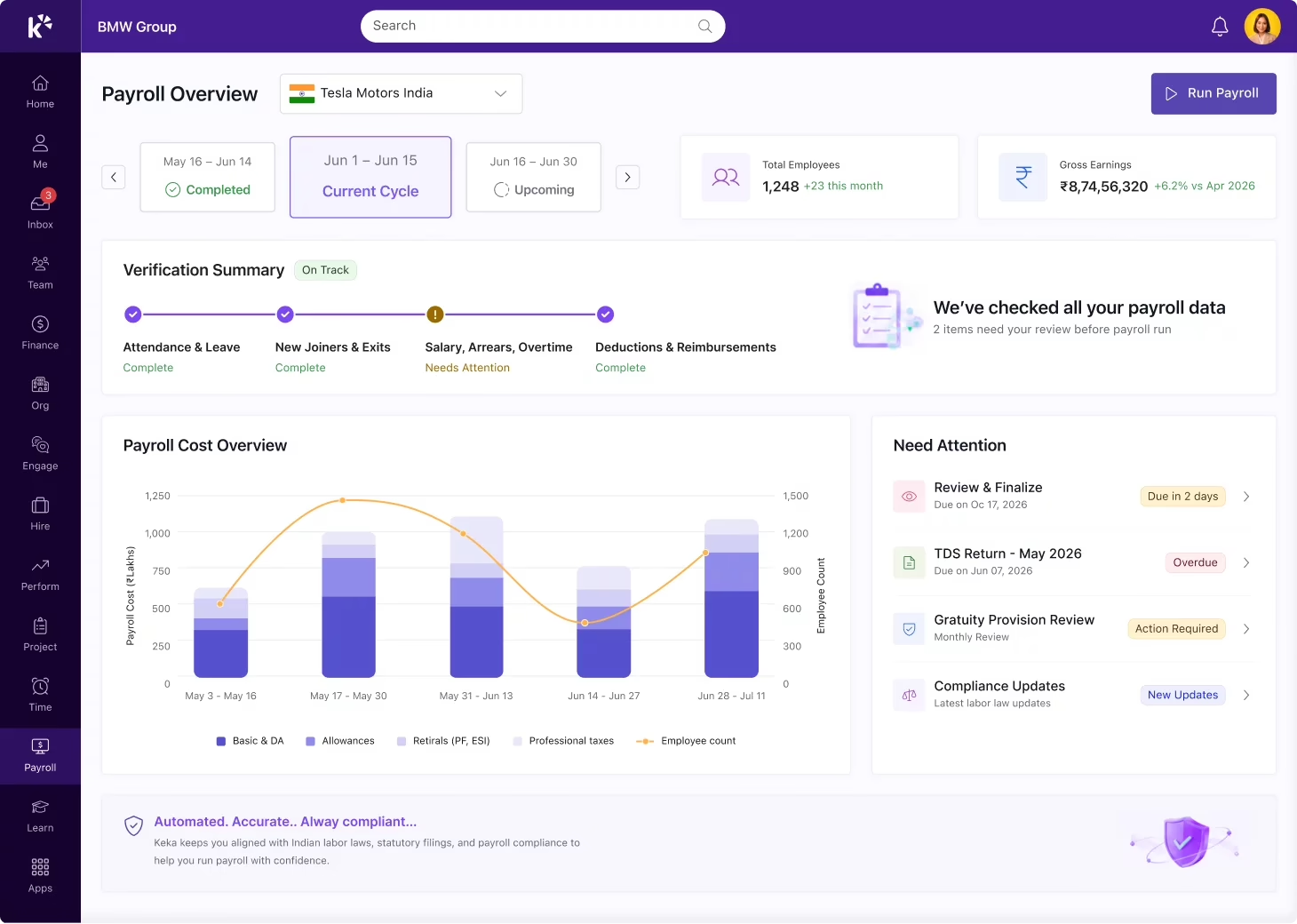
Keka covers the full employee lifecycle, from hiring and onboarding to core HR, attendance, payroll, and performance management. Keka AI uses live data to answer manager queries, draft workflows, and flag payroll anomalies or attrition risks. Automated updates keep employee records, approvals, policies, and access in sync, reducing manual work and helping HR teams manage a growing workforce.
Keka Payroll handles Indian statutory requirements, including PF, ESI, TDS, professional tax, and labor welfare fund rules across states. An AI employee helpdesk helps reduce repetitive queries, while Professional Services Automation supports project timesheets, billing, and resource management. Keka integrates with 100+ tools and serves 12,500+ companies. It also offers multilingual access, guided onboarding, dedicated support, GDPR compliance, and hosting on SOC 2 and ISO 27001 certified infrastructure.
Key features:
-
HR Cloud: Employee records, onboarding, offboarding, attendance, leave and performance management.
-
Payroll Cloud: Payroll processing and related employee compensation workflows.
-
Talent management: Recruitment, performance reviews, goals, and employee engagement.
-
Keka PSA: Project management, resource allocation, timesheets, billing, and utilization reporting.
-
Workflow automation: Automates processes such as employee requests, approvals, hiring and onboarding.
-
Analytics and reporting: Provides workforce and operational insights across supported modules.
Pros:
-
Broad HR and PSA coverage: Combines HR, payroll, talent, employee experience, project management, resource management, timesheets and billing within one platform.
-
Connected workforce data: Employee, attendance, payroll, performance, project and resource information can work together across supported modules, reducing the need to maintain separate records for each process.
-
Intuitive user experience: Designed to make HR and workforce processes easier to navigate for HR teams, managers, and employees.
-
Automation across HR workflows: Supports automation across processes such as hiring, onboarding, approvals, employee requests, and payroll operations.
Cons:
-
The connected platform offers less value to single-module buyers: Businesses purchasing only a narrow HR function may not benefit from the broader workflows and shared data that distinguish Keka’s wider platform.
-
PSA expands the platform beyond conventional HR: Businesses that only need basic employee records, leave and payroll may find project management, resource planning and billing capabilities unnecessary.
-
Multi-country operations introduce additional configuration requirements: Organizations operating across countries must account for different workforce processes and compliance requirements. A single platform does not remove the need for country-specific configuration.
Best for:
Indian businesses of all sizes that want to connect HR, payroll, talent management and workforce operations as they grow.
Pricing:
Keka offers a free trial. Book a free demo to explore its plans and request a custom quote based on your business requirements.
greytHR
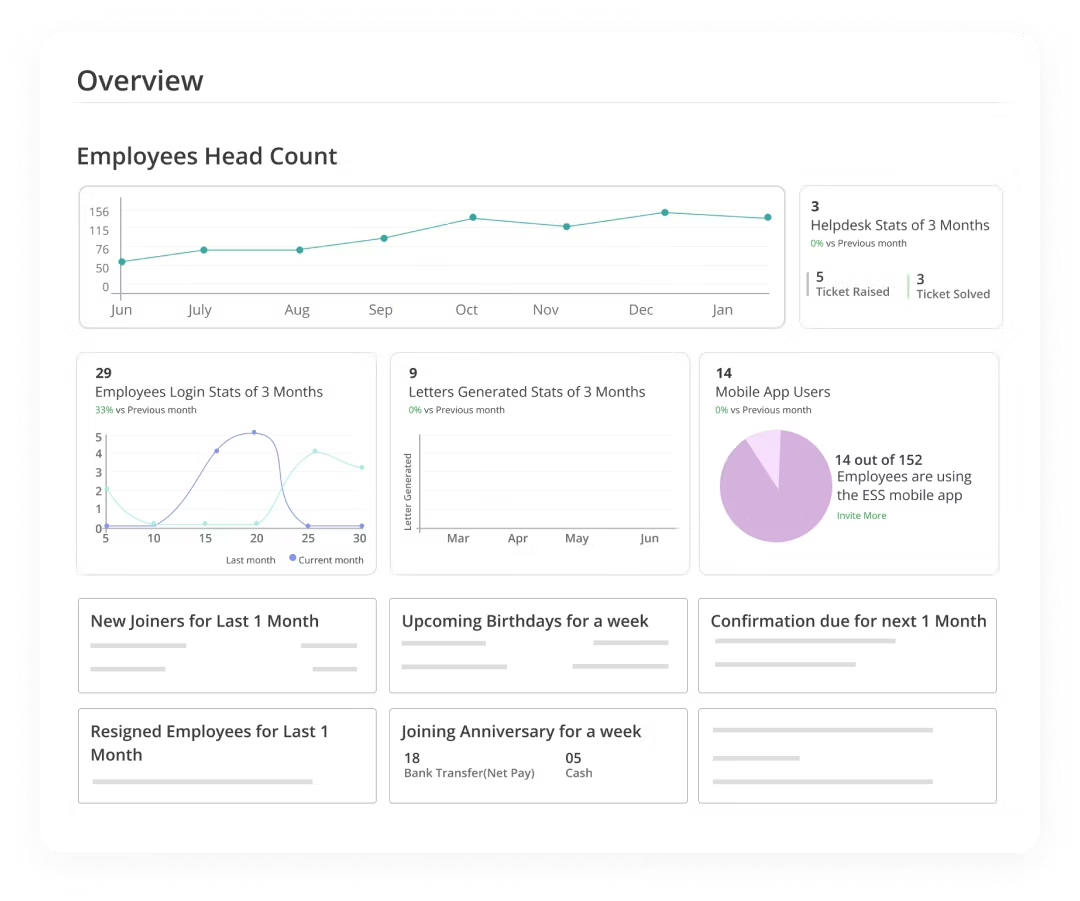
greytHR brings hiring, employee management, and payroll into one system, with payroll at the heart of its HRMS. HR teams can manage salary structures, arrears, employee loans, and final settlements without juggling separate tools. Statutory calculations and filings, including PF, ESI, state-wise professional tax, Form 24Q, and Form 16, are built in, reducing manual calculations and compliance work. A Tally add-on also transfers payroll journals to finance, saving teams from entering the same data twice.
In June 2026, greytHR introduced NAVOS, an AI assistant that can handle requests such as granting leave within the user’s permissions. It also logs each action, giving teams a record of what the assistant has done.
Key features:
-
Automated payroll for salary structures, arrears, loans, and final settlements.
-
Built-in statutory compliance for PF, ESI, professional tax, Form 24Q, and Form 16.
-
Attendance tracking through biometric, GPS, and face-recognition devices, with data synced to payroll.
-
Tally integration to transfer payroll journals to finance.
-
Employee self-service for payslips, leave balances, and tax declarations through the app.
-
NAVOS AI assistant to handle requests such as granting leave within user permissions, with every action logged.
Pros:
-
Payroll-centered workflows: Payroll processing sits at the core of the product, making it relevant to businesses with recurring salary and statutory tasks.
-
Employee self-service: Employees can access supported information and complete routine HR requests without depending entirely on the HR team.
-
Integrated attendance and leave: HR teams can manage time-off and attendance alongside other employee processes.
Cons:
-
Less suitable for project-based workforce management: Businesses that need detailed project resourcing, billable-time tracking and project billing will need a separate solution or additional integration.
-
Advanced talent requirements may need another system: Organizations seeking a broader talent and workforce platform should verify whether their required recruitment, succession and strategic workforce capabilities are covered.
-
Plan scope affects available functionality: Businesses cannot assume every payroll, HR and reporting capability is included in every package.
Best for:
Small and mid-sized Indian businesses that need a payroll-focused HRMS with attendance, leave and employee administration.
Pricing:
greytHR’s basic pricing plan starts at ₹2,495/month for 50 employees, and additional employees can be added at ₹45/month.
Darwinbox
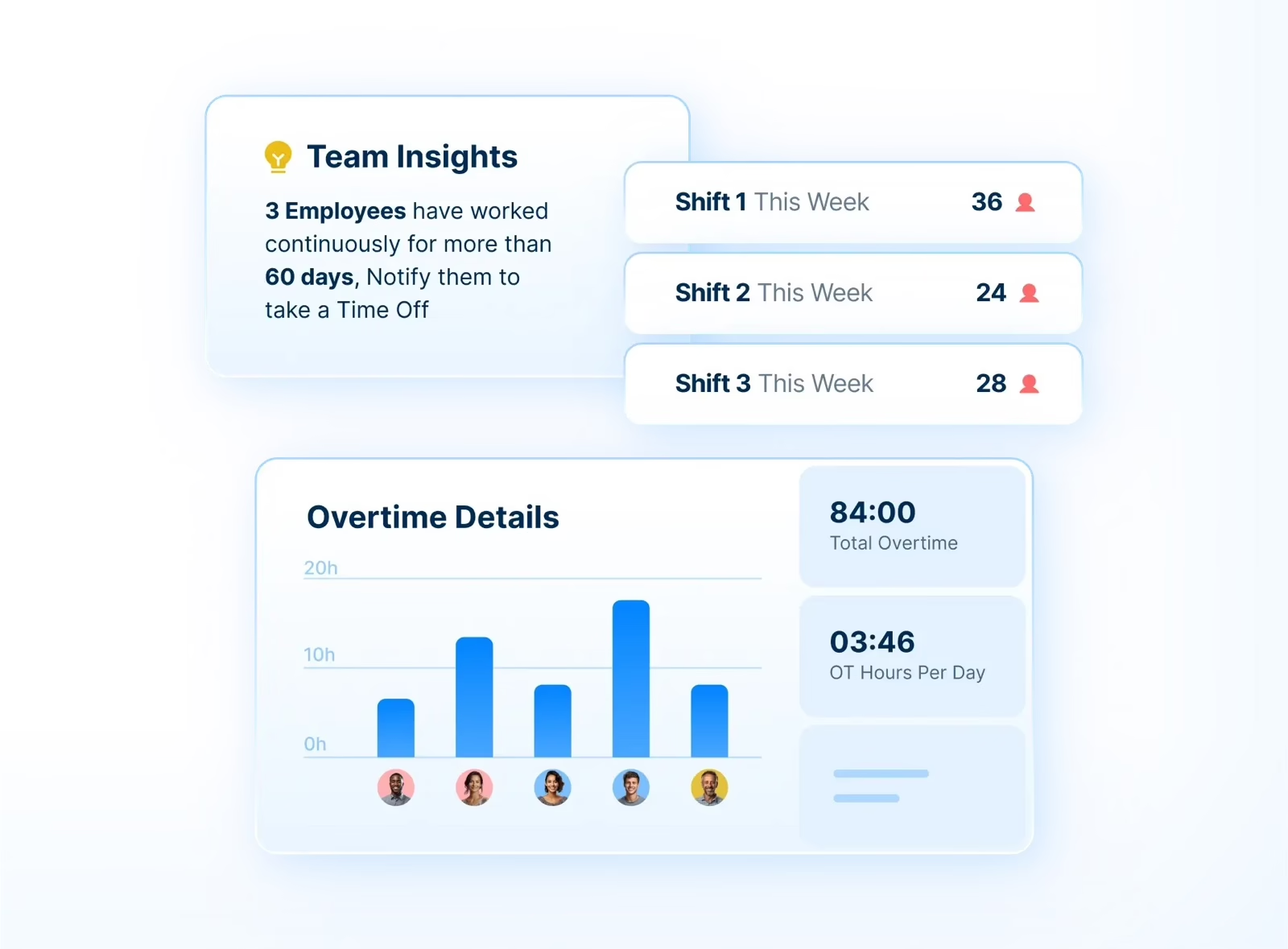
Darwinbox is an enterprise HCM platform that brings core HR, recruitment, onboarding, workforce management, performance, and payroll into one system. Its India payroll module automates salary calculations and statutory requirements, including Provident Fund (PF), Employees’ State Insurance (ESI), state-wise Professional Tax (PT), and other Indian labor law obligations. HR and finance teams can manage payroll across multiple locations using shared employee data, reducing manual inputs and reconciliation.
The platform is suited to organizations that need to coordinate HR processes across larger teams, business units, and locations. In August 2026, Darwinbox launched Cortex, its AI-native HCM platform.
Key features:
-
Employee records, organizational structures, and employee lifecycle management.
-
Applicant tracking, recruitment workflows, and new-hire onboarding.
-
Payroll processing, multi-location payroll, and Indian statutory compliance, including PF, ESI, and state-wise PT.
-
Goal setting, performance reviews, continuous feedback, and talent development.
-
Attendance, leave management, shift scheduling, and time tracking.
-
Employee self-service, engagement surveys, recognition, and internal communication.
-
Workforce dashboards, HR metrics, and analytics.
-
Cortex AI capabilities for HR workflows and workforce management.
Pros:
-
Broad HCM coverage: Supports multiple HR functions within an enterprise-oriented platform.
-
Enterprise workforce processes: Designed for organizations managing complex structures and employee populations.
-
Talent management capabilities: Supports performance and talent processes alongside core HR.
Cons:
-
Excessive scope for basic HR needs: Small businesses looking only for leave, attendance, and payroll may not need an enterprise HCM platform.
-
Enterprise deployment has a wider implementation scope: Organizations rolling out multiple modules across business units must account for data, integrations, roles and process dependencies.
-
Not a substitute for evaluating local payroll requirements: Buyers must confirm the exact Indian payroll, tax and statutory workflows included in their proposed deployment.
Best for:
Large Indian organizations looking to manage multiple HR functions through an enterprise HCM platform.
Pricing:
Darwinbox doesn’t publish its plans publicly and operates on a quotation-based model.
Zoho People
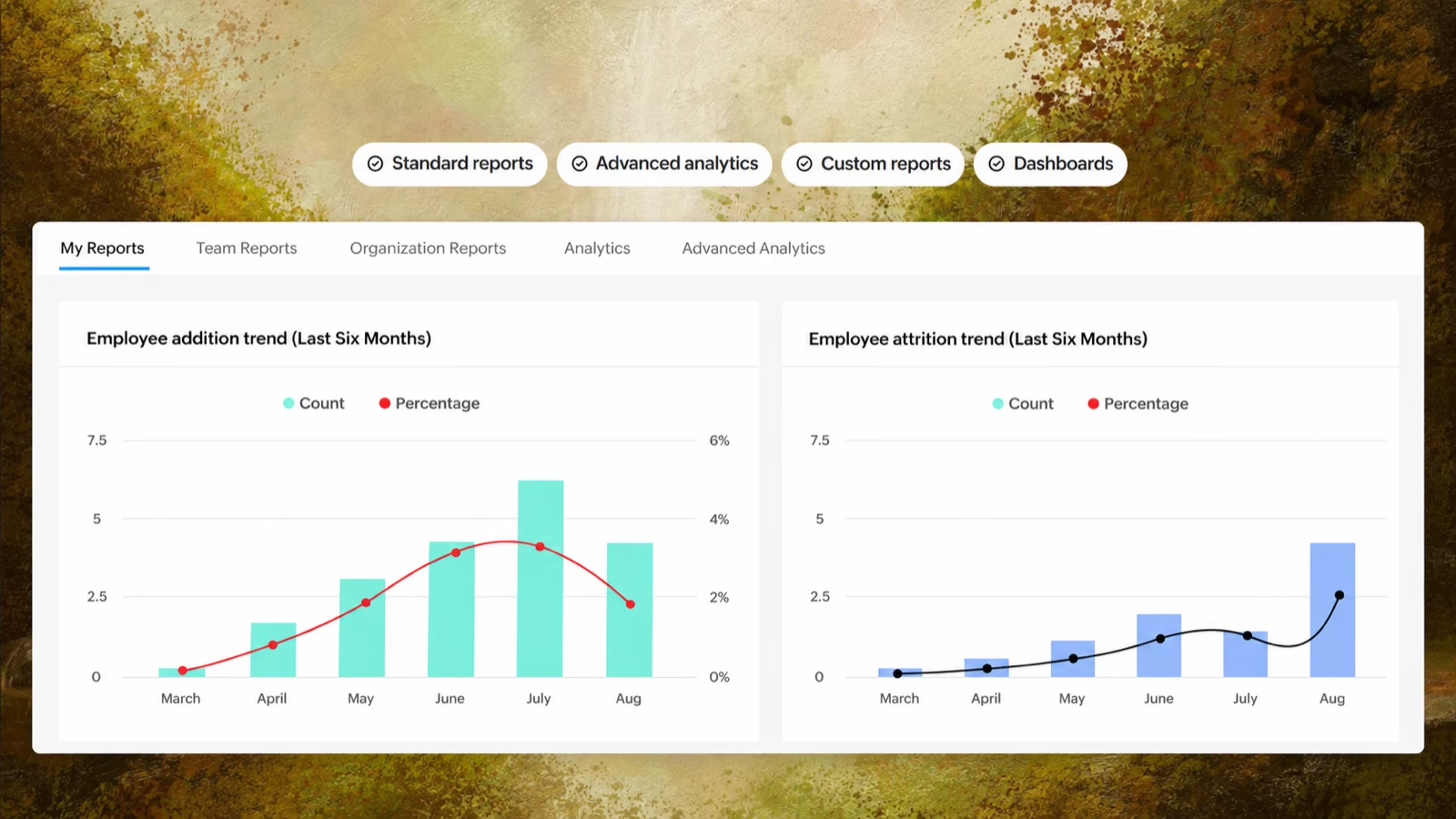
Zoho People is an HR management platform for employee records, attendance, leave, performance, and related HR processes. It supports configurable workflows and is part of Zoho’s wider business software ecosystem.
Its flexibility makes it relevant to organizations that want to configure HR processes around their existing operating requirements.
Key features:
-
Employee records, document management, and employee self-service.
-
Leave tracking, attendance management, shift scheduling, and timesheets.
-
Performance reviews, goal setting, feedback, and appraisal management.
-
Customizable HR workflows, forms, approvals, and automation.
-
Employee onboarding, offboarding, and lifecycle management.
-
HR reports, dashboards, and workforce analytics.
-
Integration with Zoho applications and third-party business tools.
Pros:
-
Configurable HR processes: Supports workflows and policies that can be adapted to organizational requirements.
-
Broad core HR coverage: Combines employee records, attendance, leave and performance functions.
-
Zoho ecosystem connectivity: Can fit into a wider set of Zoho business applications.
Cons:
-
Payroll may require a separate product or integration: Businesses should not assume all payroll processing is native to the selected Zoho People setup.
-
Advanced configurations can increase administration: Highly customized workflows and policies create more configuration to maintain as processes change.
-
The wider product ecosystem can split ownership: Organizations using separate applications for HR, payroll, and other employee functions may still need to manage cross-system data and permissions.
Best for:
Businesses looking for configurable HR management and existing or planned use of Zoho applications.
Pricing:
Zoho People’s basic plans start at ₹48/user/month.
PeopleStrong
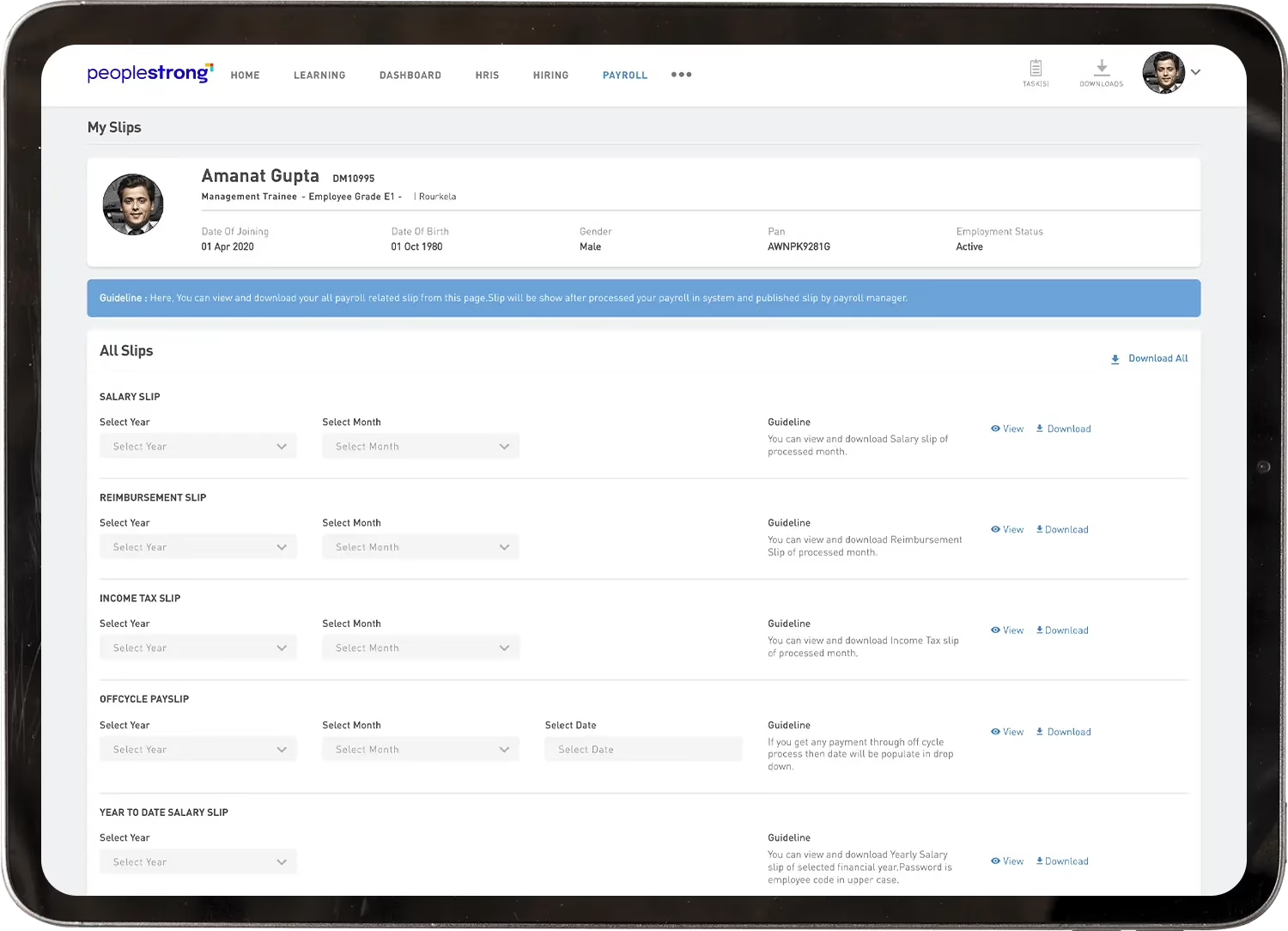
PeopleStrong provides enterprise HR technology covering core HR and talent-related processes. It is relevant to organizations that need to manage employee information, hiring, performance, and workforce administration across larger teams.
Its enterprise focus makes it worth evaluating when HR processes span multiple business units or locations. The specific features available depend on the solution scope and modules selected.
Key features:
-
Employee records, organizational structures, and employee lifecycle management.
-
Recruitment, applicant tracking, and onboarding workflows.
-
Payroll processing and statutory compliance management.
-
Performance reviews, goal setting, and talent development.
-
Attendance, leave management, shift scheduling, and workforce administration.
-
Employee self-service and HR service delivery.
-
Workforce reporting, dashboards, and analytics.
-
Configurable workflows and integrations with enterprise systems.
Pros:
-
Enterprise-oriented HR coverage: Supports multiple HR processes within a broader workforce management setup.
-
Talent and employee lifecycle capabilities: Extends beyond employee records to hiring and performance-related workflows.
-
Suitable for complex organizational structures: Relevant to businesses with multiple teams and locations.
Cons:
-
Not proportionate to every small business: Organizations with basic HR needs may not require its enterprise-oriented scope.
-
Exact module coverage varies by solution: Buyers need to distinguish included capabilities from separately scoped modules.
-
Payroll requirements need explicit validation: Businesses should confirm which Indian payroll and statutory workflows are included in the proposed implementation.
Best for:
Growing and large organizations that need enterprise HR and talent management capabilities.
Pricing:
Custom pricing. Contact PeopleStrong for a quote based on employee count, modules and deployment requirements.
ZingHR
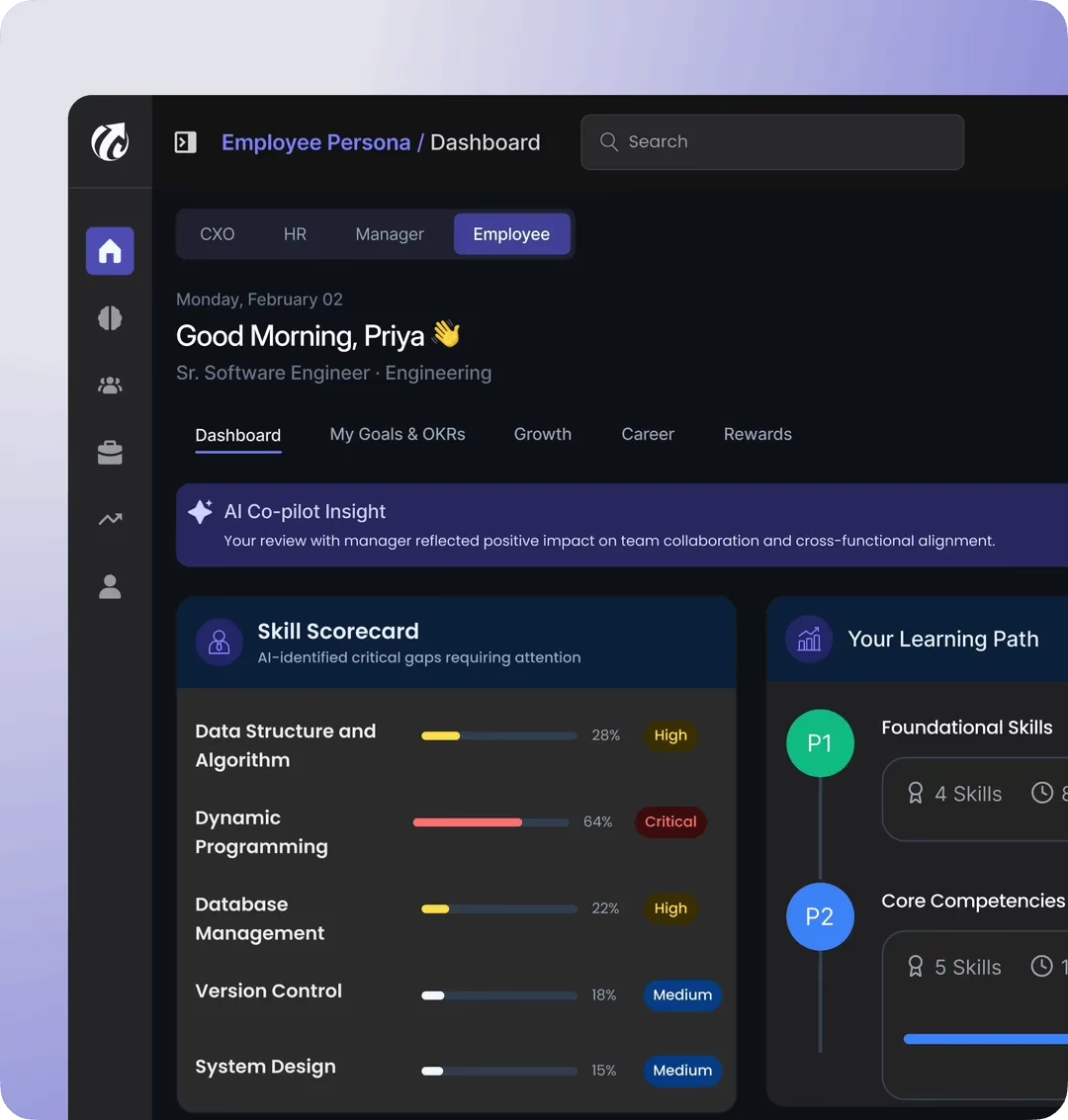
ZingHR offers HR technology covering employee administration, workforce processes, and talent-related functions. Its platform is relevant to organizations looking to bring several HR activities into a shared system.
Businesses should assess its fit against their actual requirements, especially when payroll, attendance, recruitment and employee engagement need to work together across locations.
Key features:
-
Core HR and employee records.
-
Attendance and workforce management.
-
Recruitment and talent processes.
-
HR analytics and reporting.
Pros:
-
Broad HR process coverage: Addresses several employee and workforce management needs.
-
Workforce management capabilities: Relevant to businesses with attendance and employee administration requirements.
-
Talent-related functionality: Supports HR processes beyond payroll and employee records.
Cons:
-
Basic HR teams may not need the full scope: Businesses that only need employee records, leave and payroll may find parts of a broad platform unnecessary.
-
The exact product package matters: Buyers must confirm which modules and integrations are included in their proposed configuration.
-
Indian compliance coverage needs verification by workflow: A broad HR platform description does not establish that every state-specific payroll or statutory requirement is supported in the selected package.
Best for:
Mid-sized and large businesses seeking a broad HR and workforce management platform.
Pricing:
ZingHR doesn’t publish its plans publicly, contact its team for more information.
HROne
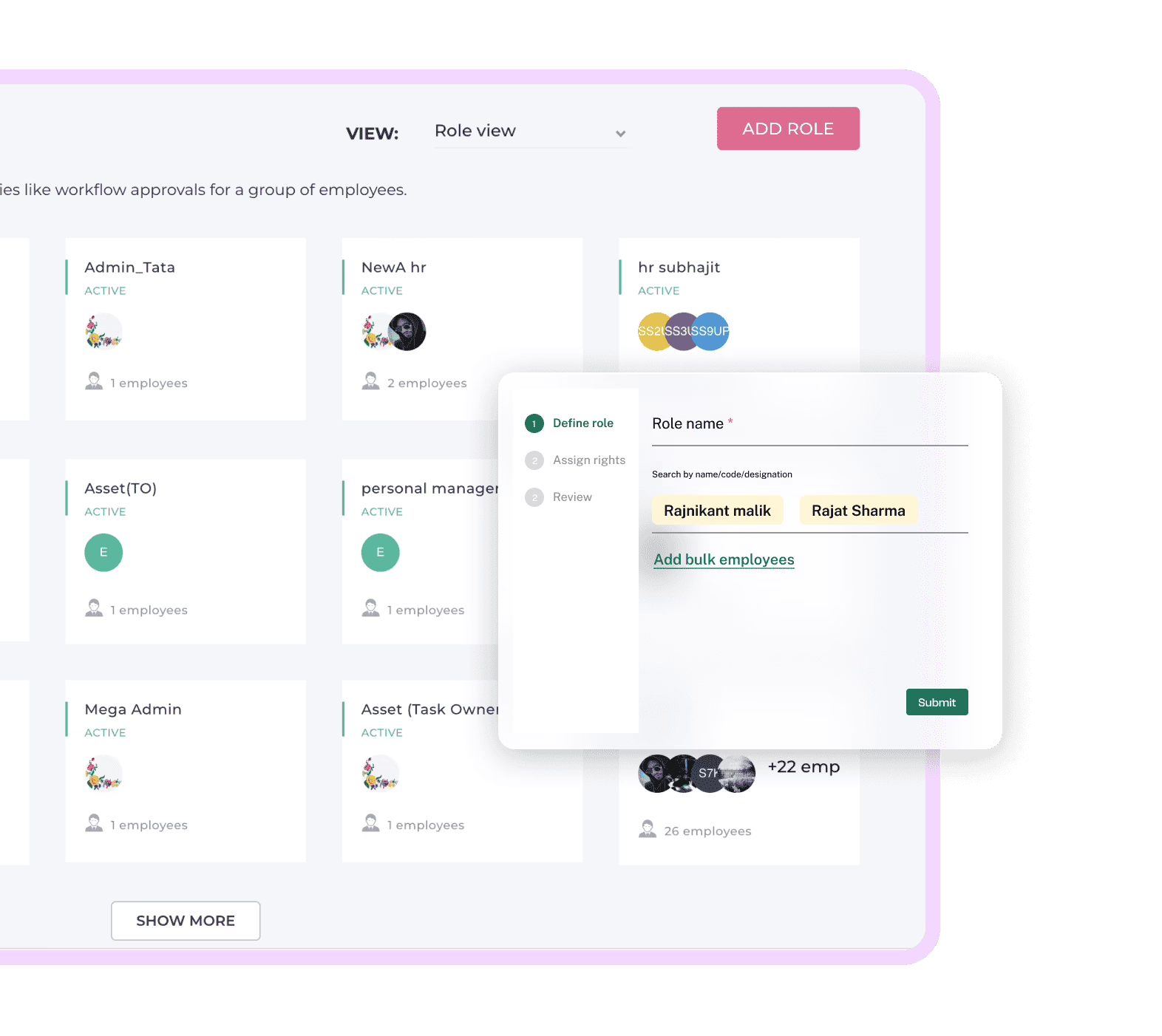
HROne is an HRMS platform covering employee administration and common HR workflows. Its capabilities include processes such as leave, attendance, payroll, employee self-service, and performance management, depending on the selected solution.
It is relevant to organizations looking to reduce manual coordination across everyday HR tasks.
Key features:
-
Core HR and employee database.
-
Leave and attendance management.
-
Payroll and employee self-service.
-
Performance management and workflow automation.
Pros:
-
Workflow-oriented HR management: Supports routine employee requests and approval processes.
-
Multiple HR functions in one system: Can reduce the need to manage every employee process in a separate tool.
-
Employee self-service: Helps employees access supported information and submit routine requests.
Cons:
-
Not designed to replace every specialist business system: Businesses needing detailed project billing, resource utilization or other specialist operational capabilities should assess separate tools.
-
Complex reporting requirements need validation: Buyers should verify that the required report dimensions and export options are available in the selected plan.
-
Module dependencies can affect the final setup: The functionality available to a business depends on the modules and configuration included in its contract.
Best for:
Businesses seeking to centralize and automate everyday HR workflows.
Pricing:
HROne’s basic plan starts at ₹4950/month for up to 50 users, and additional employees can be added at ₹99/month.
factoHR
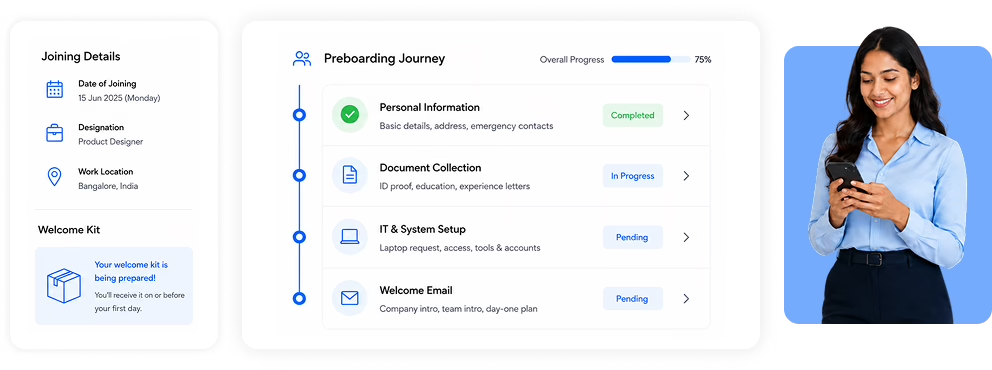
factoHR provides HR and workforce management capabilities, including employee records, attendance, leave and payroll-related processes. Its mobile-enabled approach is relevant to organizations where employees and managers need access to HR functions outside a desktop environment.
Key features:
-
Employee database and self-service.
-
Attendance and leave management.
-
Payroll processing.
-
Performance management and HR reporting.
Pros:
-
Mobile access to HR processes: Supports employee and manager access to relevant HR functions.
-
Integrated attendance and leave: Brings time and leave administration into the HR workflow.
-
Payroll and employee data in one system: Reduces the need to maintain separate employee records for routine HR and payroll tasks.
Cons:
-
Not a specialist project operations platform: Businesses that need detailed project resourcing, timesheets and billing may need additional software.
-
Advanced enterprise requirements need validation: Organizations with complex multi-entity structures should confirm the availability of required controls and reporting.
-
The mobile interface does not replace desktop administration: HR teams handling detailed configuration, reporting and payroll administration may still need desktop workflows.
Best for:
Small and mid-sized businesses that need core HR, attendance, and payroll functionality with mobile access.
Pricing:
factoHR offers a free plan for up to 20 employees, with paid plans ranging from ₹4,999 to ₹6,999/month for up to 50 employees (billed annually).
Zimyo
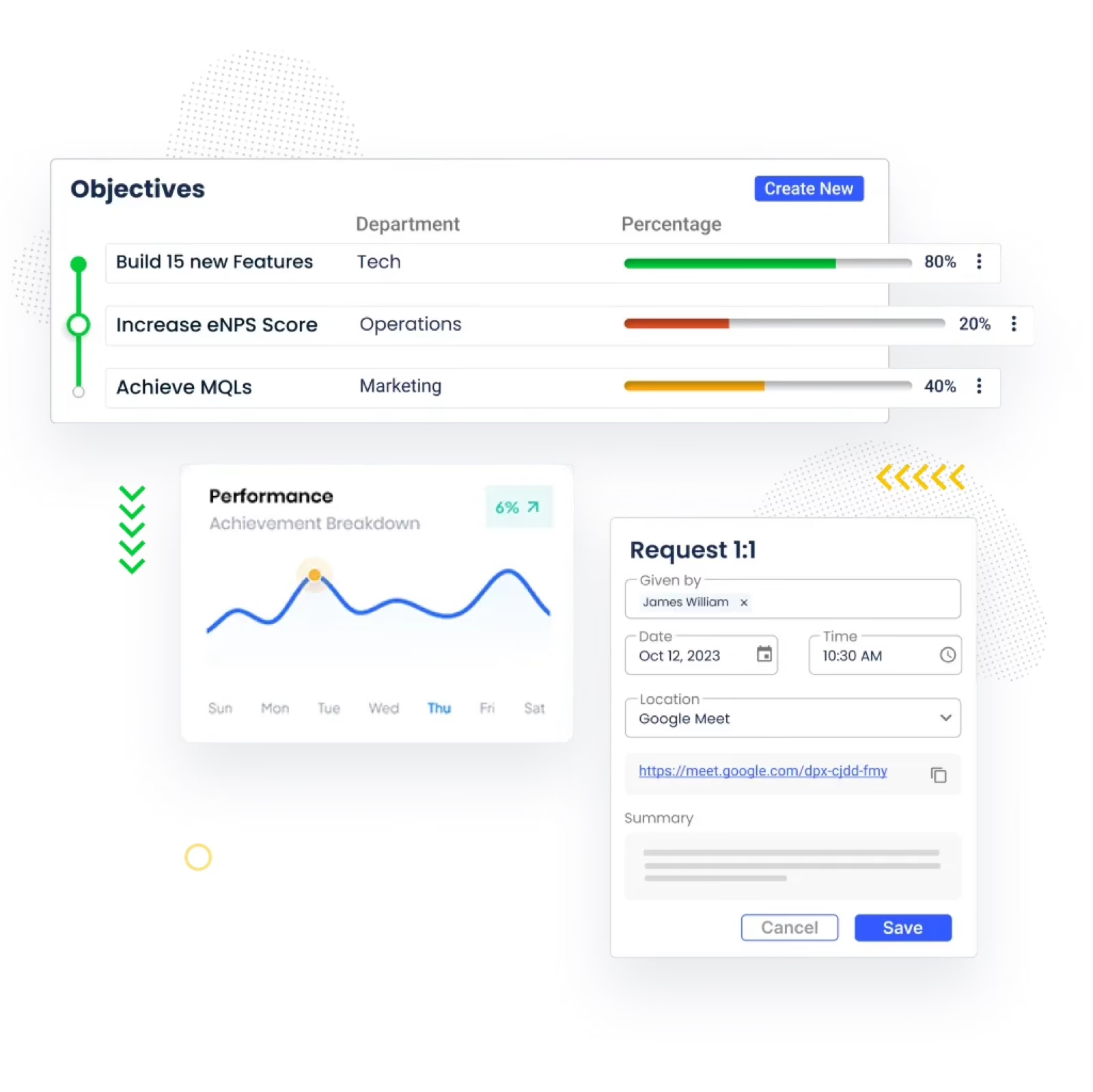
Zimyo provides HRMS capabilities spanning employee administration, attendance, leave, payroll, and performance-related processes. Its modular approach can suit businesses that want to select HR capabilities according to their operating requirements.
The platform is worth evaluating when a company wants to consolidate routine employee processes.
Key features:
-
Employee database, onboarding, offboarding, document management, and employee self-service.
-
Attendance tracking, shift scheduling, leave requests, and holiday calendars.
-
Payroll processing, salary structures, payslips, and statutory compliance management.
-
Recruitment workflows, applicant tracking, and candidate management.
-
Performance appraisals, goal setting, feedback, and employee development.
-
Employee engagement surveys, recognition, and feedback tools.
-
HR reports, workforce analytics, and customizable dashboards.
Pros:
-
Modular HR coverage: Businesses can evaluate functionality according to their requirements.
-
Core employee workflows: Supports common processes such as leave, attendance, and employee administration.
-
Performance-related capabilities: Extends beyond basic HR records to employee performance processes.
Cons:
-
A modular setup can leave gaps between functions: If required capabilities are purchased or configured separately, the overall workflow may not be as connected as a fully integrated deployment.
-
Specialist workforce management may require another product: Businesses with advanced project accounting or resource planning needs should assess the platform’s scope carefully.
-
Complex enterprise requirements need a fit assessment: Large organizations should validate their specific reporting, entity and permission requirements before selecting it.
Best for:
Small and mid-sized businesses looking for a modular HRMS.
Pricing:
Zimyo’s plans run from ₹80/user/month (Basic) to ₹240/user/month (Enterprise), with Standard at ₹160/user/month and a 50-user minimum.
Kredily
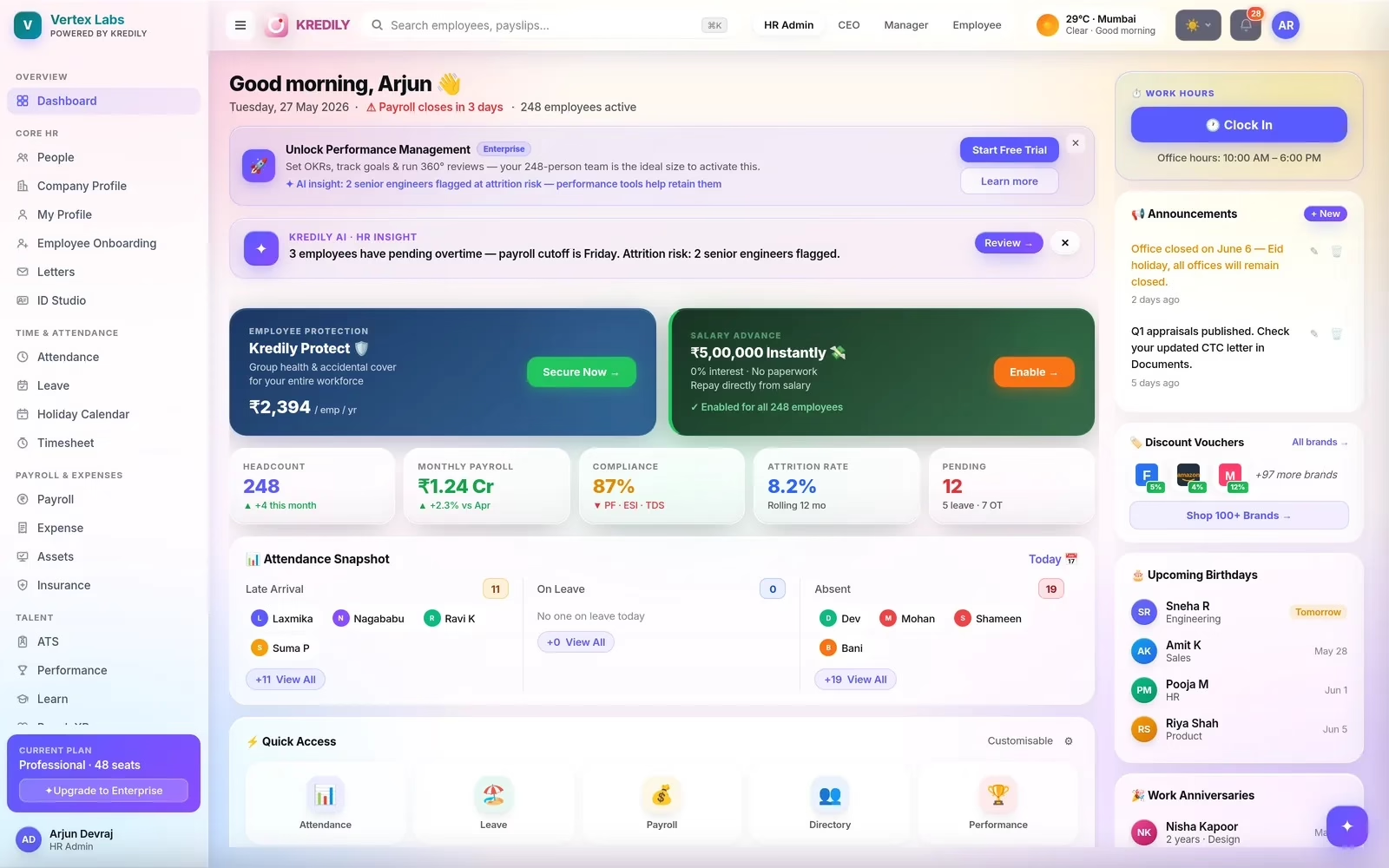
Kredily focuses on HR and payroll processes for businesses looking to digitize employee administration. Its core use cases include employee information, attendance, leave, and payroll-related workflows.
It can be relevant to smaller teams that want to move away from spreadsheets and manual coordination. Businesses with advanced talent management, complex workforce structures, or specialist operational needs should compare its scope with broader HR platforms.
Key features:
-
Employee records, document management, and employee self-service.
-
Recruitment, applicant tracking, and onboarding workflows.
-
Payroll processing, payslips, and statutory compliance for PF, ESI, PT, and TDS.
-
Attendance tracking through GPS, selfie, web, and biometric integrations.
-
Leave management, configurable leave policies, and holiday calendars.
-
Expense claims, reimbursements, and approval workflows.
Pros:
-
Core HR and payroll focus: Addresses common employee administration and salary-processing requirements.
-
Suitable for smaller teams: Its core use cases align with businesses that do not need a broad enterprise HCM deployment.
-
Digitized employee processes: Helps bring employee records, leave and attendance into a system rather than managing everything manually.
Cons:
-
Limited fit for advanced enterprise workforce needs: Organizations requiring complex resource planning, project billing, or multi-entity reporting should evaluate more specialized platforms.
-
Not a complete talent management suite by default: Businesses with extensive succession, strategic workforce planning or advanced talent requirements should verify coverage.
-
Complex workflows need validation: Buyers should confirm that the required approval paths and reporting controls are available.
Best for:
Small businesses looking to digitize core HR and payroll processes.
Pricing:
Kredily offers a free plan, with paid plans starting at ₹1,249/month for 25 employees. Professional costs ₹1,749/month, and Enterprise pricing is custom.
Pocket HRMS
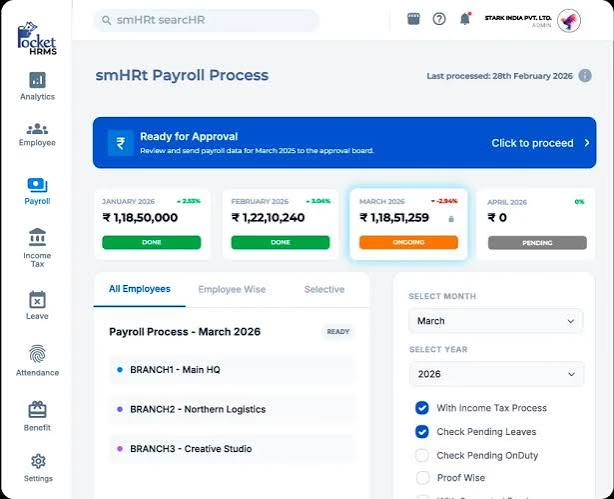
Pocket HRMS provides HR and payroll services covering employee administration and related workforce processes. Its offering includes functions such as employee records, attendance, leave, payroll, and employee self-service.
The platform is relevant to businesses looking to digitize everyday HR activities and reduce manual handling of employee information.
Key features:
-
Employee records, onboarding, offboarding, and employee self-service.
-
Payroll processing, salary structures, payslips, and statutory compliance for PF, ESI, PT, and TDS.
-
Attendance tracking through GPS, geofencing, selfies, and biometric devices.
-
Leave management, leave balances, configurable policies, and approval workflows.
-
Recruitment, applicant tracking, interview scheduling, and onboarding.
-
Performance reviews, goal setting, KPIs, and performance analytics.
Pros:
-
HR and payroll coverage: Supports core employee administration alongside payroll workflows.
-
Employee self-service: Gives employees access to supported HR information and requests.
-
Attendance and leave management: Brings routine time and leave processes into the HR system.
Cons:
-
Not a substitute for specialist project operations software: Businesses needing project resourcing, billable timesheets and project invoicing may need a separate platform.
-
Advanced workforce analytics need verification: Organizations requiring complex resource utilization or cross-project reporting should confirm the available reports.
-
The selected package determines functional coverage: Buyers should confirm whether their required recruitment, performance, and payroll capabilities are included in the chosen plan.
Best for:
Businesses seeking an HRMS that combines employee administration, attendance and payroll.
Pricing:
Pocket HRMS’s standard plan starts at ₹2995/month for up to 50 employees, and additional employees can be added at ₹60/month.
SAP SuccessFactors
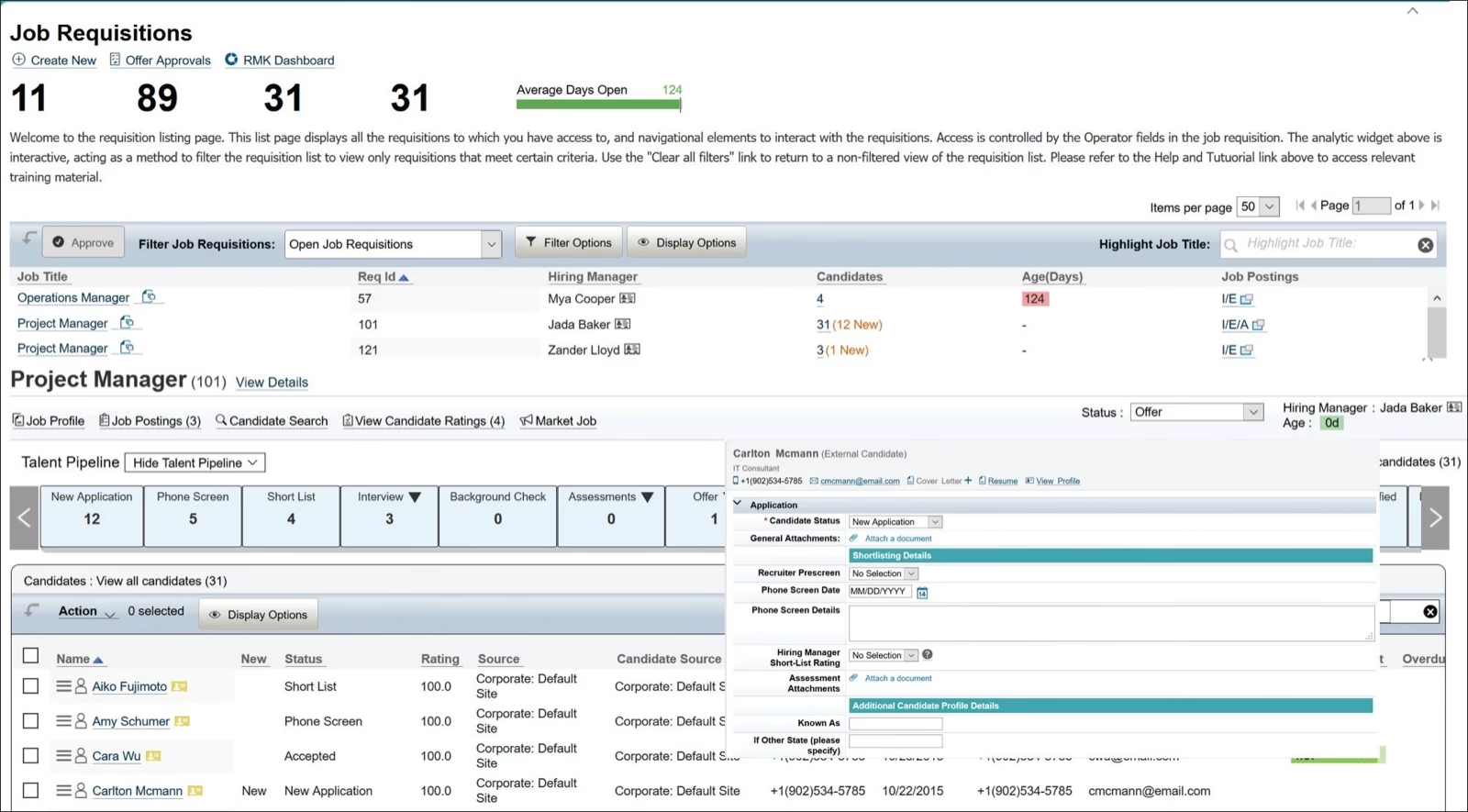
SAP SuccessFactors is an enterprise HCM suite that supports core HR and a broad range of talent and workforce processes. It is designed for organizations that need to manage HR across large employee populations, business units, and geographies.
Its breadth makes it relevant to businesses with complex workforce structures and enterprise system requirements. However, organizations should assess the scope of implementation and the relationship between SuccessFactors modules and their existing SAP or third-party systems.
Key features:
-
Employee records, organizational structures, employee self-service, and global HR administration.
-
Recruitment, applicant tracking, candidate management, and onboarding.
-
Payroll processing and localization for country-specific requirements, depending on the payroll solution selected.
-
Time tracking, attendance, timesheets, and absence management.
-
Performance reviews, goal setting, compensation management, and succession planning.
-
Learning management, skills development, and career development.
-
Workforce planning, people analytics, reporting, and HR dashboards.
Pros:
-
Broad enterprise HCM scope: Supports multiple HR functions within an enterprise-oriented suite.
-
Suitable for complex workforce structures: Relevant to organizations operating across business units and geographies.
-
Talent management coverage: Provides capabilities beyond routine employee administration.
Cons:
-
Disproportionate for basic HR requirements: Small businesses that mainly need leave, attendance and payroll are unlikely to need a full enterprise HCM suite.
-
Implementation can span multiple systems and modules: Enterprise deployments can involve extensive data, integration, configuration, and change-management work.
-
Local payroll needs may require additional components: Buyers must confirm how Indian payroll and statutory requirements will be handled in the proposed architecture.
Best for:
Large enterprises that need broad HCM capabilities and have the resources to support an enterprise implementation.
Pricing:
SAP SuccessFactors Employee Central starts at US$6.30/user/month on 1–5-year contracts. Pricing for other modules is available on request.
ADP India
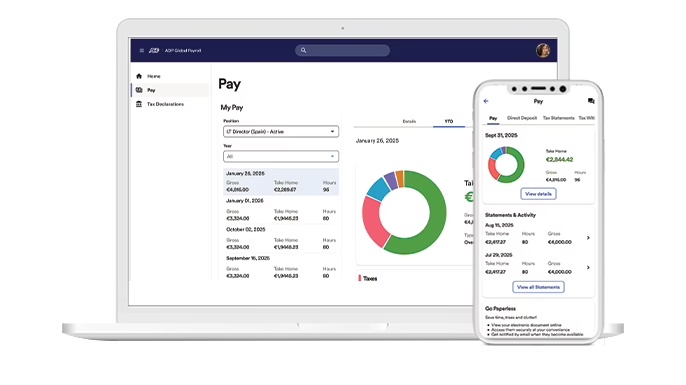
ADP provides payroll and human capital management services for organizations with different workforce and administrative needs. Its relevance to Indian businesses depends on the specific payroll, HR and managed-service requirements in scope.
ADP is worth evaluating when payroll processing and workforce administration are major priorities.
Key features:
-
Payroll processing, salary calculations, payslip generation, and payroll administration.
-
Indian statutory compliance support for PF, ESI, Professional Tax, TDS, and payroll-related reporting.
-
Employee records, workforce information management, and employee self-service.
-
Attendance, leave management, time tracking, and workforce scheduling.
-
HR reporting, payroll analytics, and workforce dashboards.
Pros:
-
Payroll-led capabilities: Relevant to organizations with recurring payroll and workforce administration needs.
-
Enterprise service options: Businesses can evaluate software and service arrangements according to their operating model.
-
Workforce administration support: Can address requirements beyond basic employee record management, depending on the offering.
Cons:
-
The exact solution scope can vary: Buyers cannot assume that all ADP capabilities are part of a single standard product.
-
Not every offering is a full HRMS replacement: Businesses seeking extensive native performance, talent and employee experience functionality should confirm which components are included.
-
Software and managed services are not interchangeable: Organizations need to understand whether they are purchasing software, outsourced services, or a combination of both.
Best for:
Businesses prioritizing payroll and workforce administration, particularly where service support is part of the requirement.
Pricing:
ADP India follows a quotation-based pricing plan.
SumHR
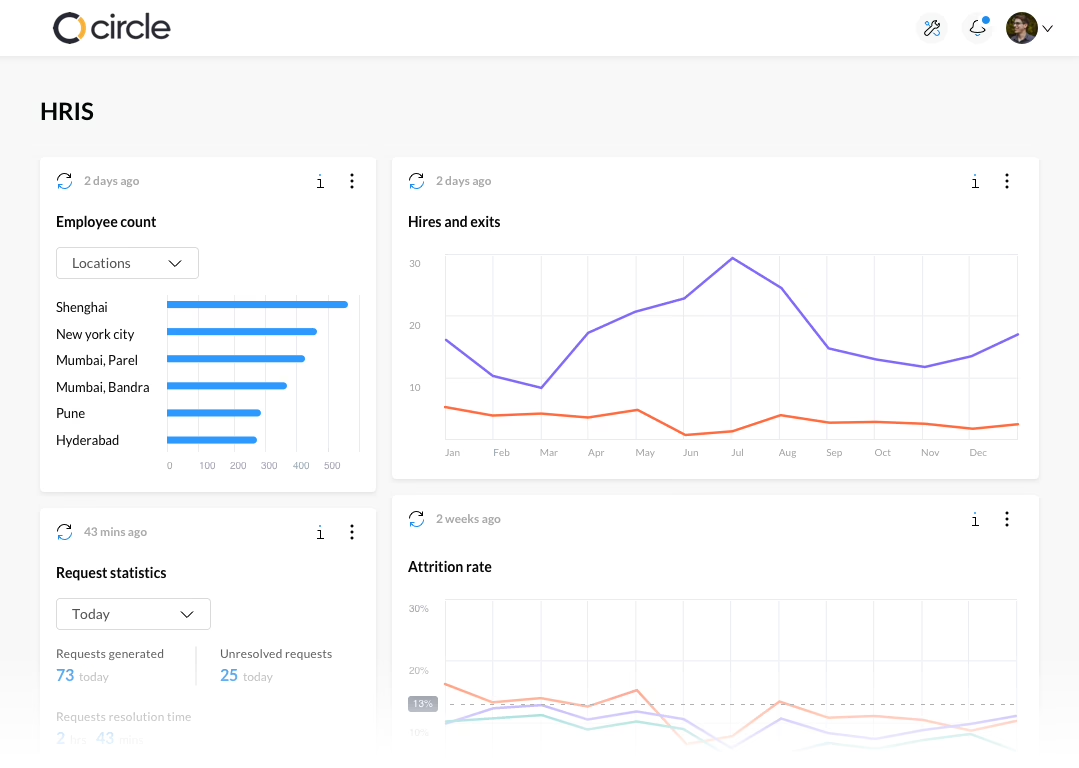
sumHR is an HRMS platform that covers employee information, attendance, leave, payroll and related HR processes. It also offers capabilities such as performance management, onboarding, employee document management, and workflow automation.
The platform is relevant to growing businesses that want to digitize everyday HR administration without adopting a large enterprise HCM suite. Its suitability depends on the depth of reporting, integrations, and workforce functionality the business needs.
Key features:
-
Employee records, directory, and organizational charts.
-
Attendance, shift planning, and leave policies.
-
Payroll, salary structures, and tax-related workflows.
-
Onboarding, offboarding, documents, and performance management.
Pros:
-
Core HR and attendance in one platform: Brings employee information, leave and attendance into a shared HR workflow.
-
Payroll-related capabilities: Supports salary structures and payroll processes for Indian businesses.
-
HR operations beyond employee records: Includes document management, onboarding and related employee lifecycle workflows.
Cons:
-
Not positioned as a specialist enterprise PSA platform: Businesses needing detailed project resourcing, utilization, timesheets and billing should assess another solution.
-
Advanced enterprise requirements may exceed its core focus: Large organizations should validate complex entity structures, workforce reporting, and governance requirements.
-
The selected plan affects functionality: Buyers need to confirm whether the required performance, payroll, attendance and automation capabilities are included or available as add-ons.
Best for:
Small and growing businesses seeking a core HRMS with attendance and payroll workflows.
Pricing:
Startup plan starts at ₹49/user/month.
How to Choose the Right HR Software for Your Business
The best HR software is the one that fits your current HR processes and can support the way your business will operate as it grows. Evaluate the following six factors before making a decision.
| Factor | What to evaluate |
|---|---|
| Company size and growth | Does it support your current workforce and the HR processes you’ll need as you grow? |
| Indian statutory compliance | Does it handle applicable PF, ESI, state-wise PT, TDS, statutory reports, and regulatory updates? |
| Total cost of ownership | What will you pay for subscriptions, implementation, add-on modules, integrations, and support? |
| Implementation and adoption | How will data migration, workflow configuration, employee training, and go-live be handled? |
| Integrations and reporting | Does it connect with your finance, accounting, recruitment, and collaboration tools? Can it sync the required data? |
| Demo or trial | Can you test real workflows, such as onboarding, leave approvals, attendance-to-payroll processing, and manager reports? |
What Statutory Compliance Should HR Software Handle in India?
HR software in India should handle applicable statutory payroll deductions, social security contributions, tax calculations, and labor law requirements. Use the table below to check which PF, ESI, Professional Tax, TDS, and other compliance tasks your chosen platform should support.
| Compliance area | What to verify |
|---|---|
| PF (Provident Fund) | Employee and employer contributions, PF calculations, payroll records, and applicable reports. Confirm which filing tasks are automated and which require employer action. |
| ESI (Employee State Insurance) | ESI eligibility, contribution calculations, payroll deductions, and supporting reports for applicable establishments and employees. |
| Professional Tax (PT) | State-wise Professional Tax requirements, including rates, slabs, exemptions, calculations, and reporting for every state where your employees work. |
| TDS (Tax Deducted at Source) | TDS calculations, tax regime handling, investment declarations, proof collection, and applicable forms and statements. |
| Form 16 and quarterly reporting | Form 16 generation, salary TDS reports, quarterly TDS reporting, and the division of responsibilities between the software, employer, and any external filing service. |
| Gratuity, bonus, and other statutory payments | Applicable calculations, eligibility rules, payment records, and reporting for gratuity, bonus, and other statutory obligations. |
| Labor law updates | How the vendor updates statutory rules, communicates changes, and maintains current calculations and reporting requirements. |
Before choosing a platform, request a walkthrough of your actual compliance scenarios. Ask the vendor to demonstrate the relevant employee categories, locations, calculations, and reports instead of relying on a general claim that the software is compliant.
Which HR Software Should You Choose?
The best fit depends on what you need your HR software to handle.
-
Keka: For businesses that want HR, payroll, talent management, and project operations on one platform.
-
greytHR: For businesses that prioritize payroll processing and statutory compliance.
-
Darwinbox and SAP SuccessFactors: For enterprises with complex HR requirements across teams, business units, and locations.
-
Zoho People: For businesses that want configurable HR workflows within the Zoho ecosystem.
-
sumHR, Kredily, and factoHR: For businesses looking to digitize core HR and payroll processes.
Use these as starting points, then evaluate the shortlisted platforms against your specific requirements.
Ready to simplify HR, payroll, and talent management in one place?
Discover how Keka’s connected capabilities can fit your organization’s needs.