


 Login
Login


“Take care of your employees, and they’ll take care of your business.” – Richard Branson
The problem? Too many employee wellness programs still feel like checkbox exercises. A stress workshop nobody remembers. A gym discount buried in an email. A meditation app only a handful actually use.
And yet, wellness works. The global corporate wellness market is surging from USD 68.41 billion in 2026 to USD 102.56 billion by 2032, and 80% of HR leaders now consider it essential to retention. But Gen Z and Millennials can spot performative wellness from a mile away. They want mental health support, financial wellness tools, and a culture where taking a sick day doesn’t require a guilt trip—not another Fun Friday pizza party.
The disconnect happens when companies invest in wellness platforms based on vendor promises rather than what actually integrates into daily work and drives measurable outcomes.
That’s why the best employee wellness platforms in 2026 go beyond step-counting challenges. They combine mental health resources, personalized wellness journeys, and data analytics that show ROI, not just participation rates.
In this guide, I break down the platforms actually moving the needle in 2026, with transparent pricing, implementation realities, and features that only matter after six months of use.
Because effective wellness shouldn’t feel like another HR program. It should feel like your company actually gives a damn.
Research Methodology: How I Chose the Top Solutions
I didn’t just compile vendor marketing materials and call it research. Instead, I applied clear criteria to separate the platforms that transform workplace wellness from those destined to gather digital dust. Here’s what I looked at:
- Core Features and USPs: Does it solve real problems, or just add another login? I prioritized platforms with distinct capabilities that address genuine gaps and not feature bloat that looks impressive in a deck but overwhelms in practice.
- User Experience and Accessibility: A wellness platform is worthless if nobody uses it. I tested mobile functionality, navigation, and whether even the least tech-savvy employee could find value without a manual.
- Integration and Compatibility: Standalone systems create extra work. I evaluated how seamlessly each platform connects with HR software, benefits administration, and health tech.
- Data Privacy and Security: Employee health data is sensitive. I verified HIPAA compliance, encryption standards, and privacy controls.
- Personalization and Engagement: Generic wellness programs fail fast. I assessed how well each platform tailors experiences and sustains engagement beyond the initial launch.
- Analytics and ROI Measurement: I looked at which platform provides actionable data, including participation, health outcomes, absenteeism trends, that demonstrate effectiveness.
- Scalability and Support: What works for 100 employees often breaks at 1,000. I looked at pricing structures, implementation support, and whether customer service disappears after you sign the contract.
With that foundation, let’s get into the platforms that actually deliver.
Best Employee Wellness Platforms in 2026
Employee wellness platforms centralize every effort of employee wellbeing undertaken by corporates, under a unified and digital platform. Most of the recent software make employee wellness an all-inclusive activity including trackers, health challenges, mental wellbeing perks, coaching, and much more.
Let’s list down the top solutions making the waves in the employee wellness market in 2026:
1. Keka
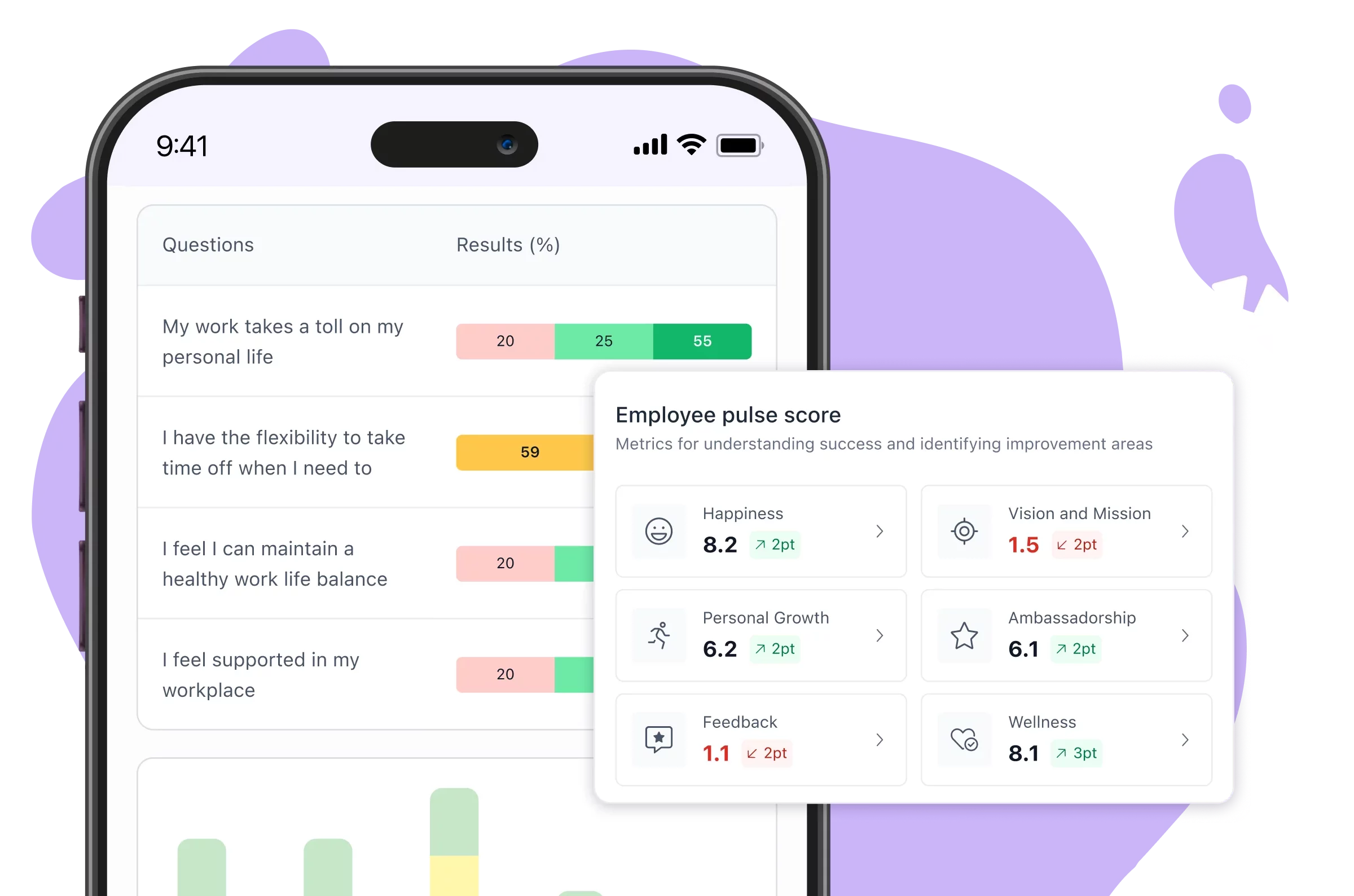
Keka is a modern, cloud-based HRMS that goes beyond payroll and attendance to include employee pulse surveys for measuring real-time sentiment and engagement. Its focus is on making feedback continuous, secure, and actionable within the flow of daily HR operations.


Key Features of Keka:
- 10-Metric Engagement Framework: Keka Pulse 2.0 measures engagement across 10 dimensions, including job satisfaction, leadership effectiveness, company culture, career growth, and work-life balance.
- Real-time Analytics Dashboard: Provides department, location, gender, and role-based insights with participation tracking and trend analysis.
- Anonymous Feedback: Enterprise-grade privacy with restricted access ensures employees can respond openly.
- Automated Weekly Survey: Five questions appear directly in employee dashboards, generating robust participation data within weeks.
- Advanced Question-Level Insights: Drill down into specific trends and receive actionable recommendations.
- Seamless HRMS Integration: Works across Keka’s payroll, performance, attendance, and talent modules for unified data visibility.
- Mobile-Responsive: Accessible via the Keka mobile app with features like GPS and selfie attendance.
- Continuous Feedback Loop: Tracks sentiment shifts, supports one-on-ones, and closes the loop with action plans.
- Enterprise-Grade Security: End-to-end encryption, IP masking, and compliance safeguards sensitive data.
Pros and Cons of Keka:
| Pros | Cons |
|---|---|
| Comprehensive 10-metric framework provides holistic insights | Limited customization in advanced reporting |
| Anonymous feedback with strong security measures | Surveys are organization-wide, with no granular team-level targeting |
| Real-time analytics to enhance branding | |
| Easy-to-use interface praised by HR teams and employees |
Ideal Solution for:
SMBs and enterprises across technology, consulting, and professional services seeking a quick-to-deploy HRMS with built-in employee engagement tools.
Pricing:
Foundation plan starts at $9/user/month.
Expert’s Opinion on Keka:
Keka handles payroll and attendance seamlessly while offering basic wellness tracking. The self-service portal gets employees engaged with their benefits, though comprehensive mental health support requires additional solutions.
2. Limeade
Limeade is a comprehensive employee wellness and engagement platform, now part of WebMD Health Services. It blends HR-focused analytics with holistic wellbeing programs, supporting both organizational culture and employee health.

Key Features of Limeade:
- Data-Driven Engagement Dashboard: Tracks wellness participation, HR satisfaction, and engagement metrics with real-time alerts.
- Holistic Well-Being Framework: Covers mental health, physical fitness, financial wellness, and social connection throughout the employee lifecycle.
- Pulse Surveys: Customizable surveys capture employee sentiment and provide actionable reports.
- Communication Hub: Centralized platform for HR announcements, culture-building messages, and change management support.
Pros and Cons of Limeade:
| Pros | Cons |
|---|---|
| HR-focused insights enable workforce planning and employee development | Limited customization in HR reporting features |
| Integrates with HR systems for smoother wellness management | Custom pricing model lacks transparency |
| Supports multicultural teams and global compliance | Mixed ratings across NPS and feature satisfaction |
| Expands beyond wellness into career and financial development | Enrollment rates reportedly lower than industry averages |
Ideal Solution for:
Mid-sized and large organizations with diverse, global workforces looking for a platform that unites HR engagement with holistic wellness programs.
Pricing:
Custom, consultation-based pricing model.
Expert’s Opinion on Limeade:
Limeade transforms employee engagement through its combination of pulse surveys and wellness challenges. The real-time feedback loop and the customizable rewards system actually drive participation. However, the integration issues mentioned across reviews are real, so budget time for IT support during implementation.
3. Wellable
Wellable is a global wellness platform that enables organizations to design engaging and flexible well-being programs using modular technology and curated services. It’s designed to fit into existing HR ecosystems while driving measurable improvements in employee health and workplace satisfaction.

Key Features of Wellable:
- HR System Integration: Direct API connections with leading HRIS platforms for seamless employee onboarding, unified reporting.
- Gamified Engagement: A points-based system integrated with recognition and rewards programs to make participation fun.
- Clinical Event Integration: Tracks preventive health screenings and integrates with benefits administration.
- Global Workforce Support: Localized content and multi-country program deployment for distributed teams across diverse geographies.
Pros and Cons of Wellable:
| Pros | Cons |
|---|---|
| Quick 4-week implementation with minimal IT disruption | Modular pricing can escalate costs as features scale |
| Proven programs for tobacco cessation and preventive health | Limited native HR features require integration with existing HRIS platforms |
| Strong support for distributed international teams | Primarily English-only, limiting adoption in some regions |
| Gamification drives higher participation rates | Smaller platform with fewer enterprise-grade analytics compared to competitors |
Ideal Solution for:
SMBs and mid-sized organizations in technology, professional services, and consulting that want quick deployment, fitness tracker integration, and HR-friendly wellness management.
Pricing:
Essential plan starts at $100/month + $4/user/month.
Expert’s Opinion on Wellable:
What stands out about Wellable is how quickly teams adopt it thanks to the mobile-first design and flexible program options. Just note that reporting could go deeper if granular health metrics beyond participation rates are needed.
4. Spring Health
Spring Health is a clinically validated mental healthcare platform that integrates seamlessly into HR and benefits infrastructures. It focuses on precision care, offering personalized support that reduces HR’s administrative burden while ensuring measurable improvements in workforce mental health.

Key Features of Spring Health:
- Benefits Integration: Automated enrollment through existing HR and benefits systems with streamlined reporting.
- Precision Care Matching: AI-driven algorithms that match employees to the right mental health providers based on role, stress levels, and accessibility needs.
- Digital Platform: Mobile and web apps with self-service features for employees, plus manager dashboards for team wellness insights.
- Family Care Support: Extends mental health coverage to dependents, reducing overall benefits complexity and costs.
Pros and Cons of Spring Health:
| Pros | Cons |
|---|---|
| Measurable ROI with clinical outcomes data and reduced healthcare costs | Higher implementation costs compared to traditional programs |
| Global provider network supporting distributed HR teams | Mental health focus requires integration with broader HR wellness initiatives for comprehensive coverage |
| Family-inclusive coverage boosts overall satisfaction | May require significant change management support from HR teams during EAP transition |
| Improves access speed compared to traditional EAPs | Primarily mental health focused, requiring additional vendors for comprehensive HR wellness programs |
Ideal Solution for:
Mid-to-large enterprises in healthcare, finance, consulting, and technology that prioritize mental health and want clinically validated solutions with measurable outcomes.
Pricing:
No public pricing plans, custom quotes available on request.
Expert’s Opinion on Spring Health:
Spring Health’s AI matching delivers faster therapy access than traditional EAPs, with employees reporting genuinely helpful sessions. The clinical quality is there, but billing complications require dedicated admin oversight.
5. Lyra Health
Lyra Health delivers workforce mental health solutions that combine provider networks, AI-powered insights, and HR consulting services. It helps HR leaders not only manage employee well-being but also understand its impact on retention, productivity, and organizational culture.

Key Features of Lyra Health:
- AI-Driven HR Analytics: Predictive insights on workforce well-being and retention risks with anonymized mental health data.
- Comprehensive Provider Network: Global therapist network integrated with HR systems for seamless referrals and care management.
- Evidence-Based Treatment: Clinically validated therapies with outcome-based reporting for HR and benefits teams.
- Organizational Consulting: Strategy sessions, manager training, and policy support to build mentally healthy workplaces.
Pros and Cons of Lyra Health:
| Pros | Cons |
|---|---|
| High utilization rates with guaranteed ROI | Premium pricing may be too high for smaller organizations |
| Advanced analytics for workforce mental health trends | Primarily North America-focused, with slower global expansion |
| Proven outcomes in reducing healthcare costs | Implementation complexity requires strong HR change management |
| Family-inclusive programs covering children, teens, and couples | Limited scope outside of mental health |
Ideal Solution for:
Large enterprises and mid-sized companies in finance, healthcare, tech, and professional services that want comprehensive mental health support with clear business impact.
Pricing:
Outcome-based pricing model.
Expert’s Opinion on Lyra Health:
Lyra consistently delivers high-quality therapist matches, which employees notice and appreciate when they’re struggling. The evidence-based approach and global provider network make it suitable for distributed teams with complex needs. However, the premium pricing reflects the clinical rigor.
6. TELUS Health
TELUS Health combines the reliability of a traditional Employee Assistance Program (EAP) with the innovation of digital wellness tools. Its integrated approach helps HR teams manage both preventive and responsive care while supporting diverse employee needs worldwide.

Key Features of TELUS Health:
- Integrated EAP and Wellness Platform: Confidential counseling paired with proactive digital resources.
- COM-B Behavioral Model: Evidence-based framework driving long-term behavioral change.
- Comprehensive Health Assessment: Real-time biomarker data, activity tracking, and personalized insights.
- Holistic Wellness Hub: Access to fitness classes, mindfulness, nutrition, and mental health resources in one platform.
Pros and Cons of TELUS Health:
| Pros | Cons |
|---|---|
| Reduces stigma by merging EAP with proactive wellness | Can feel overwhelming for employees unfamiliar with digital wellness tools |
| Covers mental, physical, and emotional aspects of health | Shared login systems may create privacy concerns |
| Evidence-based engagement model with proven results | Less customizable than standalone niche platforms |
| Strong adoption in healthcare and government sectors | Integration challenges when replacing existing vendors |
Ideal Solution for:
Medium to large organizations in healthcare, government, and professional services looking for integrated EAP and wellness solutions that balance prevention with care.
Pricing:
Custom pricing available upon request.
Expert’s Opinion on TELUS Health:
TELUS Health covers impressive ground with EAP, virtual care, and multilingual support all in one platform. The 24/7 availability works well for shift workers and global teams, though response times for urgent requests can lag behind expectations.
7. Modern Health
Modern Health is a global mental wellness platform that blends clinically validated assessments, personalized care pathways, and a network of certified coaches and licensed therapists. Its unique mix of data-driven insights and community care makes it a strong partner for HR teams seeking both analytics and culture-building tools.

Key Features of Modern Health:
- Modern Health Central: Real-time HR dashboard with anonymized engagement data, utilization rates, and organizational well-being scores broken down by department or location.
- Circles Community Care: Group sessions led by licensed professionals, including skill building workshops, peer discussions, and on-demand resources.
- WHO Well-Being Assessment: Integrated triage system that aligns employees with the right care option.
- Global Provider Network: Mental health professionals in 30+ languages, ensuring culturally competent care across distributed workforces.
Pros and Cons of Modern Health:
| Pros | Cons |
|---|---|
| Strong HR analytics support data-driven workforce planning | Higher costs compared to traditional EAPs |
| Community features combine wellness with engagement and culture initiatives | Complex platform that requires structured HR communication and rollout |
| Global provider network simplifies international HR administration | Primarily mental health-focused, needing integration with broader wellness tools |
| Outcomes tracking gives HR measurable ROI on benefits programs | Community features may not resonate equally across employee demographics |
Ideal Solution for:
Large enterprises with advanced HR teams in tech, media, and professional services, especially those looking for a blend of analytics and community-driven care.
Pricing:
Custom quotation-based plans.
Expert’s Opinion on Modern Health:
Modern Health bridges the gap between therapy and everyday wellness through its coaching and self-guided content library. The utilization tracking helps prove program value to leadership, and employees engage with the gamified elements. Administrative hiccups around scheduling and billing come up frequently enough to mention, so factor in some extra coordination time.
8. WellRight
WellRight is a customizable wellness platform built to integrate seamlessly with existing HR systems. Its six-dimensional approach to well-being makes it a comprehensive choice for HR teams managing diverse employee populations.

Key Features of WellRight:
- Six-Dimensional Wellness Framework: Covers physical, emotional, social, financial, intellectual, and occupational wellness, aligned with HR development goals.
- Extensive Challenge Library: 100+ customizable wellness challenges for team building, engagement, and culture enrichment.
- NCQA-Certified Assessments: Validated health risk assessment tools that provide HR with detailed population health insights.
- Real-Time HR Control: Strong administrative customization, white-label branding, and seamless integration with HR vendor ecosystems.
Pros and Cons of WellRight:
| Pros | Cons |
|---|---|
| Exceptional customization supports complex HR requirements | No public pricing; requires demos and consultation |
| Six-dimensional model aligns wellness with HR development strategy | No API support, limiting deeper integrations |
| High employee satisfaction ratings tied to engagement and retention | Platform complexity may need dedicated HR resources |
| Rich library of wellness challenges for year-round engagement | Limited adoption outside North America compared to global peers |
Ideal Solution for:
Mid-to-large organizations with dedicated HR teams, particularly in healthcare, insurance, and professional services that are looking for high customization and a structured wellness framework.
Pricing:
Custom pricing, available upon consultation.
Expert’s Opinion on WellRight:
WellRight shines when highly customized wellness programs with hands-on support from their team are needed. The challenge libraries and biometric integration drive measurable health improvements, which resonates with data-focused executives.
9. Castlight Health
Castlight Health focuses on healthcare navigation integrated with HR benefits. Its AI-driven personalization engine helps employees access the right care while reducing HR’s administrative workload.

Key Features of Castlight Health:
- AI-Driven Navigation: Personalized healthcare recommendations and benefits education to guide employees effectively.
- Universal HR Platform: Employer branding, multi-channel communications, and HR dashboards in one place.
- Integrated Rewards System: Connects wellness activities with recognition and incentives to boost engagement.
- Care Guidance for HR: End-to-end benefits integration, vendor management, and consolidated reporting.
Pros and Cons of Castlight Health:
| Pros | Cons |
|---|---|
| Reduces HR service desk load by simplifying healthcare navigation | Complex implementation needs extensive HR oversight |
| Strong integration with HR benefits systems for unified experience | No transparent pricing; requires consultation |
| AI personalization improves engagement and utilization | Focus on healthcare navigation may overshadow broader wellness features |
| Partner ecosystem expands HR program management capabilities | Ongoing management may need dedicated HR tech resources |
Ideal Solution for:
Large enterprises with complex HR and benefits teams, particularly those managing multiple vendors and high-deductible health plans.
Pricing:
Customizable quotation-based plans.
Expert’s Opinion:
Castlight’s navigation tools help employees make smarter healthcare spending decisions, which directly impacts benefits budgets. The personalized recommendations based on claims data are genuinely useful, though the interface feels dated compared to newer platforms.
10. YuMuuv
YuMuuv is a lightweight, cost-effective wellness platform that enables HR teams to launch employee challenges quickly. With strong language and device support, it’s designed for global adoption without heavy system integration.

Key Features of YuMuuv:
- Unlimited Challenges: Fitness, mindfulness, yoga, and team challenges to enhance collaboration and culture.
- Team Management: Supports department-based and cross-functional initiatives for team bonding. ‘
- Global Language Support: Available in 32+ languages for consistent program delivery worldwide.
- Device Integration: Connects with major fitness trackers, supporting BYOD initiatives.
Pros and Cons of YuMuuv:
| Pros | Cons |
|---|---|
| Quick deployment, launch wellness programs in days and not months | Limited analytics compared to enterprise platforms |
| Highly affordable, supporting lean HR budgets | Occasional syncing issues with devices |
| Global readiness with multilingual support | Limited integrations with broader HR systems |
| Minimal administrative overhead, easy to manage | Narrower wellness focus than full-suite platforms |
Ideal Solutions for:
Small to mid-sized organizations and remote/hybrid teams that want affordable, easy-to-deploy wellness programs with global compatibility.
Pricing:
Starts at $800 for 25 users for up to 45 days.
Expert’s Opinion on YuMuuv:
YuMuuv gets teams moving through friendly competition and social leaderboards that actually feel fun rather than forced. The activity tracking requires minimal setup, and employees stay engaged through the challenge mechanics.
Best Employee Wellness and HRMS Platforms in 2026: A Comparison
Now that we’ve explored each platform’s individual strengths and capabilities, let’s put them side by side to help you make an informed decision.
Here’s a quick comparison table to help you evaluate which platform aligns best with your organizational needs:
| Platform | Key Features | Best For | Free Trial |
|---|---|---|---|
| Keka |
| Small to large enterprises | Yes |
| Limeade |
| Medium-sized organizations | Custom consultation |
| Wellable |
| SMBs | Yes |
| Spring Health |
| Mid-to-large enterprises | Custom consultation |
| Lyra Health |
| Large enterprises | Custom consultation |
| TELUS Health |
| Mid-sized organizations | Yes |
| Modern Health |
| Large enterprises | Yes |
| WellRight |
| Mid-sized to large organizations | Yes |
| Castlight Health |
| Large enterprises | Yes |
| YuMuuv |
| Small to mid-sized organizations | Yes |
The landscape of employee wellness platforms continues to evolve, but these solutions represent the current gold standard for organizations serious about employee wellbeing.
Which Employee Wellness and HRMS Platform is the Right Pick for You
Choosing the right employee wellness platform isn’t a one-size-fits-all decision. The right fit depends on your company’s size, industry, and workforce needs. To make this practical, let’s look at common HR scenarios and the platforms that serve them best.
Fast Growing Tech Startups
You’re scaling fast, hiring aggressively, and need to build a strong wellness culture early. Cost is a factor, but flexibility and scalability matter more.
- Keka: Combines HRMS with wellness features, plus employer branding support like Glassdoor integration.
- Wellable: Quick setup (just four weeks) with gamified engagement, though it requires a separate HRMS integration.
Mid-Sized Professional Services Firm
Consultants and client-facing teams often face long hours and burnout. You need tools to reduce stress and improve balance without hurting productivity.
- Spring Health: Clinical-grade mental health care with proven ROI.
- Keka: Engagement framework with 10 wellness metrics, plus anonymous surveys for genuine feedback.
Global Enterprises
You’re managing multicultural, distributed teams across time zones. Consistency matters, but so does local customization.
- Modern Health: 30+ languages, global provider network, advanced analytics.
- TELUS Health: International presence with strong cultural adaptation.
- Keka: More regional but works well with global partners and ensures enterprise-level security.
Healthcare Organizations
Your workforce faces high stress, irregular hours, and complex healthcare challenges. You need evidence-based programs that understand these realities.
- Lyra Health: Clinically validated treatments with industry expertise.
- WellRight: NCQA-certified and highly customizable for healthcare environments.
Small Businesses with Limited HR Resources
A lean HR team means you need maximum impact with minimal admin burden. Affordability is key but so is keeping employees engaged.
- Keka: Higher investment upfront but replaces multiple vendors with a single HRMS + wellness solution.
- YuMuuv: Simple, cost-effective ($800 for 25 users), and easy to roll out.
Use this table to systematically evaluate which platform aligns best with your organization’s priorities.
| Use Cases | Ideal Solution | Key Strengths |
|---|---|---|
| Fast-growing tech startups | Keka/Wellable | Quick deployment, scalability |
| Mid-sized professional services | Spring Health/Keka | Mental health focus, strong analytics |
| Global enterprises | Modern Health/TELUS Health | Multi-language, global adaptability |
| Healthcare organizations | Lyra Health/WellRight | Clinically validated, healthcare-specific |
| Small businesses | Keka/YuMuuv | Cost-effective, minimal HR admin |
| Remote-first companies | Keka/Modern Health | Mobile-friendly, strong virtual engagement |
| Manufacturing | WellRight/TELUS Health | Physical wellness, shift-worker programs |
| Financial services | Lyra Health/Castlight Health | Mental health crisis support, executive wellness |
At the end of the day, the best platform should feel like a natural extension of your company culture, not just another HR tool. Whether you go for a specialized wellness vendor or an all-in-one HRMS like Keka, success depends on how well you implement, communicate, and lead wellness from the top.
How to Choose the Right Employee Wellness and HRMS Platform in 2026
With 80% of HR leaders ranking wellness as essential for retention and engagement, picking the wrong platform can be costly. To avoid that, here’s a framework you can follow:
Define Your Wellness Goals
Don’t chase every feature. Decide whether your focus is physical health, mental health, engagement, or cost control.
Goal Clarity Exercise:
- List your top 3 challenges (e.g., stress, turnover, healthcare costs).
- Define 2–3 measurable outcomes for the next 12 months.
- Map platform features directly to these goals.
Action Tip:
Consider whether you need crisis intervention tools like Spring Health’s clinical-grade mental health support, or comprehensive engagement measurement like Keka’s 10-metric framework that connects wellness to broader organizational health.
Evaluate Workforce Demographics and Preferences
Your workforce’s makeup should guide your choice. A young, tech-savvy team will respond differently than a multi-generational or global workforce.
Assessment Steps:
- Survey employee on wellness platforms.
- Identify language requirements.
- Map device use and tech comfort levels.
- Review remote/hybrid/on-site mix.
Action Tip:
Younger teams may love Wellable’s gamification, while global teams will need Modern Health’s 30+ languages or YuMuuv’s 32+ languages.
Assess Integration Needs
A platform that doesn’t sync with your HRIS or benefits stack creates more work than it saves.
Integration Requirements Checklist:
- Map all systems needing integration.
- Decide must have vs. Nice-to-have features.
- Confirm IT bandwidth for setup.
- Evaluate SSO needs for user ease.
Action Tip:
Platforms like Keka offer built-in HRMS functionality, eliminating integration challenges entirely, while specialized solutions like Castlight Health excel at connecting with existing benefits ecosystems.
Prioritize Data Security and Privacy
Employee wellness data is highly sensitive. Compliance with healthcare regulations and transparent data policies are non-negotiable for building user trust and avoiding legal issues.
Security Verification Process:
- Verify HIPAA compliance.
- Review encryption and data residency.
- Check vendor’s breach history.
- Confirm employee control over data sharing.
Action Tip:
Pick a vendor with granular privacy controls so employees feel safe participating.
Balance Budget Constraints and ROI Potential
Look beyond subscription fees. Factor in total cost of ownership: setup, training, IT, and long-term savings.
ROI Framework:
- Calculate current wellness costs.
- Add setup and training costs.
- Estimate savings from lower turnover and health costs.
- Compare per user vs. flat pricing.
Action Tip:
A customizable platform that scales with you (like Keka or WellRight) can often deliver better value than flashy tools you’ll underuse.
Evaluate User Experience and Support
Even feature-rich platforms fail if employees don’t use them consistently. Intuitive interfaces and responsive support drive higher engagement and quicker issue resolution.
User Experience Testing:
- Trial demo accounts.
- Test mobile app experience.
- Check onboarding flow.
- Send test queries to support.
Action Tip:
Platforms with complex interfaces require extensive training, while solutions prioritizing user experience see higher adoption rates and sustained engagement.
Analyze Analytics and Reporting Capabilities
Look for robust, actionable insights that help you continuously refine your program and demonstrate measurable impact to leadership.
Analytics Requirements Assessment:
- Define KPIs (retention, productivity, healthcare savings).
- Check real-time dashboard availability.
- Ensure benchmarking against industry standards.
Action Tip:
Comprehensive platforms like Keka provide detailed analytics connecting wellness metrics to business outcomes, while simpler solutions may offer basic participation tracking.
Your wellness platform choice will shape employee experience for years. Take the time to align goals, demographics, integrations, and culture before signing on. A thoughtful decision now ensures your wellness program creates lasting value for both the employees and the business.
Your Next Steps Towards Employee Wellness
Here’s the reality: the difference between a wellness program that reshapes company culture and one that wastes budget isn’t in its features but whether the platform fits your employees’ actual needs.
The organizations winning in 2026 know that wellness isn’t a standalone HR initiative. It’s intricately woven into how they measure, manage, and motivate their workforce every day.
The best platforms—whether it’s Keka’s unified engagement framework, Spring Health’s clinical outcomes, or Modern Health’s global community support—share one trait: they make participation effortless. When wellness feels natural instead of like another task, employees engage, and leadership finally sees the ROI.
The companies attracting and retaining top talent today aren’t offering programs that sit unused in HR’s toolkit. They’re creating wellness experiences employees actually want to be part of, like experiences that strengthen culture, reduce burnout, and showcase a workplace people are proud to join.
Make this choice with the same care you put into your employer brand, because the two are inseparable. Pick a platform your employees will thank you for, not one they’ll quietly ignore.


