


 Login
Login


What are the best paycom alternatives for US mid-market companies in 2026?
| Tool | Best For | Beats Paycom On (User Reviews) | Pricing (Indicative) |
|---|---|---|---|
| Rippling | Fast scaling companies | Modern UI, integrations, automation flexibility | Pricing typically starts at a $35/month base fee plus ~$8 per employee per month for the core platform |
| ADP Workforce Now | Compliance heavy organizations | Global coverage, compliance, HR outsourcing | Custom pricing |
| Keka HR | Mid-market companies | Local compliance, flexible workflows | Pricing typically starts around $9–$22 per employee per month depending on the plan. |
| Paylocity | Engagement focused teams | Modern UI, native engagement tools | Custom pricing |
| Paycor | Analytics driven HR teams | Manager workflows, bundled talent tools | Pricing typically starts around $99–$199 per month plus ~$5–$8 per employee per month for core plans. |
| BambooHR | People focused SMBs | Learning curve, intuitive self-service | Custom pricing |
| Workday | Mid-market and global organizations | Unified HR, payroll, and finance platform with scalable architecture | Custom pricing |
Why do companies look for Paycom alternatives?
As an HR practitioner with over 6 years in the trenches, I know companies don’t change HRMS on a whim. Switching core systems is disruptive, expensive, and risky. It usually happens only when the platform starts creating more friction than value.
So, I asked myself: where do Paycom users hit that friction point? The answer becomes clear when you dig into reviews on platforms like G2, Capterra, Gartner Peer Insights, and Reddit. A few recurring issues show up again and again:
1. Interface and usability issues
Paycom’s interface feels outdated and clunky, requiring multiple steps for simple tasks that competitors handle in fewer. Users report frequent bugs, like employee profile changes not updating automatically, leading to manual fixes and audits. The ATS lacks modern features, and navigation demands workarounds.
2. Inconsistent customer support
Support teams often lack product knowledge, provide reflexive answers without solutions, and take weeks for resolutions. Implementation is rushed, with high team turnover and unaddressed errors like incorrect payroll data migration. Clients feel dismissed, facing unexpected fees for Paycom’s mistakes.
3. Implementation challenges and integration gaps
Onboarding creates chaos: payroll errors, late payments, and mismatched data, often without parallel testing. Integrations fail with tools like QuickBooks, and no test environment exists for safe changes.
4. High costs relative to value
Pricing is steep relative to features used, with hidden fees for errors, rushes, or cancellations (e.g., $10k exit fees). Many note it doesn’t justify the cost without full utilization, prompting switches to cheaper, more intuitive alternatives.
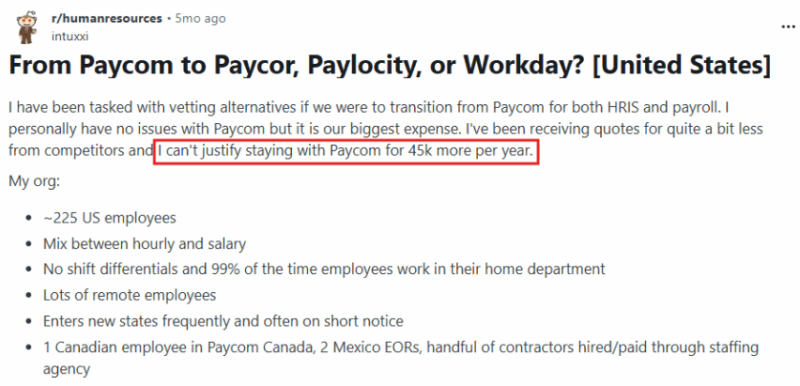
If any of these challenges sound familiar, you’re not alone. Many mid-market companies eventually start evaluating alternatives that offer better usability, integration, and pricing. Here are eight options worth exploring in 2026.
In-Depth Review: 8 Best Paycom Alternatives in 2026
1. Keka HR
Best Paycom alternative for cost-conscious mid-market teams
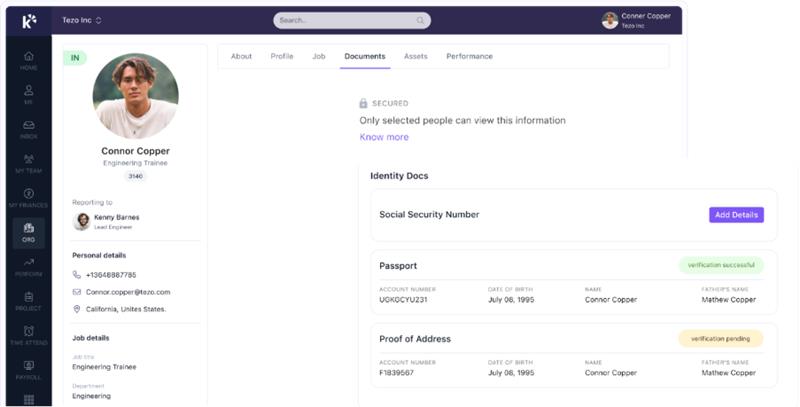
Keka HR is the strongest like-for-like Paycom replacement for US mid-market companies in the 200-2,000 employee range. Unlike most alternatives, Keka offers a free trial, and covers payroll, HR, time and attendance, performance, hiring, benefits, and project management in one modular platform.
Its US offering includes automated compliance across all 50 states, federal and state tax filing, direct deposit, and flexible pay schedules. What sets it apart is the design philosophy.
Keka is built for employees to use, not just HR administrators, which drives adoption rates that legacy tools struggle to match. For teams switching from Paycom specifically, Keka’s implementation averages 2-4 weeks versus Paycom’s typical 6-12 week onboarding, and the transition does not require an external implementation partner.
Key Features
- All-50-state payroll compliance with automated federal and state tax filing at no additional charge, unlike Paycom’s add-on model.
- Employee self-service with mobile app access for pay stubs, leave requests, expense claims, and time tracking, reducing HR admin load significantly.
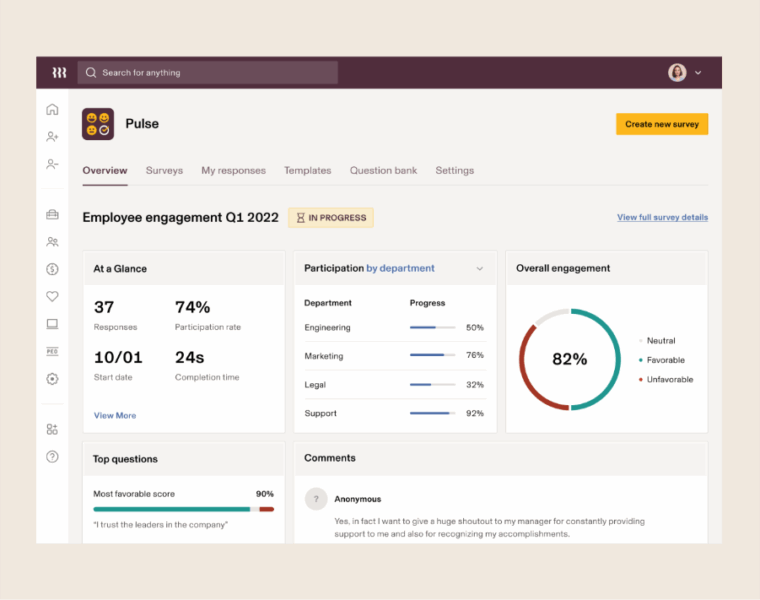
- Pulse surveys and peer recognition built into the platform, with employee engagement scores surfaced directly in HR dashboards
- Performance management with OKRs, continuous feedback, pulse surveys, and cyclic reviews built in, not sold separately.
- PSA module for project-based businesses: time tracking, billing, invoicing, and resource management linked directly to payroll.
- Transparent, tiered pricing (Foundation, Strength, Growth) with published per-employee rates and free trials, no surprise add-on fees.
Pros
- Free trial available. No credit card required to evaluate.
- Fastest implementation of any platform in this list: 2-4 weeks average.
- All-in-one: payroll, HR, ATS, performance, PSA in one login.
- All-50-state compliance included in base plan, not charged separately.
- Strong employee adoption due to consumer-grade UX, rated 9.1 for ease of use on G2.
Cons
- US product is newer than the India market version; some advanced analytics modules still maturing
- Mobile app has feature gaps vs. web version, flagged in multiple G2 reviews
- Not the right fit for companies above 5,000 employees or with heavy enterprise ERP dependencies
Pricing
Foundation plan starts at approximately $9 per employee per month for the US market. Strength and Growth tiers are priced on request based on headcount and modules.
Free Trial: Yes. Free trial available on all three plans directly at www.keka.com/us/signup with no credit card required.
2. Rippling
Best Paycom alternative for scaling companies with distributed teams
Rippling unifies HR, IT, and finance in a single system. For fast-scaling companies, this matters. For example, onboarding a new employee in Rippling triggers their payroll setup, benefits enrollment, laptop provisioning, and app access simultaneously.
It handles payroll across 50 states and global operations in 185+ countries, and its 650+ native integrations give it a very broad ecosystem. Where Rippling excels for Paycom switchers specifically is integration depth and automation. If Paycom’s closed system has been blocking your tech stack, Rippling removes that constraint immediately.
The trade-off is pricing complexity. Rippling is modular, which means costs scale fast once you add payroll, IT, and benefits admin on top of the base platform.
Key Features
- Unified HR plus IT management: onboarding triggers simultaneous device provisioning, app access, and payroll setup from a single workflow.
- Global payroll and EOR in 185+ countries, a very wide international footprint.
- 650+ native app integrations including Greenhouse, Slack, NetSuite, Salesforce, and Google Workspace.
- Automated multi-state and multi-country tax compliance with real-time payroll previews before submission.
- Granular role-based permissions: finance sees compensation data, managers see their team only, eliminating data leakage.
- Modular pricing: pay only for HR, payroll, IT, or spend modules you actually use, without being forced into a bundle.
Pros
- Best-in-class integration ecosystem: 650+ apps, Paycom has a fraction of this
- Global payroll in 185+ countries, one of the strongest international coverage in this list.
- Fast implementation for straightforward setups: 2-4 weeks.
Cons
- Costs escalate fast once you add payroll, IT, and benefits modules beyond the base
- No free trial. Demo only, which limits self-serve evaluation
- US small business focused historically: most customers still under 200 employees
- Newer modules like performance management have thinner review coverage vs. mature payroll features
Pricing
Base platform (Rippling Unity) starts at $8 per employee per month plus a $35 monthly base fee. Full HR stack with payroll, benefits, and time tracking typically runs $15-25 per employee per month. Adding IT management brings costs to $30-50+ per employee per month. All pricing requires a custom quote. EOR services are $499-599 per employee per month separately.
Free Trial: No. Demo only.
3. ADP Workforce Now
Best Paycom alternative for compliance-heavy organizations
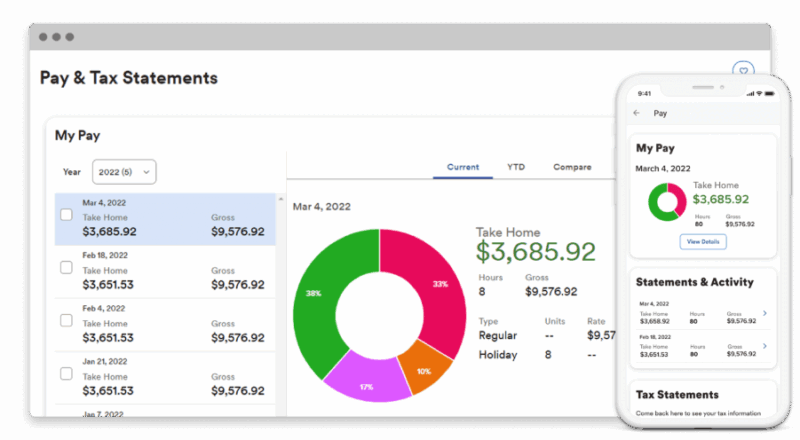
ADP Workforce Now is the payroll incumbent for US mid-market and the default choice for organizations in regulated industries. It processes payroll for roughly 1 in 6 American workers and is the platform the US government itself uses as a benchmark for employment data.
For Paycom switchers dealing with multi-state payroll complexity, union workforces, or industries like healthcare and financial services where tax errors carry compliance risk, ADP’s depth of regulatory expertise is genuinely hard to match. Its ADP Marketplace offers 700+ pre-built integrations.
The honest trade-off: pricing is opaque, implementation typically takes 2-3 months, and customer service quality varies significantly by account tier. Mid-market customers frequently report inconsistent support experiences, a criticism that mirrors what many Paycom users are already frustrated by.
Key Features
- Payroll processing for multi-state and multi-entity organizations with automated federal, state, and local tax filings across all jurisdictions
- ADP SmartCompliance: automated alerts for regulatory changes, minimum wage updates, and ACA compliance deadlines
- ADP Marketplace with 700+ pre-built integrations covering ERP, benefits, recruiting, and time and attendance
- Comp Services option: fully outsourced payroll and benefits administration, not just software, for lean HR teams
- Benchmarking via ADP Research Institute, giving HR teams access to real compensation and workforce data from 700,000+ US employers
- Mobile app (ADP Mobile Solutions) covering pay stubs, W-2s, benefits enrollment, and PTO requests with iOS and Android support
Pros
- Deepest US payroll compliance expertise on the market. Processes 1 in 6 American paychecks
- 700+ Marketplace integrations, one of the broadest ecosystems available
- Can fully outsource payroll and HR via Comp Services for lean teams
- Strong for multi-state, multi-entity, and highly regulated industries
- ADP Benchmarking gives access to real compensation data across industries
Cons
- Pricing not published. Requires sales negotiation, the same complaint many have about Paycom
- Customer support quality inconsistent, especially for mid-market accounts below enterprise tier
- Implementation takes 2-3 months on average, longer than most alternatives here
- UI is functional but dated compared to Rippling, Gusto, or Keka HR
Pricing
Custom quotes only. Industry benchmarks place ADP Workforce Now at $19-30 per employee per month for software access (Select to Premium tiers), plus a one-time implementation fee typically equal to 10-20% of annual software costs. Comp Services (fully managed) adds $30-48 per employee per month on top.
Free Trial: No. Self-guided demo available at adp.com.
4. Gusto
Best Paycom alternative for SMBs under 200 employees
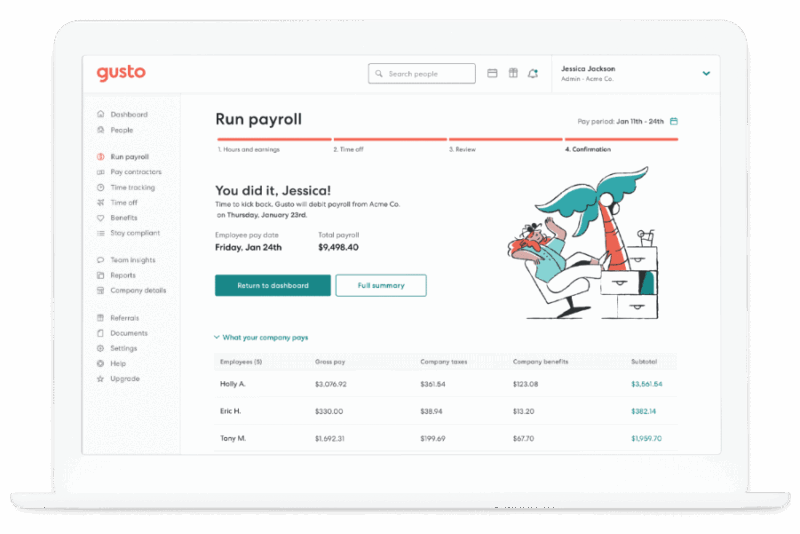
Gusto is the platform companies turn to when they first outgrow spreadsheets, and it earns that reputation consistently. It is the most transparent on pricing of any platform in this guide, the easiest to set up, and among the highest-rated for employee experience.
It’s Simple plan covers full-service payroll in all 50 states, direct deposit, automatic tax filings, and basic HR tools for $49/month plus $6 per employee. Where Gusto becomes less competitive is scale. The Plus and Premium plans add multi-state payroll and dedicated support, but the feature depth and reporting capability thin out compared to others in the list at the 300-500+ employee mark.
For Paycom switchers at sub-200 headcount who are frustrated primarily by cost and complexity, Gusto solves both problems immediately.
Key Features
- Full-service payroll in all 50 states with unlimited payroll runs at no extra cost per cycle, unlike competitors that charge per payroll run
- AutoPilot feature runs recurring payroll automatically with no manual input required once configured
- Transparent, published pricing with no setup fees and no long-term contracts. Month-to-month billing on all plans
- Built-in benefits administration: health, dental, vision, 401(k), FSA, HSA, and workers comp all manageable within Gusto
- Next-day direct deposit available on Plus plan, same-day ACH available on Premium
- Gusto Global EOR services for international hires via Remote partnership, covering 180+ countries at $399-599 per employee per month
Pros
- Transparent pricing. No hidden fees, no sales call required to get a number
- Unlimited payroll runs included at no extra charge on all plans
- No setup fees, no long-term contracts. Cancel anytime
- Best UX for small teams. Employees with no tech background adapt quickly
- AutoPilot recurring payroll eliminates manual admin overhead each cycle
Cons
- Not built for 500+ employees. Feature depth drops compared to ADP or Paylocity at scale
- Plus and Premium add-ons add $12-22 per employee per month on top of base, raising total cost quickly
- No same-day direct deposit on the Simple or Plus plans (Premium only)
- Reporting and workforce analytics are basic compared to Paylocity or Paycor
Pricing
Simple: $49/month + $6 per employee per month. Plus: $80/month + $12 per employee per month. Premium: $135/month + $16.50 per employee per month. Contractor-only plan: $35/month + $6 per contractor. All pricing updated as of March 2026. No setup fees or long-term contracts.
Free Trial: No traditional free trial. Gusto offers free account setup with no credit card required to start. First month is billed after the first payroll run.
5. Paylocity
Best Paycom alternative for mid-market employee engagement
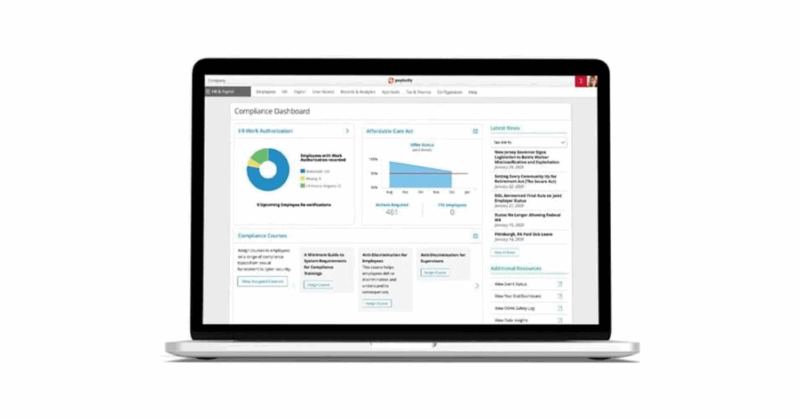
Paylocity is the second-largest US payroll provider after ADP and a direct Paycom competitor in the mid-market. It started as a payroll-first system and has since expanded into a full HCM suite.
The standout features include an internal social feed (Community), video messaging, pulse surveys, peer recognition, and real-time team feedback tools that function like a built-in engagement layer on top of payroll and HR.
For HR leaders who want to do more than run compliant payroll and actually improve workforce experience, Paylocity gives you tools to do both without a separate engagement platform. Customer reviews consistently rate the payroll and time-tracking modules positively. However, onboarding workflows and customer support get significantly more mixed feedback.
Key Features
- Community: an internal social network with company feeds, peer recognition, and manager communications built directly into the HRIS.
- Modern Workforce Management with AI-assisted scheduling, real-time labor cost visibility, and geofenced mobile clock-in.
- Advanced payroll with 100+ configurable check types, multi-subsidiary support, and garnishment services.
- Learning Management System (LMS) built in with certification tracking, reducing the need for a separate L&D tool.
- ExecView dashboards with DEI metrics, headcount forecasting, and turnover risk analytics for leadership reporting.
- 300+ pre-built integrations including Greenhouse, Microsoft Teams, and major benefits carriers.
Pros
- Strong employee engagement tooling via social feed, recognition, pulse surveys built in.
- Strong payroll depth with 100+ check types and multi-entity support.
- Built-in LMS reduces the need for a separate learning and development tool.
- Transparent PEPM pricing model. No per-payroll-run charges.
- Clean, updated UI rated intuitive by 40%+ of G2 reviewers.
Cons
- Customer support quality is a recurring complaint: 233+ G2 reviews cite inconsistency, long wait times, and rep turnover.
- Onboarding workflows rated weaker than BambooHR or Keka HR. Multiple reviewers required third-party tools to supplement.
- Implementation takes 3-6 months, comparable to Paycom’s timeline.
- Primarily US-centric. Global payroll via Blue Marble sister company, not native within the platform.
Pricing
Custom quotes only. Industry benchmarks (OutSail, G2) place Paylocity at $22-32 per employee per month depending on headcount and modules selected. Implementation fees typically run 10-20% of annual software cost. No per-payroll-run charges.
Free Trial: No. Demo required to access pricing and begin evaluation.
6. Paycor
Best Paycom alternative for HR analytics and workforce planning
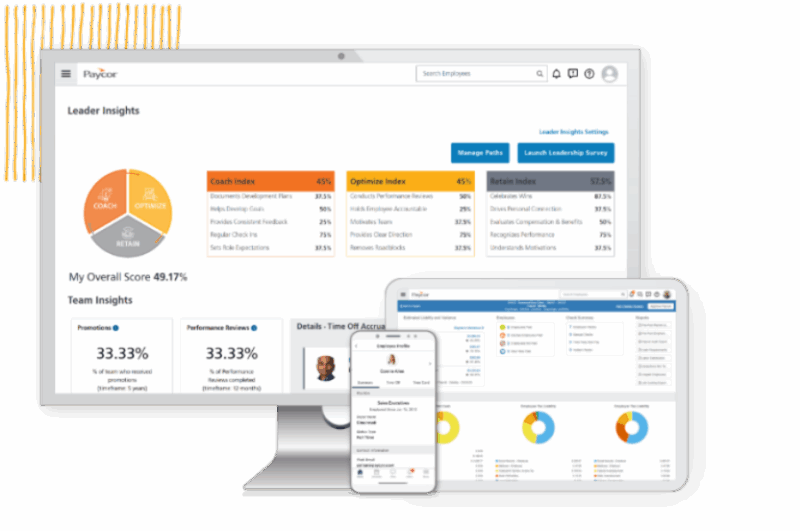
Paycor is a solid mid-market HCM platform that has invested more heavily in analytics and workforce planning than most competitors at its price point. Where it differentiates is via predictive analytics for turnover risk, compensation benchmarking against industry peers, and talent development tools that connect performance data to succession planning.
For HR leaders at companies where the CFO is asking hard questions about workforce ROI, Paycor gives you the data layer to answer them. It is not the cheapest option, but it is more affordable than ADP or Workday for similar analytical depth.
One consistent theme in user reviews (including a cited review from an HR professional switching from Paycor to BambooHR): customer service rep turnover and modular billing are recurring sources of friction.
Key Features
- Workforce analytics with predictive turnover risk modeling, compensation benchmarking, and manager effectiveness scoring
- Full payroll suite with automated multi-state compliance, garnishments, and ACA/COBRA tracking
- Talent development tools: performance improvement plans (PIPs), training need identification from review cycles, and succession planning
- Advanced recruiting with AI-assisted job description generation and candidate scoring built into the ATS
- Time and labor management with geofencing, touchless time kiosks, and overtime policy automation
- QuickBooks and major ERP integrations with bidirectional data sync to eliminate manual accounting reconciliation
Pros
- Strong workforce analytics in the mid-market tier: turnover risk, comp benchmarking, retention scoring
- Talent development and PIP tools integrated with performance review cycle
- Published base pricing for under-50 teams offers transparency absent from most competitors
- AI-assisted job description and candidate scoring reduces recruiter workload
- Strong QuickBooks and ERP integrations for finance team alignment
Cons
- Customer service rep turnover and inconsistent account management is a recurring complaint across Capterra and G2
- Each feature module billed separately with its own implementation fee, making total cost hard to predict
- Implementation timeline comparable to ADP: 2-3 months average
- Mid-market focus means the platform scales less smoothly above 1,000 employees
Pricing
For under-50 employees, Paycor publishes base bundles from $99/month + $6 per employee (Basic) to $199/month + higher per-employee rates (Premium). For 50+ employees (the Paycom-relevant range), pricing requires a custom quote. Industry benchmarks place Paycor at $19-27 per employee per month for mid-market configurations.
Free Trial: Yes. Paycor offers a free trial for evaluation prior to purchase.
7. BambooHR
Best Paycom alternative for employee experience and onboarding
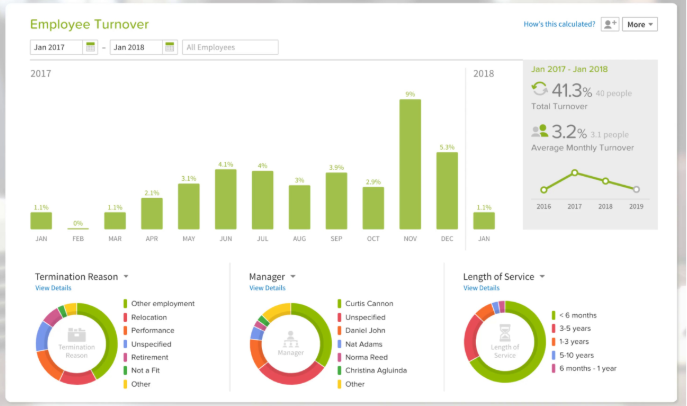
BambooHR has the best onboarding experience in this list and one of the highest employee satisfaction ratings on the market (4.6/5 on G2 based on 3,000+ reviews, with 91% recommending it for employee management). It is purpose-built for companies that want HR to feel like a people-first function, not a compliance checkbox. The onboarding workflow, e-signatures, employee self-service, and performance review tools are cleaner and more intuitive than anything in the Paycom ecosystem. The key caveat: payroll is an add-on, not native, which means at larger scales you are effectively running two systems. For Paycom switchers frustrated with UX and employee adoption, BambooHR is the most immediate UX upgrade. For those switching primarily because of payroll complexity, BambooHR is better paired with a payroll-first tool.
Key Features
- Industry-leading onboarding: task checklists, e-signatures, pre-boarding portals, and equipment provisioning triggers automated before day one.
- Core HR with centralized employee profiles, document storage, org charts, and automated workflow approvals.
- Performance management with 360-degree feedback, goal tracking, and peer reviews, with higher adoption than most enterprise tools.
- 145+ app integrations via BambooHR Marketplace including Gusto, QuickBooks, Paylocity, ZipRecruiter, and Okta.
- BambooHR Payroll (add-on): automated pay runs, tax filings, and direct deposit in all 50 states with employee self-service.
- 7-day free trial available with access to the full platform before any purchase commitment.
Pros
- Best onboarding experience in this guide. Consistently top-rated across G2, Capterra, and TrustRadius.
- 91% of G2 reviewers recommend it for employee management, the highest endorsement rate in this list.
- 7-day free trial: test before buying, rare among HCM platforms.
- Simpler and more affordable than ADP or Paylocity at under-500-employee scale.
- Employee-first design drives high adoption without extensive training.
Cons
- Payroll is an add-on, not a native module. Adds cost and occasional sync complexity.
- Not a strong fit for 500+ employees or companies with complex multi-state payroll configurations.
- Reporting and analytics less robust than Paycor or Paylocity.
- Customer support only available during US business hours, flagged as a limitation for global or async teams.
Pricing
BambooHR no longer publishes pricing publicly. Custom quotes based on headcount. Third-party sources indicate Core plan starts around $6-9 per employee per month with payroll as a separate add-on (reported at $75/month for up to 10 employees). Volume discounts available as headcount grows. Implementation fees may apply.
Free Trial: Yes. 7-day free trial available with full platform access.
8. Workday HCM
Best Paycom alternative for enterprise and global organizations
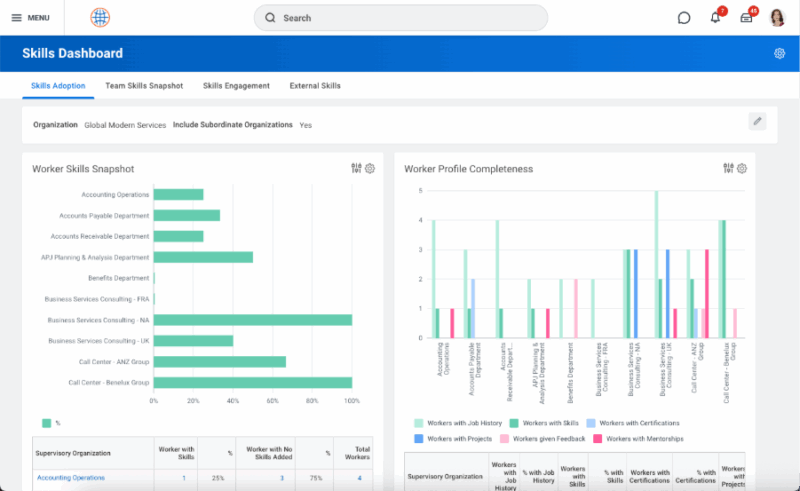
Workday combines HR, payroll, finance, and workforce planning in a single architecture that connects people data to business outcomes in ways most mid-market tools cannot match. Historically an enterprise-only play, that is changing fast.
In November 2025, Workday launched Workday GO, a purpose-built offering for small and midsize businesses with go-live in as few as 60 business days, fixed fees, and a predictable scope. The Insperity HRScaleTM solution, launched February 2026, embeds Workday’s HCM into a full-service HR offering for SMBs. 75% of Workday’s customers now have fewer than 3,500 employees.
For Paycom switchers in the 500-3,500 employee range, it is now a legitimate shortlist option. Under 500 employees, the cost and complexity still outweigh the benefit for most.
Key Features
- Full hire-to-retire HCM: recruiting, onboarding, payroll, benefits, time, performance, learning, and succession.
- HR and financial management in one data model: compensation, headcount, and workforce analytics tied to financial forecasts.
- AI agents embedded from day one: Payroll Agent, Self-Service Agent, and Business Process Optimize Agent.
- Global payroll and compliance across 100+ countries, extended to midsize via Workday GO Global Payroll.
- Real-time analytics and self-service dashboards for HR, finance, and leadership.
- Configurable workflows and approval chains without heavy IT involvement.
Pros
- HR, payroll, and financial management in one data model, rare at any price point.
- Workday GO brings sub-60-day go-live and fixed fees to mid-market for the first time.
- Strong workforce analytics: succession modeling, retention risk, headcount forecasting.
- Global payroll in 100+ countries, deepest international coverage in this list.
- 75% of customers now under 3,500 employees, mid-market support is maturing fast.
Cons
- Pricing still custom and opaque. No published numbers even for Workday GO.
- Workday GO is new. Real-world SMB reviews are limited as of early 2026.
- Full enterprise implementation still requires external partners and 4-9 months.
- Perceived as an enterprise tool. Mid-market credibility still being established.
Pricing: Custom pricing only | Workday GO: fixed fees, structure not published | Full HCM ~$34-42 PEPM (500+ employees) | Annual minimum ~$100K-300K | Implementation ~100-200% of Year 1 cost
Free Trial: No. Demo at workday.com
Bottom Line: What to Do Right Now
Paycom is a great platform, but in 2026 it is no longer the only option at this price point, and for most mid-market companies it is not the best one. If pricing transparency is your primary driver, start with Keka HR or Gusto.
If integration depth is the issue, get a Rippling demo and map it against your current tech stack. If compliance is the priority, request an ADP quote alongside whichever alternative you are already evaluating.
The worst outcome is staying on Paycom by default because evaluating alternatives feels time-consuming. Most of the platforms in this guide will let you see a real number within 48 hours. The $30,000-50,000 annual gap that drove that Reddit post is real, and it compounds every year you stay.
For mid-market teams that want to move quickly, Keka HR offers a free trial, published pricing, and an implementation timeline measured in weeks rather than months. Start there.


