


 Login


Joint Employment
Read Time: 2 Mins


PRODUCTS
 Payroll Suite
 HR Suite
 Talent Suite
 Project Services Suite

Meet the platform tailored to your business
Core system of record
One platform for the entire employee journey

BY INDUSTRY
BY COMPANY SIZE
LEARN
EXPLORE KEKA
Joint employment describes a situation where more than one party is responsible for an individual’s employment. The first party is the direct employer who hires, pays, and provides W-2 forms to the employees. The second party is a business establishment responsible for managing certain aspects of the employees.
For instance, a staffing agency might place one of their employees at the client’s work location. In this scenario, the staffing agency and the client company are considered joint employers, as they share responsibilities and ensure proper working conditions for the employees.
Joint employment is common in industries where staffing flexibility is critical, such as hospitality, healthcare, and construction.
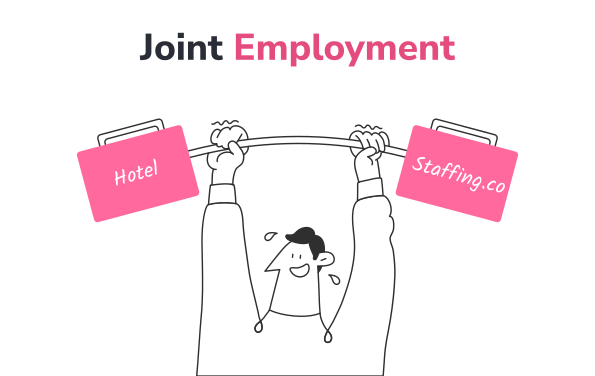
Joint employers are both equally responsible for compliance with the Fair Labour Standards Act (FLSA) and the Migrant and Seasonal Agricultural Worker Protection Act (MSPA).
2. Under MSPA, both the employers ensure employees receive the following benefits:
However, a joint employer is not responsible for complying with housing and transportation regulations.
Joint employment offers the following benefits:
Thus, joint employment helps organizations manage their workforce better.
Subscribe to keep up with the latest strategic finance content.
Request a demo


